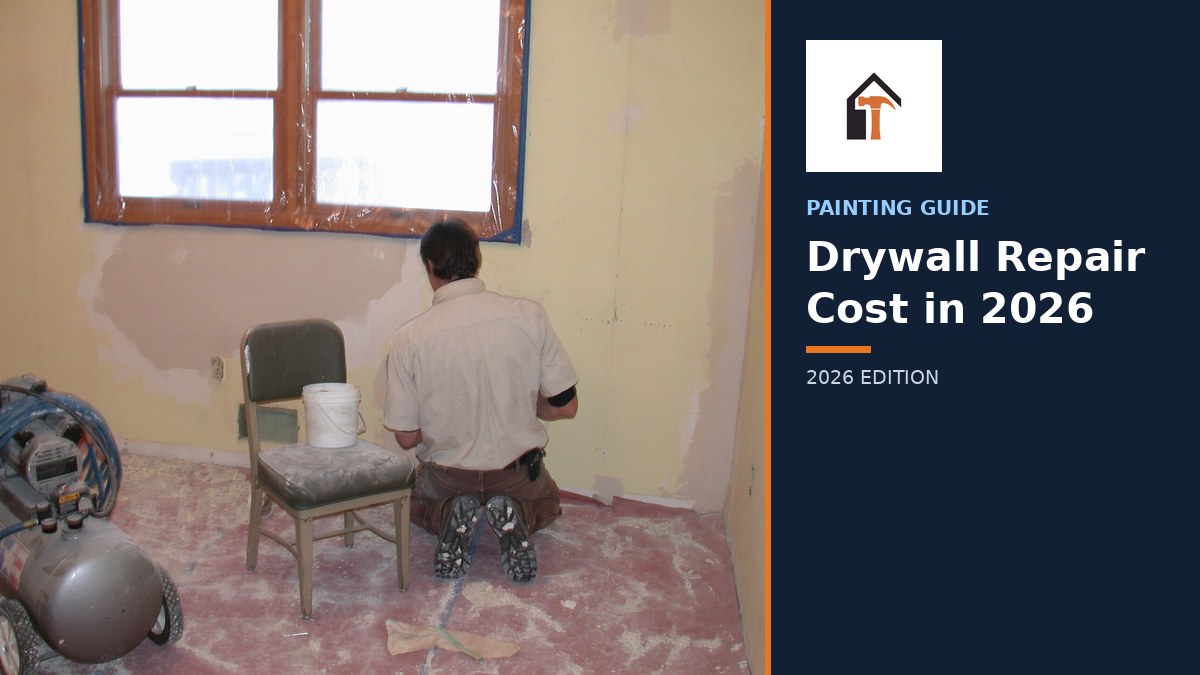
Quick Answer: How Much Does Drywall Repair Cost in 2026?
A professional drywall repair costs $150 to $500 per hole depending on size, with most single-hole jobs landing between $200 and $350. Tiny nail holes and dings run $75 to $150, doorknob-sized holes (1 to 6 inches) cost $150 to $250, medium holes (6 to 12 inches) run $200 to $350, and large holes over 12 inches cost $300 to $500 or more. Texture matching adds $50 to $100, and painting adds another $75 to $150. Most contractors charge a $150 to $200 minimum because the return trips for mud coats make tiny jobs unprofitable otherwise.
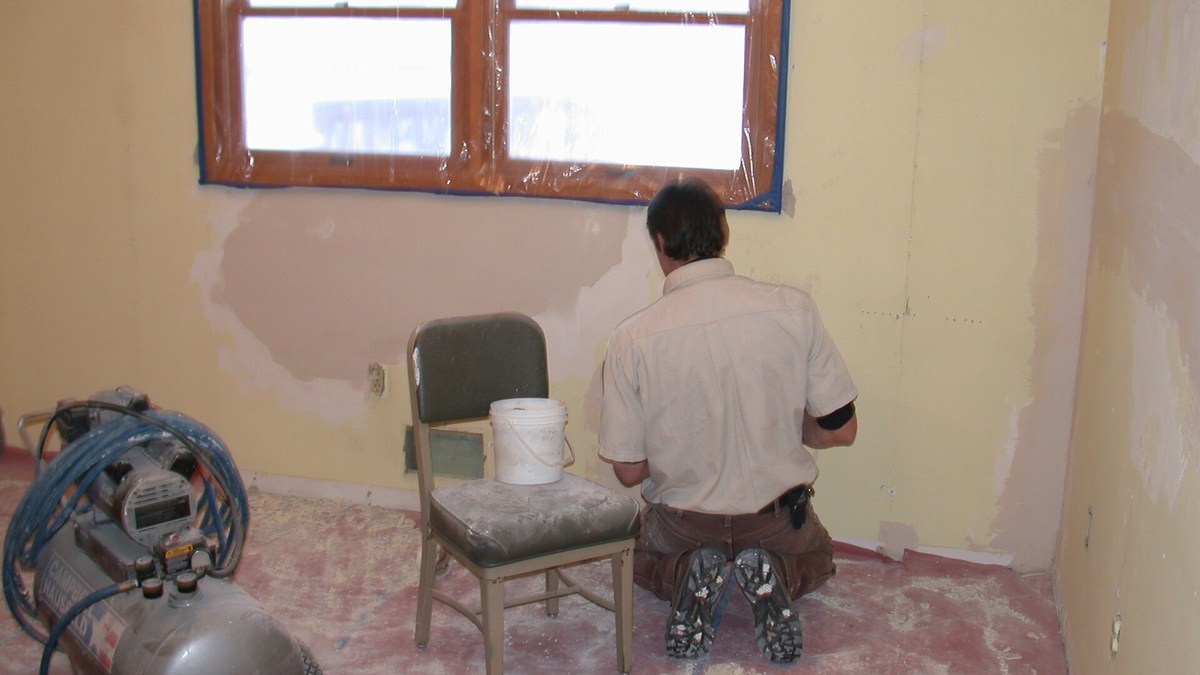
Drywall Repair Cost Table: Price by Hole Size
The single biggest cost driver is the size of the damage. Here’s what U.S. homeowners typically pay a professional in 2026:
| Damage Size | Description | Pro Cost Range | Typical Job |
|---|---|---|---|
| Under 1 inch | Nail holes, screw holes, small dings | $75 – $150 | $110 |
| 1 – 6 inches | Doorknob holes, anchor pull-outs | $150 – $250 | $200 |
| 6 – 12 inches | Fist-sized holes, plumbing access | $200 – $350 | $275 |
| 12 – 24 inches | Large wall sections | $300 – $500 | $400 |
| Full panel (4×8 ft) | Whole sheet replacement | $250 – $650 | $450 |
| Cracks (per foot) | Seam cracks, settling cracks | $13 – $25/ft | $150 – $400 total |
| Corner bead (per foot) | Damaged metal corner | $15 – $25/ft | $100 – $200 per corner |
Add-ons that raise the price:
- Texture matching: $50 – $100 (orange peel, knockdown, and popcorn textures cost more)
- Painting the repair: $75 – $150 (spot paint) or $200 – $400 (full wall repaint for a seamless blend)
- Ceiling work: add roughly 30% — ceilings cost $350 to $800+ for typical repairs
- Water damage: $400 to $1,000 for section replacement; $600 to $1,600+ for extensive damage with remediation
- Skim coating: $1 to $2 per square foot to resurface rough walls
Drywall Repair Cost Per Room
When damage spans multiple spots in one room, contractors usually price the room as a project rather than per hole:
| Room Scenario | Typical Scope | Pro Cost Range |
|---|---|---|
| Bedroom touch-up | 3–5 nail holes + 1 small patch | $200 – $400 |
| Living room | Multiple patches, 1 medium hole | $300 – $600 |
| Hallway | Corner bead repair + scuffs | $250 – $500 |
| Bathroom | Water-damaged section replacement | $500 – $1,200 |
| Kitchen | Large hole + texture match | $400 – $800 |
| Whole-room skim coat | 12×12 ft room, Level 5 finish | $600 – $1,200 |
Money-saving tip: bundle repairs. A contractor’s $150–$200 minimum charge covers the trip, so having them fix five holes in one visit costs far less per hole than five separate visits. Ask for a per-visit price when you have multiple small repairs.
DIY vs Pro: When to Do It Yourself
DIY Drywall Repair Costs
Materials for a DIY patch job are cheap — typically $15 to $50 total:
- Self-adhesive mesh patch kit: $8 – $15
- Joint compound (small tub): $8 – $12
- Sandpaper and putty knife set: $10 – $15
- Texture spray can (orange peel/knockdown): $12 – $18
- Primer + paint (quart): $20 – $40
DIY makes sense when: the hole is under 6 inches, the wall has a flat (untextured) finish, you’re comfortable with 2–3 days of drying time between mud coats, and the repair is in a low-visibility spot like a closet or garage.
When to Hire a Pro
Hire a professional when: the hole is larger than 6 inches, the wall has knockdown or popcorn texture (matching it is a genuine skill), the damage is on a ceiling, there’s water damage or mold, the repair is in a highly visible area like a living room, or you need it done in one coordinated visit. A pro’s real value isn’t the patch — it’s the invisible finish. Anyone can fill a hole; making it disappear under paint takes practice with feathering joint compound and matching texture.
The Hidden Cost of DIY Gone Wrong
The most expensive drywall repair is the one you pay for twice. Common DIY failures — visible humps from over-applied compound, mismatched texture, flashing (dull spots where the patch absorbs paint differently) — often cost $200 to $400 for a pro to fix after you’ve already spent $40 on materials and a weekend of labor. If the wall is textured or the spot is prominent, the pro’s $250 is usually cheaper than the DIY attempt plus the re-do.
Texture Matching Guide: The Part Everyone Underestimates
Texture is what separates a $150 patch from a $350 one. Here’s what you’re dealing with:
Orange Peel (most common, 1990s–present)
A fine, dimpled spray texture. DIY difficulty: moderate. A $15 aerosol can of orange peel texture gets you close, but pros use a hopper gun with thinned compound for a better match. Pro upcharge: $50 – $75.
Knockdown
Heavier splatter that’s been flattened (“knocked down”) with a trowel. DIY difficulty: hard. The timing of the knockdown pass determines the look, and it’s nearly impossible to match an existing pattern with a spray can. Pro upcharge: $75 – $100.
Popcorn / Acoustic
The bumpy cottage-cheese ceiling texture. DIY difficulty: very hard. Matching requires the same aggregate size and spray technique, and pre-1978 popcorn may contain asbestos — test before disturbing. Many pros recommend scraping the whole ceiling smooth ($1–$3 per sq ft) instead of patching. Pro upcharge: $100 – $150.
Smooth / Level 5
No texture, just perfectly flat drywall. DIY difficulty: hard. Smooth walls show every imperfection — the patch must be feathered wide and sanded flawlessly. Pros often skim-coat the entire wall section ($1–$2 per sq ft) to guarantee invisibility.
Texture Matching Tips That Actually Work
- Practice on cardboard first. Every texture can looks different depending on distance, speed, and how full the can is. Burn 30 seconds of practice spray before touching the wall.
- Feather wide. Extend joint compound 6–12 inches beyond the patch edges. The eye detects abrupt transitions, not gradual ones.
- Prime before texturing. Bare compound absorbs texture spray unevenly. A coat of PVA drywall primer first gives a uniform base.
- Paint the whole wall if you can. Even a perfect texture match can flash under certain light if the paint sheen differs. A $30 gallon of paint for the full wall is the cheapest insurance for an invisible repair.
What Affects Drywall Repair Cost? 7 Price Drivers
- Size of damage — the #1 factor; see the cost table above.
- Location — ceilings cost ~30% more than walls (overhead work, scaffolding). Stairwells and high walls add setup time.
- Texture type — smooth and popcorn cost the most to match; orange peel the least.
- Number of return trips — joint compound needs 2–3 coats with drying time between. Each trip is labor. This is why small jobs have high minimums.
- Paint — spot-priming and painting is standard; full-wall repaint for blending adds $200–$400.
- Water damage and mold — if drywall is soft, crumbly, or moldy, it must be cut out and replaced, not patched. Remediation can double the cost.
- Your market — the same patch job costs roughly 40–70% more in high-cost metros (New York, San Francisco, Boston) than in lower-cost markets (San Antonio, Memphis, Oklahoma City). Always get 3 written quotes.
Drywall Repair vs Full Replacement: How to Decide
Not every damaged wall should be patched. Here’s how pros decide between a patch and tearing out the whole sheet:
Patch It When
- The hole is under 2×2 feet and the surrounding drywall is solid
- The damage is from impact (doorknob, furniture, fist) — not moisture
- There’s only one layer of drywall (no double-layer fire walls)
- The wall framing behind the damage is intact
- You’re dealing with cracks from normal house settling, not structural movement
Replace the Sheet When
- Water damage: if the drywall is soft, sagging, or crumbles when pressed, the gypsum core is compromised. Patching over it is throwing money away — cut back to dry material and replace. Budget $250 to $650 per 4×8 sheet installed and finished.
- Mold: surface mold on paint can sometimes be cleaned, but mold inside the gypsum means the sheet goes. If the affected area is larger than about 10 square feet, call a remediation specialist ($1,000–$2,000+) rather than a drywall contractor.
- Multiple holes in one sheet: three or four patches in a single 4×8 sheet often costs more in labor than hanging one new sheet. Ask your contractor: “Would it be cheaper to just replace the whole sheet?” The honest ones will tell you.
- Fire or smoke damage: drywall absorbs smoke odor permanently. Replacement is the only real fix.
The 50% Rule of Thumb
Contractors use a rough rule: if the damaged area covers more than half of a drywall sheet, replacement usually beats patching on both cost and quality. A full sheet hung fresh has no seams to feather, no texture to match across patch boundaries, and no risk of the old damage telegraphing through. For a standard 4×8 sheet, that threshold is about 16 square feet of damage.
How to Hire a Drywall Contractor: 6 Questions to Ask
Drywall repair is one of the most quote-variable trades in home improvement — the same job can range from $200 to $600 depending on who you call. These six questions separate the pros from the patch-and-dash operators:
- “What’s your minimum charge, and what does it cover?” Legitimate pros quote $150–$200 minimums. If someone says “fifty bucks,” they’re either not counting return trips or planning to rush the mud work.
- “How many coats of compound, and how many return trips?” The right answer: 2–3 coats, 2–3 visits. One-coat-and-done is a red flag for visible seams within a year.
- “Do you match the existing texture, and is that included?” Get it in writing. Texture matching is a separate skill — some low bidders leave walls smooth and hope you don’t notice until after they’ve been paid.
- “Is paint included, or just primer?” Most quotes include primer only. Clarify whether spot-painting, full-wall painting, or nothing is covered.
- “Can I see photos of your patch work?” Any experienced drywall contractor has before-and-after photos. Invisible patches are their portfolio — if they can’t show you, keep looking.
- “What’s your timeline?” A single hole takes 2–3 days elapsed (drying time), not 2–3 hours. Anyone promising same-day completion for a textured repair is cutting corners on cure time.
Where to find them: Angi and HomeAdvisor both maintain reviewed drywall contractor listings with verified pricing data. Your local paint store is another underrated source — counter staff know which drywall guys do clean work because painters are the ones who have to paint over bad patches.
Frequently Asked Questions
How much does it cost to fix a doorknob hole in drywall?
A doorknob-sized hole (2–4 inches) costs $150 to $250 professionally repaired, including patching, mudding, sanding, and texture matching. Paint is usually extra ($75–$150). DIY kits cost under $25, but matching the texture is the hard part — doorknob holes sit at eye level where flaws show.
Can you patch drywall without replacing the whole sheet?
Yes — holes up to about 2×2 feet can be patched with a cut-to-fit drywall piece, backing boards, tape, and joint compound. Full sheet replacement is only needed for extensive water damage, mold, or when damage spans multiple stud bays. A good patch is structurally sound and invisible once finished.
How long does drywall repair take?
The hands-on work takes 1–2 hours, but the job spans 2–3 days because joint compound needs 12–24 hours of drying time between each of the 2–3 coats. Quick-set compound (20- or 45-minute mud) can compress this to a single day, but it’s harder to sand smooth and most pros prefer standard compound for finish quality.
Should I hire a handyman or a drywall contractor?
For holes under 6 inches, a handyman ($45–$75/hour, $150–$200 minimum) is fine and often cheaper. For larger holes, texture matching, ceilings, or multiple rooms, hire a drywall contractor — they finish faster and the invisible blend is worth the premium. Get quotes from both for medium jobs and compare.
Does drywall repair include painting?
Usually not — most drywall quotes cover patching, mudding, sanding, and priming, with painting as an add-on ($75–$150 for spot painting, $200–$400 for a full wall). Always ask: “Does this quote include paint?” A repair that’s patched but unpainted will flash badly under room lighting.
How We Estimated These Costs
Our drywall repair cost ranges are planning estimates built from 2026 U.S. contractor pricing data, not quotes for your specific job. We cross-referenced published cost guides from Angi and HomeAdvisor, regional contractor price lists, and working drywall contractors’ published rate catalogs (including per-size patch pricing and regional comparisons between high- and low-cost markets). Material prices reflect 2026 retail pricing at major home improvement stores.
These are planning ranges, not guaranteed prices. Your actual cost depends on your market, the contractor’s minimum charges, texture type, and whether painting is included. We recommend getting 3 written estimates and asking each contractor: What’s your minimum charge? How many return trips are included? Does the quote include texture matching and paint? Never pay more than 10–15% upfront for a small repair job.
By Renovation Guide HQ — October 2026