Transparency note: This guide contains no affiliate links. Renovation Guide HQ currently earns no commissions from any product or service mentioned — every figure is cited so you can verify it yourself.
By Renovation Guide HQ · Updated October 8, 2026
Quick Answer
Refacing kitchen cabinets costs $6,750 on average in 2026, with most homeowners spending $4,500–$10,550, according to SoFi’s 2026 cost data. Angi’s 2026 data puts the national average at $7,234, with most projects between $4,483 and $10,590. Refacing keeps your existing cabinet boxes and replaces the doors, drawer fronts, and visible veneer — typically finishing in 3–5 days at 30–50% less than full replacement.
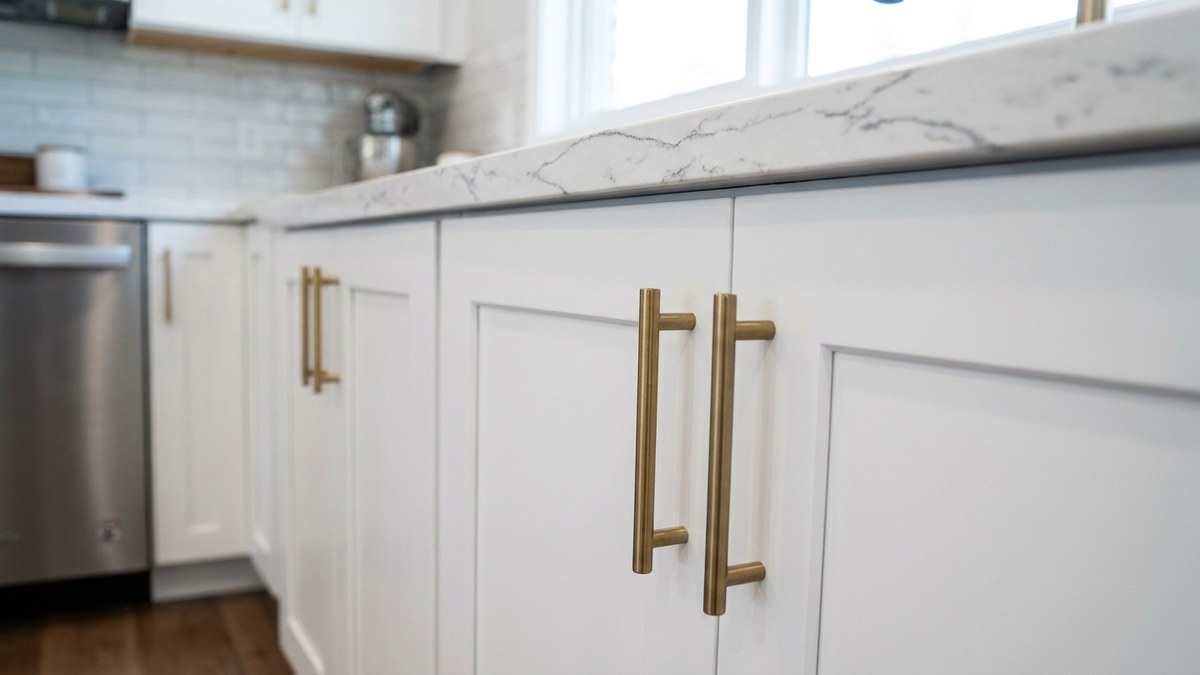
This guide breaks refacing costs down by kitchen size, material, and region, compares refacing against refinishing and replacement, and flags the one price point where replacement starts to make more sense.
2026 Cabinet Refacing Cost by Kitchen Size
Contractors usually price refacing by linear foot of cabinetry — roughly $150–$450 per linear foot, materials and labor included, per Angi’s 2026 data. HomeBuddy’s 2026 guide breaks it down by total linear footage:
| Linear feet of cabinets | Typical refacing cost | Kitchen size |
|---|---|---|
| 10 linear feet | $1,500–$4,000 | Small galley |
| 15 linear feet | $2,250–$6,000 | Small to mid |
| 20 linear feet | $3,000–$8,000 | Average 10×10–10×12 |
| 25 linear feet | $3,750–$10,000 | Large, island included |
HomeGuide’s 2026 data gives a slightly wider band for a full kitchen: $5,000–$13,000 for an average kitchen, $4,000–$10,000 for a small kitchen, and $9,000–$22,000+ for a large one. Ideal Home Improvement’s 2026 pricing shows a typical project at $5,900–$15,000 with a national average of $6,700–$9,200.
Cost by Material: Laminate vs. Veneer vs. Solid Wood
Material choice is the single biggest lever on your refacing bill. HomeGuide and SoFi report these 2026 material bands:
| Refacing material | Cost per linear foot | Typical total | Best for |
|---|---|---|---|
| Laminate / rigid thermofoil | $80–$125 | $2,000–$4,000 | Busy family kitchens — durable, moisture-resistant, budget-friendly |
| Wood veneer | $100–$250 | $2,500–$8,000 | Natural wood look at a middle price; can be refinished later |
| Solid wood | $200–$500 | $5,000–$16,000 | Premium look, longest life, handles water and humidity best |
For raw material pricing, drcabinet’s 2026 materials guide puts wood veneer at $2–$5 per square foot and plastic laminate at $1–$3 per square foot — laminate wins on durability and moisture resistance, veneer wins on the natural-grain look and the ability to be refinished down the road.
Refacing vs. Refinishing vs. Replacing: An Honest Comparison
The three cabinet-update routes are different projects with different prices. Here’s how they compare using 2026 published data:
| Paint / refinish | Reface | Replace | |
|---|---|---|---|
| What changes | Finish only — same doors, same boxes | New doors, drawer fronts, veneer; boxes stay | Everything — new boxes, layout possible |
| Typical cost | $2,000–$5,000 (Fixr 2026) | $4,000–$13,000 | $10,000–$60,000+ (LI Wood Renewal 2026) |
| Timeline | 3–5 days | 3–5 days (1–3 weeks with door lead time) | 3–8 weeks |
| New door style possible? | No | Yes | Yes |
| Layout changes? | No | No | Yes |
| Best for | Sound cabinets, wrong color | Sound boxes, wrong style | Damaged boxes or new layout |
The overlap most homeowners miss: HomeBuddy notes full replacement can run $10,000–$25,000+, and when a refacing quote climbs past $7,000–$8,000, it enters territory where a full set of new plywood cabinets can cost about the same. Always get a replacement quote alongside any refacing quote — it’s the only way to know which is the better value for your kitchen.
What $5,000, $8,000, or $13,000 Actually Buys
Three common refacing budgets for an average kitchen (all planning estimates):
$5,000: the laminate refresh
Laminate or rigid thermofoil doors and drawer fronts on your existing boxes, boxes wrapped in matching laminate, existing hardware reused or replaced with basic pulls. Clean, modern, done in 3–4 days.
$8,000: the wood-veneer upgrade
Real wood veneer doors and drawer fronts, boxes wrapped in matching veneer, new soft-close hinges, new knobs and pulls, crown molding along the top of the uppers. The look of custom cabinetry at a fraction of replacement cost.
$13,000: the solid-wood showpiece
Solid wood doors and drawer fronts, premium veneer on boxes, under-cabinet lighting, pull-out organizers added inside a few key cabinets, decorative end panels and molding. Approaching replacement money — compare both quotes before committing.
Rule of thumb: refacing makes sense when the quote is under about $8,000 for a standard kitchen. Past that, price a full replacement too — you may get new boxes, soft-close drawers, and a warranty for similar money.
A Worked Example: 10×10 Kitchen Refacing
Here is what a mid-range veneer refacing looks like as a line-item budget for a standard 10×10 kitchen with about 20 linear feet of cabinets and 22 door/drawer fronts. Every line below is a planning estimate anchored to the published ranges cited in this guide; the total is the point — it sums correctly so you can sanity-check contractor quotes against it.
| Line item | Cost |
|---|---|
| New wood-veneer doors + drawer fronts (22 fronts) | $2,200 |
| Veneer wrap for cabinet boxes | $800 |
| New knobs, pulls, soft-close hinges | $450 |
| Crown molding along uppers | $600 |
| Labor (removal, prep, install, adjustments) | $3,200 |
| Subtotal | $7,250 |
| Contingency (10%) | $725 |
| Total | $7,975 |
Labor is the heavy line, and that’s normal: Fixr’s 2026 data puts labor at 50–70% of the total, averaging $4,125–$5,775 for an average-size kitchen. Refacing is measurement-heavy, prep-heavy work — every door must be sized exactly, boxes prepped smooth, and veneer applied without bubbles.
7 Factors That Move Your Refacing Price Most
1. Linear footage
The number of cabinet runs sets the baseline. More linear feet means more veneer, more doors, more hours — a 25-foot kitchen with an island can easily cost double a 12-foot galley in the same material.
2. Material tier
The jump from laminate ($80–$125 per linear foot) to solid wood ($200–$500 per linear foot) can more than double the project. Wood veneer in the middle ($100–$250) is where most mid-range projects land.
3. Door and drawer count
Each front comes off, gets measured, and is replaced individually — kitchens with many small drawers cost more than kitchens with a few large doors, even at the same linear footage.
4. Hardware and upgrades
New knobs and pulls run about $200–$800 total (planning estimate) depending on style; hinges run $1–$25 each, per HomeBuddy. Crown molding, light-rail molding, glass-front inserts, and under-cabinet lighting each add hundreds.
5. Condition of the boxes
Refacing only works if the boxes are structurally sound with smooth, clean surfaces (Fixr). Water damage, swollen particleboard, or broken frames mean box repairs or full replacement — and a reputable contractor will tell you so before quoting.
6. Labor rates in your market
Refacing is labor-intensive, so local wages drive the spread. Angi’s Columbus data cites around $50 per hour for cabinet work — coastal metros run higher, Southern and Midwestern markets lower.
7. Extras bundled in
Many refacing companies also sell backsplashes ($200–$2,000 installed), countertops, and lighting. Convenient, but price each line separately — bundled “kitchen makeover” packages can quietly carry replacement-level totals.
Step-by-Step: How Refacing Actually Proceeds
- Measure and design (1–2 weeks before install). The contractor measures every opening, you pick door style, material, and finish. Custom doors are ordered — this lead time is why some projects show 1–3 weeks total even though install is 3–5 days.
- Remove doors, drawers, and hardware (day 1). All fronts come off; hinges and pulls are removed. The kitchen stays usable — boxes stay on the wall.
- Prep the boxes (day 1–2). Boxes are cleaned, degreased, sanded, and repaired. This prep is what separates a reface that lasts 15 years from one that peels in 3.
- Apply veneer to boxes (day 2–3). Veneer or laminate is applied to the visible box frames — stiles, rails, and end panels — trimmed flush and finished.
- Hang new doors and drawer fronts (day 3–4). New fronts are installed, aligned, and adjusted so every reveal is even.
- Hardware and molding (day 4–5). Knobs, pulls, soft-close hinges, crown molding, and light rail go on. Final adjustments, cleanup, walkthrough.
Realistic total timeline: 3–5 days of on-site work for most kitchens (HomeBuddy, SoFi), plus 1–2 weeks of door manufacturing lead time before that.
DIY vs. Hiring a Pro: An Honest Breakdown
Refacing sits at skill level 3 out of 5 for DIY. Peel-and-stick veneer kits exist, and drcabinet’s materials guide notes that PSA (peel-and-stick) veneer is the most beginner-friendly option — but clean edge cuts and thorough prep are the hard parts, and wood or laminate with contact cement takes a steady hand and a trimmer.
The math: a DIY refacing kit for a 10×10 kitchen runs roughly $1,500–$4,000 ($75–$200 per linear foot), versus $4,000–$10,000 professionally. DIY material costs alone run about $36–$200 per linear foot. The savings are real, but so is the risk: mismeasured doors can’t be returned, and bubbled veneer is visible every single day.
Where DIY is flatly a bad idea: structural box repairs, anything involving the sink-base plumbing if water damage is suspected, and — in pre-1978 homes — any sanding that disturbs old paint without lead-safe practices (see the EPA’s Renovation, Repair, and Painting rule).
Materials: What Goes Into the Project
- Doors and drawer fronts: the visible stars — laminate, veneer, or solid wood, priced $80–$500 per linear foot by tier (planning estimate).
- Box veneer: matching veneer or laminate sheets for the exposed cabinet frames, $2–$5 per sq ft for wood veneer, $1–$3 for laminate.
- Hinges: $1–$25 each; soft-close hinges are the upgrade worth paying for.
- Knobs and pulls: the jewelry — budget $200–$800 total (planning estimate) for a full kitchen.
- Crown and light-rail molding: the finishing trim that makes a reface look custom; a few hundred dollars in material plus install time.
- Adhesive and edge banding: contact cement or PSA backing, edge banding for raw veneer edges — small line items, big visual difference.
5 Mistakes That Ruin a Refacing Job
- Refacing damaged boxes. Swollen particleboard or water-damaged frames will fail under new veneer. Fix or replace the boxes first — veneer can’t save structure.
- Skipping the degrease. Kitchen grease lives in every crevice near the range. Veneer applied over grease peels. TSP or deglosser first, no shortcuts.
- Mismeasuring one opening. A door that’s 1/8 inch off is a reorder and a week of delay. Measure twice, and confirm the contractor’s measure before doors are ordered.
- Mixing materials that won’t match. New doors in one finish and box veneer in a “close enough” tone look wrong in daylight. Order doors and veneer from the same line.
- Refacing past the point of value. A $12,000 reface on 30-year-old boxes in a kitchen that also needs counters, plumbing, and layout help is money aimed at the wrong target — that’s a remodel, not a reface.
Permits & Codes
Cabinet refacing rarely requires a permit — no plumbing, electrical, or structural work is involved in a standard reface. If the project grows to include new lighting circuits, outlet moves, or plumbing changes, those trades need their own permits; confirm with your local building department.
Lead paint: if your home was built before 1978, federal law requires contractors to be lead-safe certified when their work disturbs painted surfaces — that’s the EPA’s Renovation, Repair, and Painting (RRP) rule. Sanding old cabinet paint counts, so ask your contractor for their RRP certification.
How to Hire a Refacing Contractor: 6 Questions to Ask
- Are the cabinet boxes in good enough shape to reface — and will you put that assessment in writing?
- What material are the doors and the box veneer, and do they come from the same product line so the finish matches?
- Is the quote itemized — doors, veneer, hardware, molding, labor — or one lump number?
- What is the warranty on the veneer adhesion and the door finish, and for how long?
- Who does the work — your employees or subcontractors — and how many days will my kitchen be disrupted?
- Can you also quote a full replacement, so I can compare both options side by side?
Red flags: a quote with no box-condition assessment, pressure to sign the same day, a price far below the $4,000–$10,000 typical band with no explanation, or no written warranty on the veneer work. Get at least three written quotes — and make one of them a replacement quote.
Getting quotes? Tell us about your kitchen and we will point you toward the right questions to ask local pros — contact Renovation Guide HQ.
ROI and Resale: Does Refacing Pay Off?
Refacing has one of the strongest returns in kitchen remodeling. An Orlando 2026 industry analysis puts cabinet refacing ROI at 80–96%, versus 50–65% for full cabinet replacement — because the lower investment is easier for resale value to cover. The same analysis notes refacing saves 30–50% versus replacement cost.
For broader context, Zonda’s 2025 Cost vs. Value data shows a minor kitchen remodel recouping about 113% of its cost nationally — and refacing is exactly the kind of targeted cosmetic update that drives that number. See our 2026 kitchen remodel cost guide for the full kitchen numbers.
The resale caveat: refacing pays best when the rest of the kitchen is coherent — dated appliances and worn counters next to brand-new cabinet faces make buyers mentally subtract the remaining work from their offer. In a luxury market where buyers expect premium finishes, replacement may recover better.
Regional Cost Differences
Labor rates drive most regional variation in refacing. Angi’s 2026 local data shows the spread:
- Columbus, OH: $3,777–$13,076, averaging $8,153 — near the national average, at $150–$450 per linear foot.
- Dallas, TX: $3,508–$9,964, averaging $6,700 — about 19% below the national average; Texas ranks among the least expensive states for cabinet work, at $125–$375 per linear foot.
- St. Louis, MO: $4,316–$8,865, averaging $6,544 — below national average, a mid-market example.
Coastal metros typically run above the national average on labor; Southern and Midwestern markets usually land below it. Get three local quotes — your market is a band, not a number.
Cabinet Refacing FAQ
How much does it cost to reface kitchen cabinets in 2026?
The national average is about $6,750, with most homeowners spending $4,500–$10,550, per SoFi’s 2026 data. Angi’s 2026 data averages $7,234, with most projects between $4,483 and $10,590. Expect roughly $150–$450 per linear foot, materials and labor included.
Is it cheaper to reface or replace kitchen cabinets?
Refacing is almost always cheaper — $4,000–$13,000 versus $10,000–$25,000+ for replacement. But the gap narrows at the top: once a refacing quote passes $7,000–$8,000, new stock or RTA cabinets can cost about the same and give you new boxes with a warranty. Price both before deciding.
How long does cabinet refacing take?
On-site work takes 3–5 days for most kitchens. Custom doors need 1–2 weeks of manufacturing lead time before install, so the full project calendar is often 2–3 weeks from measurement to final walkthrough.
Can you reface cabinets that have water damage?
No — not the damaged sections. Refacing requires structurally sound boxes with smooth, clean surfaces. Water-damaged, swollen, or broken boxes need repair or replacement first. A reputable contractor assesses box condition before quoting.
Does cabinet refacing increase home value?
Yes — industry analyses put refacing ROI at 80–96%, among the highest returns in kitchen remodeling. It pays best when the kitchen is otherwise coherent; pairing refaced cabinets with dated appliances and worn counters weakens the effect.
What is the difference between refacing and refinishing?
Refinishing keeps your existing doors and boxes and applies a new stain or paint ($2,000–$5,000) — it changes the color, not the style. Refacing replaces the doors, drawer fronts, and hardware and wraps the boxes in new veneer ($4,000–$13,000) — it changes the style too. Refinish when you like the door profile; reface when you want a new one.
The Bottom Line
Cabinet refacing in 2026 costs about $6,750 on average — $4,500–$10,550 for most kitchens — and delivers 80–96% ROI when the boxes are sound. Pick laminate for the best value, wood veneer for the best middle ground, and solid wood only if the kitchen justifies it. Get three itemized quotes, make one of them a replacement quote, and walk away from any refacing bid that costs as much as new cabinets. For the full kitchen picture, see our 2026 kitchen remodel cost guide.
How We Estimated These Costs
Cost figures in this guide come from published 2026 industry sources: SoFi’s cabinet refacing cost data, Angi’s 2026 national and local cost data, HomeBuddy’s 2026 refacing price guide, Fixr’s 2026 cabinet refacing guide, HomeGuide’s 2026 cost database, LI Wood Renewal’s 2026 comparison data, Ideal Home Improvement’s 2026 pricing, drcabinet’s 2026 materials guide, and the EPA’s lead-safe renovation rules. Ranges explicitly marked “(planning estimate)” are our synthesis of multiple published ranges, not quotes from any single source. Figures are national; your market will differ. Last updated October 2026.