Quick Answer: Trending Bathroom Tile Styles for 2026
The biggest bathroom tile trends in 2026 are textured subway tiles, large-format stone-look porcelain slabs, terrazzo, and handmade-look zellige tiles. Budget-friendly options start around $2–$5 per square foot for ceramic subway tile (materials only), while designer looks like natural marble run $10–$25 per square foot. Expect professional installation to add $8–$15 per square foot depending on your region and the complexity of the layout. Below are 15 stunning designs for every budget, each with realistic 2026 pricing.
15 Stunning Bathroom Tile Ideas for 2026
1. Classic White Subway Tile
The white subway tile remains the most timeless bathroom choice — and one of the cheapest. In 2026, the twist is texture: handmade-look subway tiles with slightly uneven edges and glossy finishes add visual depth without raising the price much.
Cost: $2–$5 per sq ft (materials). Best for: Small bathrooms, rental-friendly renovations, and anyone who wants a classic look that will not date.
2. Zellige Tile
Authentic Moroccan zellige tiles are handmade, so every piece has subtle color variation and an almost glass-like glaze. Installed as a shower accent wall or full backsplash, zellige creates a luminous, one-of-a-kind surface that machine-made tile cannot replicate.
Cost: $8–$20 per sq ft (materials). Best for: Statement shower walls and powder rooms where you want maximum impact in a small area.
3. Large-Format Stone-Look Porcelain
Oversized porcelain tiles (24×48 inches and larger) that mimic marble or limestone are the go-to luxury look for 2026 — with fewer grout lines, a cleaner appearance, and none of marble’s maintenance headaches. Book-matched installations (mirror-image slabs) deliver the most dramatic effect.
Cost: $6–$15 per sq ft (materials). Best for: Master bathrooms, walk-in showers, and anyone who loves marble but not its upkeep.
4. Terrazzo
Terrazzo — the classic composite of marble, quartz, and glass chips set in cement — is having a major comeback. Modern terrazzo tiles come in everything from subtle neutrals to bold, playful color mixes that turn a floor into artwork.
Cost: $5–$15 per sq ft (materials). Best for: Mid-century modern and eclectic bathrooms; hides wear beautifully in high-traffic family bathrooms.
5. Penny Round Mosaic
Penny rounds are perfect for shower floors — their small size follows the slope of the drain easily, and the extra grout lines add slip resistance. White, black, or mixed-color penny rounds all look sharp, and they are forgiving for DIYers.
Cost: $4–$10 per sq ft (materials). Best for: Shower floors, and as a budget-friendly accent paired with larger wall tiles.
6. Herringbone Pattern
Laying rectangular tile in a herringbone pattern instantly makes an ordinary tile feel custom. It works with subway tile, wood-look planks, or marble — but budget 10–15% extra material for cuts and expect higher labor costs for the complex layout.
Cost: $3–$8 per sq ft (materials) plus higher labor. Best for: Floors and feature walls where you want a designer touch with standard tile.
7. Black Matte Tile
Matte black floor or shower tile delivers drama and sophistication, especially paired with brass or gold fixtures. Stick to the floor or one wall — too much black can make a small bathroom feel cave-like.
Cost: $4–$12 per sq ft (materials). Best for: Modern and industrial-style bathrooms; grounding a mostly-white design.
8. Marble (Carrara and Calacatta)
Real Carrara and Calacatta marble remain the pinnacle of bathroom luxury. The veining is impossible to fake perfectly — though porcelain lookalikes come close. Seal marble regularly; it stains and etches from acidic products.
Cost: $10–$25 per sq ft (materials). Best for: High-end master baths and powder rooms where budget allows genuine stone.
9. Wood-Look Porcelain Planks
Wood-look porcelain gives you warmth without water worries — no rotting, no swelling, no refinishing. The 2026 versions have remarkably realistic grain, and wide planks laid in a staggered pattern look convincingly like hardwood.
Cost: $3–$8 per sq ft (materials). Best for: Bathroom floors in homes that want a spa-like, warm feel; great for aging-in-place designs with slip-resistant finishes.
10. Hexagon Tile
Hexagon tiles bridge vintage and modern — small white hexes with dark grout read classic, while oversized black or colored hexes feel contemporary. They work on floors and shower walls alike.
Cost: $4–$12 per sq ft (materials). Best for: Vintage-inspired bathrooms and geometric accent floors.
11. Glass Mosaic Accents
Glass mosaic tiles catch light beautifully and add shimmer to showers and niches. Use them as an accent band, a niche backing, or a full feature wall — full glass walls can look busy, so restraint pays off.
Cost: $7–$20 per sq ft (materials). Best for: Shower niches, accent strips, and adding light to windowless bathrooms.
12. Vertical Stacked Subway Tile
Simply rotating subway tile 90 degrees changes everything — vertical stacks make ceilings feel taller and give a fresh, modern read to the most affordable tile on the market. No extra material cost, just a layout decision.
Cost: $2–$5 per sq ft (materials). Best for: Low-ceiling bathrooms and budget renovations that still want a current look.
13. Textured 3D Tile
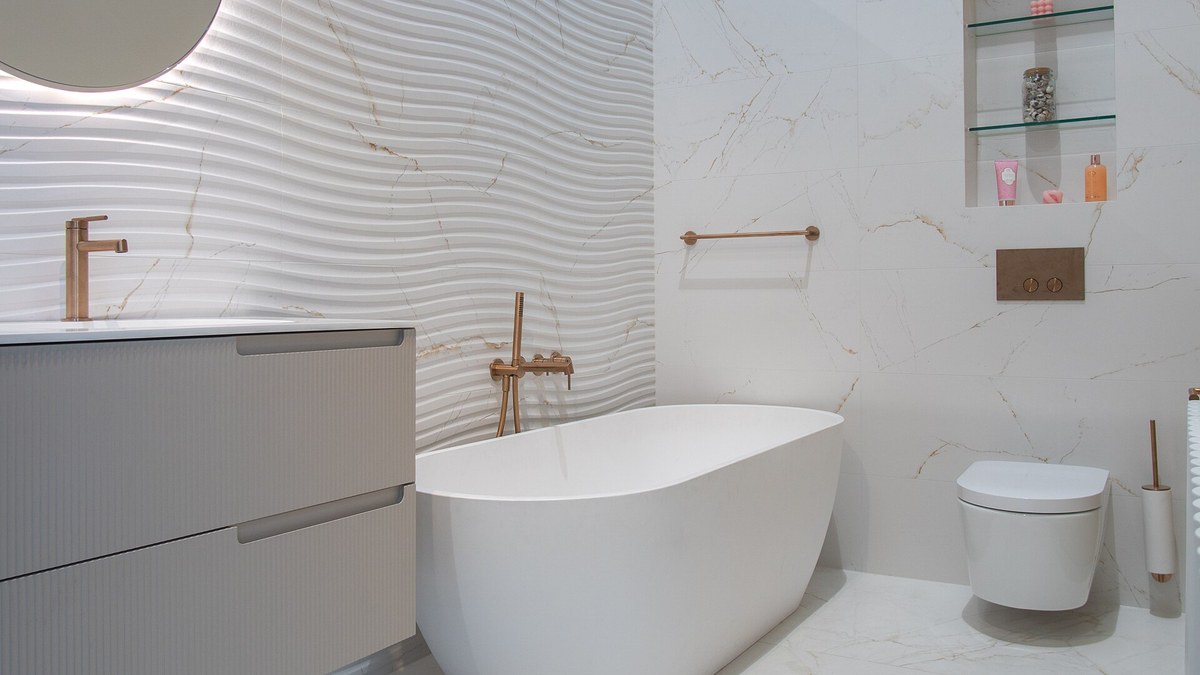
Three-dimensional tiles with fluted, wavy, or geometric reliefs create shadow play that flat tile cannot. Best used on a single feature wall — behind the vanity or in the shower — where lighting can show off the texture.
Cost: $8–$18 per sq ft (materials). Best for: Vanity feature walls and boutique-hotel-style powder rooms.
14. Checkerboard Floor
The black-and-white checkerboard floor is back in a big way — and it works with $2/sq ft ceramic just as well as $20 marble. Keep walls simple so the floor stays the star.
Cost: $2–$10 per sq ft (materials, depending on tile choice). Best for: Vintage, farmhouse, and eclectic bathrooms on any budget.
15. Tadelakt-Style Plaster Look
Inspired by Moroccan tadelakt plaster, these large seamless-look porcelain panels give walls a soft, limewash-like finish with almost no visible grout. The result is calm, spa-like, and very 2026.
Cost: $7–$16 per sq ft (materials). Best for: Minimalist spa bathrooms and wet-room style showers.
Tile Material Guide: What to Choose and Why
Ceramic Tile
Ceramic is the most affordable tile option ($1–$8 per sq ft) and comes in endless colors and sizes. It is softer than porcelain, so it is best for walls and low-traffic floors rather than heavily used bathroom floors.
Porcelain Tile
Porcelain ($3–$12 per sq ft) is denser, harder, and more water-resistant than ceramic — the best all-around choice for bathroom floors and showers. Through-body porcelain (color all the way through) hides chips better than glazed-only tile.
Natural Stone
Marble, travertine, slate, and limestone ($8–$25+ per sq ft) offer unmatched natural beauty but need sealing and gentle cleaners. Stone is porous — skip it if you want a truly low-maintenance bathroom.
Glass Tile
Glass ($7–$20 per sq ft) is non-porous and stain-proof, making it ideal for showers and accents. It can be slippery underfoot, so reserve it for walls rather than floors, and use a white thinset behind translucent glass to avoid shadowing.
Tile Layout Patterns That Change Everything
The same tile can look completely different depending on how it is laid. Before you commit, consider these layout options — most cost nothing extra in materials, only in labor:
- Straight lay (grid): Tiles aligned in neat rows and columns. The cheapest to install, clean and modern, but can look plain with basic tile.
- Running bond (brick pattern): Each row offset by half a tile. The classic subway look; slightly more cuts than straight lay.
- Herringbone: Rectangular tiles set at 45-degree angles in a zigzag. Adds 10–15% material waste and noticeably higher labor — but the custom look is unmistakable.
- Basketweave: Pairs of tiles alternating horizontal and vertical to mimic woven fabric. A vintage favorite that reads high-end with marble.
- Windmill (pinwheel): A small square tile surrounded by four larger rectangles. Charming in powder rooms and a great way to use up mixed sizes.
- Diagonal: Square tiles rotated 45 degrees. Makes small bathrooms feel larger; expect about 10% extra waste from edge cuts.
Pro tip: dry-lay a section first (or ask your installer to) so you can see the pattern at full scale before thinset goes down. What looks good in a 12-inch sample can feel very different across a whole wall.
Budget Planning: What Tile Costs for a 5×8 Bathroom
Here is a realistic materials-only budget for tiling a standard 5×8 bathroom (roughly 100 sq ft of wall/floor tile combined, before waste factor):
- Budget ($300–$700): Ceramic subway tile ($2–$4/sq ft) throughout, standard cement grout, DIY-friendly.
- Mid-range ($700–$1,500): Porcelain wood-look or stone-look tile ($5–$9/sq ft), epoxy grout in the shower, one accent feature.
- Premium ($1,500–$3,000+): Natural marble or zellige ($10–$20/sq ft), designer mosaics, epoxy grout everywhere, intricate layouts.
Add a 10–15% waste factor for cuts and breakage (15–20% for herringbone or diagonal layouts). Professional installation typically doubles the materials cost — budget $8–$15 per sq ft for labor on top.
Grout Selection Tips
Grout is the unsung hero of tile design — it can make or break the final look. Here is what to know:
- Color matters more than you think. Contrasting grout (dark grout with white tile) highlights the pattern; matching grout creates a seamless, larger-feeling surface.
- Epoxy grout for showers. Epoxy grout costs 2–3× more than cement grout but resists stains, mold, and cracking — worth it in wet areas.
- Seal cement grout. Standard sanded or unsanded grout needs sealing at installation and re-sealing every 1–2 years in showers.
- Wider grout lines = more maintenance. Large-format tiles with 1/16-inch joints are easier to keep clean than mosaics with 1/8-inch joints.
- Budget for grout. Grout, thinset, and sealer typically add $1–$3 per sq ft to material costs — do not forget them in your budget.
FAQ: Bathroom Tile Ideas
Can I tile over existing bathroom tile?
Sometimes. If the existing tile is firmly bonded, level, and in good condition, a second layer can go over it with proper surface prep — saving demolition costs of $500–$1,500. But you will lose a little room dimension, and any loose or cracked tiles underneath must be fixed first. When in doubt, tear out: hidden water damage behind old tile is common and expensive to ignore.
What is the most popular bathroom tile in 2026?
Large-format stone-look porcelain and textured subway tiles lead 2026 trends, with zellige and terrazzo close behind for statement looks. Classic white subway tile remains the best-selling budget option.
How much does it cost to tile a bathroom in 2026?
For a standard 5×8 bathroom, expect $1,500–$5,000 for materials and $2,000–$6,000 for professional installation, depending on tile choice and layout complexity. Budget ceramic with simple layouts sits at the low end; natural stone with intricate patterns at the high end.
What tile is best for shower floors?
Small mosaics — penny rounds, 2×2 squares, or small hexagons — are best for shower floors because they conform to the drain slope and provide slip resistance through extra grout lines. Choose porcelain or ceramic with a matte or textured finish.
Is porcelain or ceramic better for bathroom floors?
Porcelain is better for bathroom floors. It is harder, denser, and absorbs less than 0.5% water (versus up to 7% for some ceramics), making it more durable and stain-resistant in wet environments.
Can I mix different tile styles in one bathroom?
Yes — mixing is encouraged, but limit yourself to 2–3 tile types and keep a consistent color palette. A common winning formula: one floor tile, one shower wall tile, and one accent (niche, feature wall, or border).
How We Estimated These Costs
All material prices in this guide are 2026 US planning ranges compiled from Home Depot and Lowe’s retail pricing, Angi cost guides, and contractor-reported project data. Installation ranges ($8–$15 per sq ft) reflect national averages — expect higher rates in major metros (New York, San Francisco, Boston) and lower rates in rural markets. These are planning estimates, not quotes: always get 3 written estimates from licensed tile installers in your area before budgeting.
By Renovation Guide HQ — October 2026
Related guide: Tired grout can make good tile look worn out — learn when regrouting shower tile restores it instead of a full replacement.