By Renovation Guide HQ | October 2026
Quick Answer
Good bathroom lighting is not one fixture. It is three layers working together: task lighting at the vanity for grooming, ambient lighting overhead for general brightness, and accent lighting around mirrors or in the shower for depth and mood. In 2026, a basic vanity lighting refresh costs $300-$800 installed, while a full layered lighting scheme for a primary bathroom runs $1,000-$3,000. The single biggest upgrade you can make is moving from one overhead light to a pair of side sconces at eye level flanking the mirror. That change alone removes the harsh shadows that make shaving and makeup application frustrating, and it instantly gives the room a hotel-like feel.
Bathroom Lighting Types at a Glance
| Type | Best For | Fixture Cost | Install Cost | Total Installed |
|---|---|---|---|---|
| Vanity light bar | Above-mirror task light, small baths | $50-$150 | $100-$250 | $150-$400 |
| Wall sconce pair | Shadow-free face lighting | $80-$400 | $400-$600 | $480-$1,000 |
| Backlit LED mirror | Modern look, even glow | $150-$600 | $150-$300 | $300-$900 |
| Recessed shower light | Wet-zone task lighting | $30-$80 | $125-$300 | $155-$380 |
| Pendant pair | Style statement over vanity | $100-$400 | $300-$600 | $400-$1,000 |
| Ceiling fixture | General ambient light | $60-$250 | $100-$250 | $160-$500 |
| LED strip accent | Mirror glow, toe-kick, niches | $20-$200 | $100-$300 | $120-$500 |
| Dimmer switch | Mood control, night lighting | $25-$60 | $55-$150 | $80-$210 |
10 Bathroom Lighting Ideas for 2026
1. Flanking Wall Sconces in Matte Black
Picture two slim matte black sconces, one on each side of a round or rectangular mirror, glowing softly at face level. This is the gold standard for vanity lighting because light strikes your face from both sides, the way daylight naturally wraps around features. Frosted glass or opal shades diffuse the light so there are no hot spots. Matte black is the dominant 2026 finish, pairing with black faucets and hardware for a cohesive look, though brushed nickel and aged brass remain strong choices. Cost: $480-$1,000 installed for a quality pair.
2. Backlit LED Mirror
Imagine a frameless rectangular mirror floating on the wall with a soft halo of light bleeding from behind its edges. Backlit mirrors deliver perfectly even illumination with no visible fixture, which is why designers call them the cleanest look in modern bathrooms. Many 2026 models include anti-fog technology, dimming, and tunable color temperature that shifts from warm 2700K evening light to crisp 4000K morning light. The glow doubles as a night light, so you never need to flip on harsh overheads at 2 a.m. Cost: $300-$900 installed.
3. Hollywood-Style Globe Vanity Bar
Think of the classic dressing-room mirror ringed with exposed round bulbs, updated for 2026 with slim LED globes in a brushed brass bar. Mounted above the mirror, a globe bar spreads light widely and evenly across the vanity. Frosted globes are the better choice over clear glass, which creates dramatic but unflattering shadows. This style suits transitional and traditional bathrooms and works well when wall space beside the mirror is too narrow for sconces. Cost: $150-$400 installed.
4. Glass Globe Pendants Over the Vanity
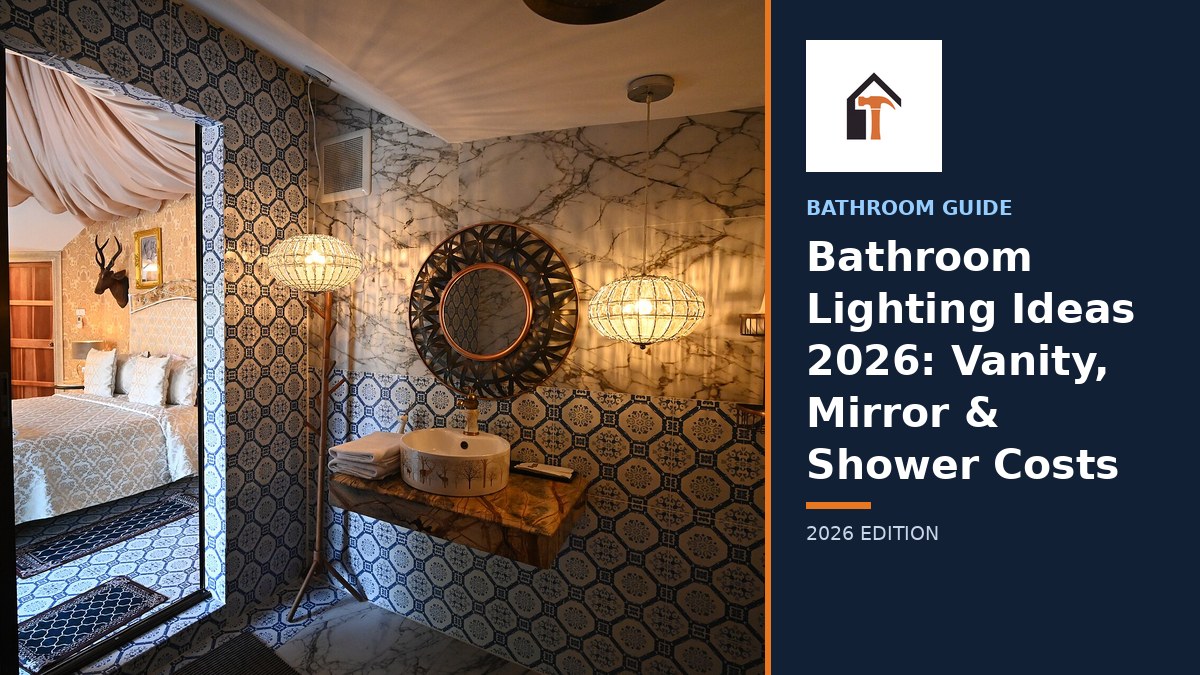
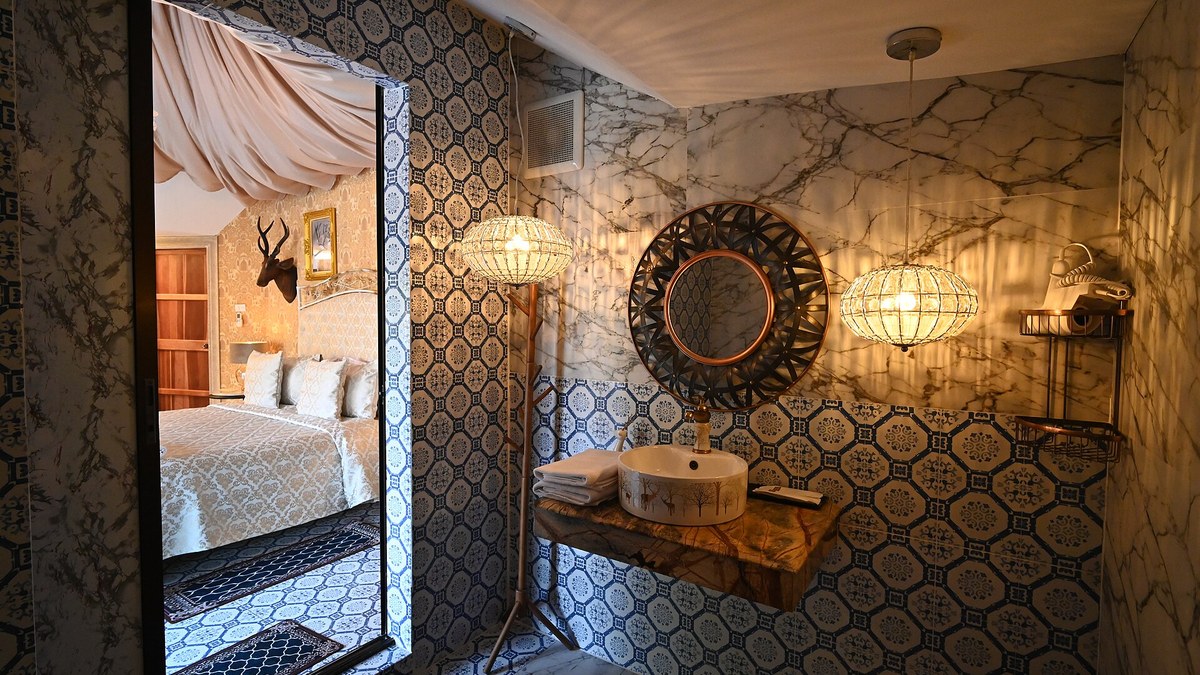
Two small smoked-glass or milk-glass pendants hang from the ceiling on thin black cords, one over each sink of a double vanity. Pendants add vertical interest and a jewelry-like quality that flat ceiling lights cannot match. They work best in bathrooms with ceilings 9 feet or higher, since the globes should hang at roughly eye level without blocking the mirror. In 2026, ribbed and seeded glass textures are trending, scattering light into soft patterns. Cost: $400-$1,000 installed for a pair.
5. Wet-Rated Recessed Shower Light
Visualize stepping into a walk-in shower and having a single warm downlight centered overhead, turning the tile and glass into a glowing alcove. Shower lights must carry a wet-location rating and sit on a GFCI-protected circuit per code. A 4-inch LED recessed can with a warm 3000K temperature is the standard choice. Position it slightly forward of center so light washes down your body rather than directly onto the showerhead. Cost: $155-$380 installed.
6. Under-Cabinet and Toe-Kick LED Strips
A thin ribbon of warm light runs along the base of the vanity where it meets the floor, making a floating vanity appear to hover and giving the room a spa-like calm after dark. LED strips also tuck neatly under wall cabinets or behind a mirror for a hidden glow. Choose high-CRI strips (90+) so colors render accurately, and pair them with a dimmer for full control. Battery-powered motion-sensor strips are a renter-friendly option that needs no wiring at all. Cost: $120-$500 installed for hardwired runs.
7. Statement Chandelier in a Primary Bath
In a large primary bathroom, a small crystal or alabaster chandelier centered over a freestanding tub turns an ordinary room into a retreat. This is pure accent lighting, meant to be layered over task and ambient sources, not a replacement for them. Keep it at least 8 feet above the tub rim and outside the direct splash zone, and choose a damp-rated fixture. The visual payoff is enormous for the cost. Cost: $400-$1,500 installed depending on fixture price.
8. Light Tube or Skylight for Daylight
Nothing flatters a bathroom like real daylight. A tubular skylight, often called a sun tube, channels sunlight from the roof through a reflective tube into a ceiling diffuser, flooding even windowless interior baths with natural light by day. At roughly $500-$1,000 installed, it costs less than a traditional skylight and requires no structural framing changes. Pair it with a solar-powered night light cap so the tube glows softly after dark. Cost: $500-$1,000 installed.
9. Dimmable Smart Lighting System
Imagine saying “bathroom, evening mode” and having the sconces drop to 20 percent while the mirror glow warms to candlelight color. Smart dimmers and tunable-white LED fixtures let one bathroom serve three moods: bright and cool for morning routines, neutral for daytime, warm and dim for evening baths. A smart dimmer switch costs $80-$210 installed, while full tunable fixtures add $150-$400 each. The catch is compatibility: confirm your bulbs and fixtures are rated dimmable before buying the switch.
10. Picture-Light Style Vanity Bar in Aged Brass
Borrowed from art galleries, a slim brass picture light mounted above the mirror casts a warm downward wash that feels intimate and curated. The aged brass finish, warm gold with darkened crevices, is one of 2026’s most requested bathroom metals. This style suits powder rooms and guest baths where flattering ambiance matters more than precision grooming light. Mount it 75-80 inches from the floor and keep the fixture width to about three-quarters of the mirror width. Cost: $200-$500 installed.
Cost by Lighting Type: Fixture Plus Installation
Fixture prices cover what you buy at the store. Installation covers a licensed electrician’s labor, which typically runs $75-$150 per hour. A simple fixture swap on an existing junction box takes under an hour and costs $100-$250 in labor. Running new wiring to a new location costs $300-$450 for one fixture or $400-$600 for a sconce pair, because the electrician must fish wire through walls and add boxes. A full rough-in during a renovation with multiple locations and new circuits runs $500-$800 or more. Always budget the fixture and the labor together, since labor is often half the total.
Placement Rules That Actually Matter
Vanity light bars
Mount the bar 75-80 inches from the floor, centered above the mirror. Choose a fixture about 75 percent of the mirror’s width: for a 36-inch mirror, a 24-30 inch bar is right. Leave at least 4 inches of clearance between the fixture top and the ceiling.
Side sconces
Mount sconces at eye level, 60-65 inches from the floor, so the light source itself sits near face height. Space the pair 28-36 inches apart, one on each side of the mirror. For a double vanity with two mirrors, give each mirror its own pair or its own bar rather than stretching one long fixture across both.
Shower and tub lighting
Any fixture inside the shower or directly above the tub must be wet-rated and on a GFCI-protected circuit. Center recessed lights over the shower stall, positioned slightly forward so light falls on you rather than the fixtures behind you.
Mirrors and accent lighting
Backlit mirrors hang like ordinary mirrors but need a nearby outlet or hardwired connection for the LEDs. LED strips behind a mirror should sit 2-3 inches from the wall edge so the glow reads as a clean halo rather than a harsh line.
Color temperature and brightness
Choose 2700K-3000K for warm, flattering bathroom light. If makeup application is the priority, step up to 3500K-4000K for more accurate color rendering. Look for a CRI of 90 or higher on any fixture used at the vanity; standard LEDs at CRI 80 are fine for ambient ceiling lights but can make skin tones look off in the mirror.
DIY vs Hiring a Pro
Swapping an existing fixture for a new one on the same junction box is a reasonable DIY project if you are comfortable turning off the breaker, testing that power is dead, and connecting three wires. Budget $0 in labor and one careful hour. Everything else belongs to a licensed electrician: running new wire, adding junction boxes, installing circuits for shower lights, and any work in wet locations. Electrical mistakes in a bathroom are not just code violations, they are shock and fire hazards in a room full of water and steam. A pro also verifies that fixtures carry the right damp or wet rating for their location and that GFCI protection is in place where the National Electrical Code requires it.
5 Ways to Save on Bathroom Lighting
You do not need a luxury budget for great bathroom light. First, keep fixtures on existing junction boxes: a straight swap costs $100-$250 in labor versus $400-$600 for new wiring. Second, choose a backlit LED mirror instead of a sconce pair; one mirror replaces two fixtures and two wiring runs. Third, buy fixtures during holiday sales at Home Depot or Lowe’s, where vanity lights routinely drop 20-30 percent. Fourth, add a $80-$210 dimmer to your existing lights before buying new fixtures; dimming alone can transform harsh lighting into evening-friendly ambiance. Fifth, use battery-powered motion-sensor LED strips for accent glow in niches and under vanities. They cost $20-$50, install in minutes, and need no electrician at all.
Frequently Asked Questions
How many lights does a bathroom need?
Plan for three layers: task lighting at the vanity, ambient lighting from the ceiling, and at least one accent such as a mirror glow or shower light. A small powder room can get by with two layers, but a primary bath with a single overhead fixture will always feel flat and shadowy.
What color temperature is best for a bathroom?
2700K-3000K gives warm, flattering light that most people prefer for daily routines. Choose 3500K-4000K if precise makeup application is the main job, since cooler light renders colors more accurately. Tunable fixtures that shift between the two are the most flexible 2026 option.
Do bathroom light fixtures need to be damp rated?
Yes. In a bathroom with a shower or tub, vanity fixtures should carry at least a damp-location rating. Fixtures inside the shower, above the tub, or anywhere subject to direct water contact must be wet-rated. When in doubt, choose the higher rating.
Can I install vanity lights myself?
You can safely replace an existing fixture on an existing box after killing the breaker and verifying power is off. Hire an electrician for new wiring, new box locations, dimmer installations on unfamiliar circuits, and anything in or above the shower.
How much does it cost to add recessed lighting to a bathroom?
Each recessed can costs $125-$300 installed, including the fixture and labor. A typical bathroom needs two to four cans depending on size. Costs rise if the electrician must cut through tile, work around attic obstructions, or add a new circuit.
How We Estimated These Costs
Cost ranges in this guide come from 2026 US pricing data published by Angi, HomeAdvisor, and Home Depot retail listings, cross-checked against contractor-published installation guides from Lumens and Modernize. Fixture prices reflect national retail averages; installation prices reflect licensed electrician labor rates, which run 20-40 percent above average in major metros and below average in rural markets. All figures are planning ranges, not quotes. Get two or three written estimates from licensed electricians in your area before committing, and confirm that every fixture carries the damp or wet rating its location requires.