Quick Answer
A bathtub replacement costs $1,400-$10,000 in 2026, while a walk-in shower costs $1,150-$15,000+, with tub-to-shower conversions typically landing at $6,000-$15,000. On resale, the safest play is the industry’s golden rule: keep at least one bathtub in the home. A walk-in shower in the primary bathroom plus one tub elsewhere pleases the widest buyer pool. Choose a shower for daily use, accessibility, and small spaces; keep the tub if you have young kids, plan to sell within 1-3 years, or it’s your home’s only tub.
Cost Comparison Table
| Project Type | Typical 2026 Cost Range | Labor Share | Best For |
|---|---|---|---|
| Standard tub replacement (same footprint) | $1,400-$4,200 | ~50% | Budget refresh, rental properties |
| Tub + surround replacement (tile walls) | $2,500-$8,000 | 50-60% | Dated tub-shower combo upgrade |
| Freestanding soaking tub install | $4,000-$10,000 | 40-60% | Large primary baths, luxury feel |
| Prefab walk-in shower insert | $1,150-$6,000 | 40-50% | Fast installs, tight budgets |
| Tub-to-shower conversion | $6,000-$15,000 | 50-60% | Most common remodel path |
| Custom tiled walk-in shower | $8,000-$15,000+ | 50-60% | Primary suites, aging in place |
| Steam shower package (add-on) | $2,800-$7,100 | Varies | Wellness/luxury upgrades |
Note: Labor typically accounts for 40-60% of any of these projects, according to Angi’s 2026 cost data. Plumbers run $45-$200/hour; permits average around $250.
Why Conversions Cost More Than Replacements
Swapping a tub for a tub in the same spot is straightforward: the drain, water lines, and footprint already exist. Converting a tub to a walk-in shower is a bigger job – demolition of the tub and surround, floor prep and waterproofing (Schluter-Kerdi style membranes or hot-mop), drain relocation or re-sloping, tiling the walls and floor, and usually a glass door or fixed panel ($530-$1,400). Add custom niches ($200-$600), a bench ($500-$1,500), or frameless glass, and you’re firmly in the $8,000-$15,000 band.
Regional Cost Differences
Where you live moves these numbers significantly. In high-cost metros (Northeast, West Coast, Chicago), expect to pay 15-40% above the national ranges above. In the Southeast and rural markets, prices often land 5-15% below national averages. Permits add another layer: some municipalities charge $100-$300 for a bathroom remodel permit, while others can charge $500-$1,000+. Always get quotes from local contractors.
The Cheapest Path: Refinish, Reline, or Replace?
If budget is tight and the tub itself is the problem, you have three cheaper options before a full remodel:
- Refinishing/reglazing: $300-$600. A professional coating lasts 5-10 years.
- Tub liner (acrylic over old tub): $1,200-$3,000 installed. Fast (one day) but adds a plastic layer some buyers notice.
- Straight replacement: $1,400-$4,200. Best value when the surround is already in good shape.
Resale Value Analysis
The “Keep At Least One Tub” Rule
Ask any real estate professional: removing the home’s only bathtub narrows your buyer pool. Families with young children – roughly a third of buyers in most suburban markets – actively filter for at least one tub. The widely recommended rule:
- Multi-bath home: Convert the primary bath tub to a walk-in shower freely. Keep the tub in the hall or kids’ bath.
- Single-bath home: Think twice. A shower-only single bathroom can turn off family buyers.
- Selling within 1-3 years: Prioritize resale – keep at least one tub and use neutral finishes.
- Staying 10+ years: Remodel for your lifestyle, but keep resale-conscious choices where cheap to do.
What the Data Says About Bathroom ROI
According to Zonda’s Cost vs. Value Report, a typical midrange bathroom remodel recovers roughly 60% of its cost at resale. The National Association of Realtors’ Remodeling Impact Report consistently ranks bathroom updates among the highest “joy scores”. The takeaway: a clean, updated bathroom sells faster whether it has a shower, a tub, or both.
Which Choice Do 2026 Buyers Prefer?
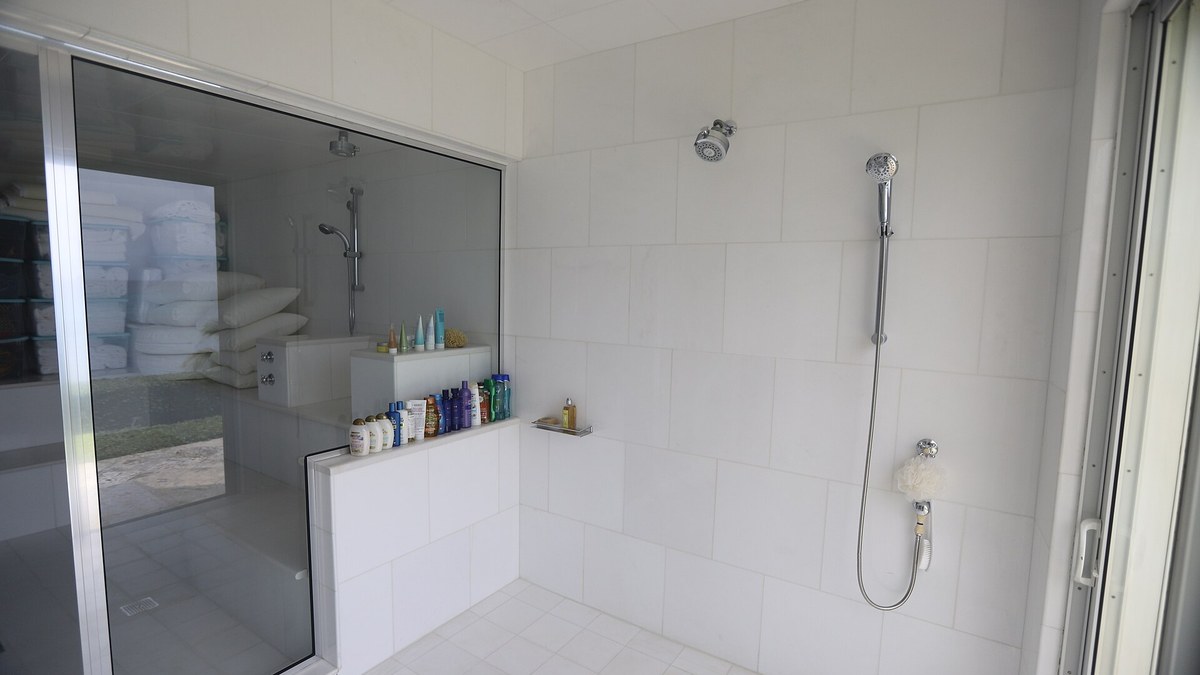
In the primary suite, a large walk-in shower with frameless glass, large-format porcelain tile, a bench, and a linear drain is the headline feature buyers photograph and remember. In secondary baths, a simple, clean tub with a tile surround is perfectly fine. The luxury tier is both: a walk-in shower and a freestanding soaking tub in a large primary bath.
Accessibility & Aging in Place
Why Showers Win on Safety
The bathroom is where most home falls happen, and a traditional tub requires stepping over an 18-inch wall. A walk-in shower with a zero-threshold (curbless) entry, grab bars, a fold-down bench, and a handheld showerhead dramatically reduces fall risk.
Tub Options for Aging in Place
If you’re keeping a tub, a walk-in tub ($3,000-$10,000 installed) with a watertight door, built-in seat, and grab bars is the accessibility answer. For most aging-in-place projects, a curbless shower is the better long-term choice.
Space Requirements
Minimum Sizes That Actually Work
- Standard alcove tub: 60 x 30 (5 ft x 2.5 ft).
- Code-minimum shower: 30 x 30 per the International Residential Code.
- Comfortable walk-in: 36 x 48 minimum; 36 x 60 is the recommended sweet spot.
- Curbless shower: typically 36 x 60 or larger, or a wet-room layout.
Small Bathroom Strategy
In bathrooms under 40 square feet, replacing a tub with a walk-in shower is often transformative: the same footprint suddenly feels larger because glass and open tile replace a bulky tub wall.
When You Have Room for Both
In primary suites of 60+ square feet, the winning layout is a walk-in shower (42 x 60 with bench) plus a freestanding tub positioned as a visual centerpiece. Budget $12,000-$25,000 for the pair.
Water Use & Running Costs
A standard showerhead flows at 2.5 gallons per minute, so an 8-minute shower uses 20-25 gallons. A full bath uses 30-50 gallons. Over a year, a shower-preferring household can save 3,000-5,000+ gallons.
Cleaning & Maintenance
Walk-in showers with large-format tile or solid-surface slabs are the easiest to maintain. Grout-heavy custom showers need periodic sealing (every 1-2 years, $200-$400). Honest verdict: a well-built shower is less work than a tub-shower combo.
Decision Guide: Which Should You Choose?
Choose the Walk-In Shower If…
- You shower daily and rarely take baths
- Someone in the home is over 60 or has mobility issues
- The bathroom is small and feels cramped
- You have another bathtub elsewhere in the home
- You’re remodeling the primary suite in a mid-to-upscale home
Keep (or Install) the Bathtub If…
- You have young children or plan to within 5 years
- It’s the home’s only bathtub and you may sell within 3 years
- You genuinely take weekly baths
- Your budget is under $5,000
- You’re in a family-heavy suburban market
7 Decision Factors That Actually Matter
1. Who lives in the house — and who will
This is the factor that settles most decisions. Young children or pets? Keep the tub — Angi’s comparison calls tubs the clear winner for bathing kids and pets. Mobility issues, or planning to age in place? The walk-in shower wins on every dimension: no 14–18-inch wall to climb over, curbless entry possible, grab bars and a bench easy to add. If both apply (grandparents visiting + grandkids), the answer is usually both — a tub in one bath, a walk-in shower in another.
2. Your resale timeline
This is the one realtors repeat like a mantra: keep at least one bathtub in the house if you might sell. A Coldwell Banker agent told Real Simple that homes without any bathtub “can be challenging for prospective buyers and renters” — families with young kids shop for tubs and will pay top dollar for the right house. NASDAQ’s renovation roundup adds the technical point: a bathroom without a tub can’t be listed as a full bath. If you’ll sell within 5 years, removing your only tub is the riskiest move in this guide. If you’ll stay 15+ years, prioritize your own comfort — the bathroom will be dated again by sale time anyway.
3. Space: the 5-foot wall problem
A standard alcove tub is 60 inches long — it demands a 5-foot wall and about 12.5 sq ft of floor (planning estimate). A compact walk-in shower works in roughly 10 sq ft on a 3–4 ft wall (planning estimate). That’s why Angi calls walk-in showers ideal for smaller bathrooms: in a 5×8, swapping the tub for a shower can free a full foot of room depth. Our small bathroom guide covers space-saving layouts in detail.
4. Upfront budget vs. long-term value
A like-for-like tub swap (~$2,100) is the budget play. A walk-in shower ($4,200–$8,500+) is the investment play — and it can pay back: Zonda’s 2025 Cost vs Value report shows midrange bathroom remodels recouping 80.0% at resale, and buyer-preference roundups consistently list walk-in showers among the bathroom updates buyers appreciate. Neither choice is “cheap” or “expensive” in absolute terms — match the spend to how long you’ll live with it.
5. Water and energy use
Showers win the water math decisively. A full bathtub takes about 70 gallons; a five-minute shower uses 10–25 gallons (EPA figures via Aquabliss). Angi puts typical baths at 25–100 gallons. The EPA’s WaterSense program notes that standard showerheads use 2.5 gallons per minute while WaterSense-labeled heads use no more than 2.0 gpm — and the average family can save 2,700 gallons a year with efficient showerheads. In drought-prone states or on a well/septic system, that difference matters every month.
6. Maintenance reality
Walk-in showers have fewer soap-scum traps than tubs — Angi notes fewer spots where grime builds up. The tradeoff: glass doors and panels need regular squeegeeing or they spot (planning estimate for the chore, not the figure — anyone with glass doors knows). Tubs need the tub ring scrubbed and caulk lines maintained, but a plain acrylic alcove tub is about as low-maintenance as bathing gets. Call this one a wash — pick based on everything else.
7. The jetted tub trap
Worth a special warning: if “tub” to you means a jetted whirlpool, reconsider. Realtors now treat jetted tubs as a negative — buyers see them as space-hogging, water-guzzling, and hard to clean, and “would much rather have a large, luxurious walk-in shower,” per Parade’s realtor roundup. A plain soaking tub keeps the resale value without the jets’ baggage. If you love jet soaks, buy them for yourself — just don’t expect the market to pay for them.
The 5-Minute Decision Framework
Answer these in order — the first “yes” that applies is usually your answer:
- Do you have kids under 10 or bathe pets regularly? → Keep a tub (at least in the family bath).
- Is this the only bathtub in the house, and might you sell within 5 years? → Keep the tub. Removing it shrinks your buyer pool and the room can’t list as a full bath.
- Is anyone in the household dealing with mobility issues, or are you renovating to age in place? → Walk-in shower, curbless if the slab allows it. See our walk-in shower cost guide for curbless pricing ($6,000–$10,000).
- Is the bathroom under 45 sq ft and dominated by the tub? → Walk-in shower frees the most space. See our small bathroom guide.
- Do you actually soak — at least weekly? → Keep the tub. A shower you resent is not an upgrade.
No clear winner? The classic compromise is a tub-shower combo ($2,000–$4,500 installed per HomeGuide): one fixture, both functions, full-bath classification intact. It’s not as elegant as a dedicated walk-in shower or as relaxing as a deep soaking tub, but it offends nobody — including future buyers.
Aging in Place: Where the Walk-In Shower Pulls Away
If this renovation is about staying in your home for decades, the comparison stops being close. Falls are the leading risk in the bathroom, and the tub’s 14–18-inch wall is the single biggest barrier (planning estimate for the wall height on standard tubs). A curbless walk-in shower eliminates the step entirely, adds grab bars and a bench naturally, and keeps working as mobility changes. The premium alternative — a walk-in tub at $4,000–$22,100 per Angi — keeps the soak but costs as much as a full custom shower. One honest note: bathroom accessibility upgrades are home improvements, not medical equipment — don’t count on insurance or Medicare to cover them (planning estimate; confirm with your plan).
Permits & Codes
A like-for-like tub swap in the same footprint sometimes avoids a permit; anything that moves plumbing, changes the drain, or alters electrical needs one — HomeGuide puts tub-job permits at $50–$250. A tub-to-shower conversion almost always requires a permit and inspection because the drain, waterproofing, and valve all change — budget $150–$1,000 (planning estimate; confirm with your local building department). Lead paint: in pre-1978 homes, federal law requires contractors to be lead-safe certified when disturbing painted surfaces — the EPA’s RRP rule. Asbestos: pre-1980 homes may hide it in old flooring or insulation — test before demo.
FAQ
Is a walk-in shower cheaper than a bathtub?
Not usually. Replacing a standard tub runs $1,400-$4,200, while a tub-to-shower conversion costs $6,000-$15,000.
Does removing a bathtub hurt resale value?
Only if it’s the home’s only tub. Removing the primary bath tub while keeping one in a secondary bath is generally well-received.
What’s the minimum size for a walk-in shower?
Code minimum is 30 x 30, but 36 x 48 is the smallest that feels comfortable. For a primary bath, 36 x 60 or larger is ideal.
Can I convert a tub to a shower without a full gut renovation?
Sometimes. It depends on the existing plumbing layout and whether the drain position works for the new shower pan.
How long does a tub-to-shower conversion take?
Typically 5-10 working days for a standard conversion. Custom tile or steam shower builds can run 2-3 weeks.
How much does it cost to replace a tub with a walk-in shower in 2026?
A tub-to-shower conversion runs $1,200–$3,600 per Angi — but that’s the conversion labor scope; a full custom walk-in shower with tile and glass lands at $4,200–$8,500+. See our tub-to-shower conversion cost guide for the complete breakdown.
How We Estimated These Costs
Cost ranges compiled from Angi’s 2026 shower installation cost data, HomeGuide’s walk-in shower cost breakdowns, and contractor-published pricing from multiple US markets. Resale and ROI context references Zonda’s Cost vs. Value Report and the National Association of Realtors’ Remodeling Impact Report. All figures are national planning ranges.
By Renovation Guide HQ – October 2026
Related guide: Whichever option you choose, our bathroom remodel cost guide has the 2026 price ranges to plan the rest of the project around it.
Related guide: For a second opinion on the same decision, read our dedicated walk-in shower vs tub guide with cost and resale analysis.