By Renovation Guide HQ | Updated October 2026
Quick Answer
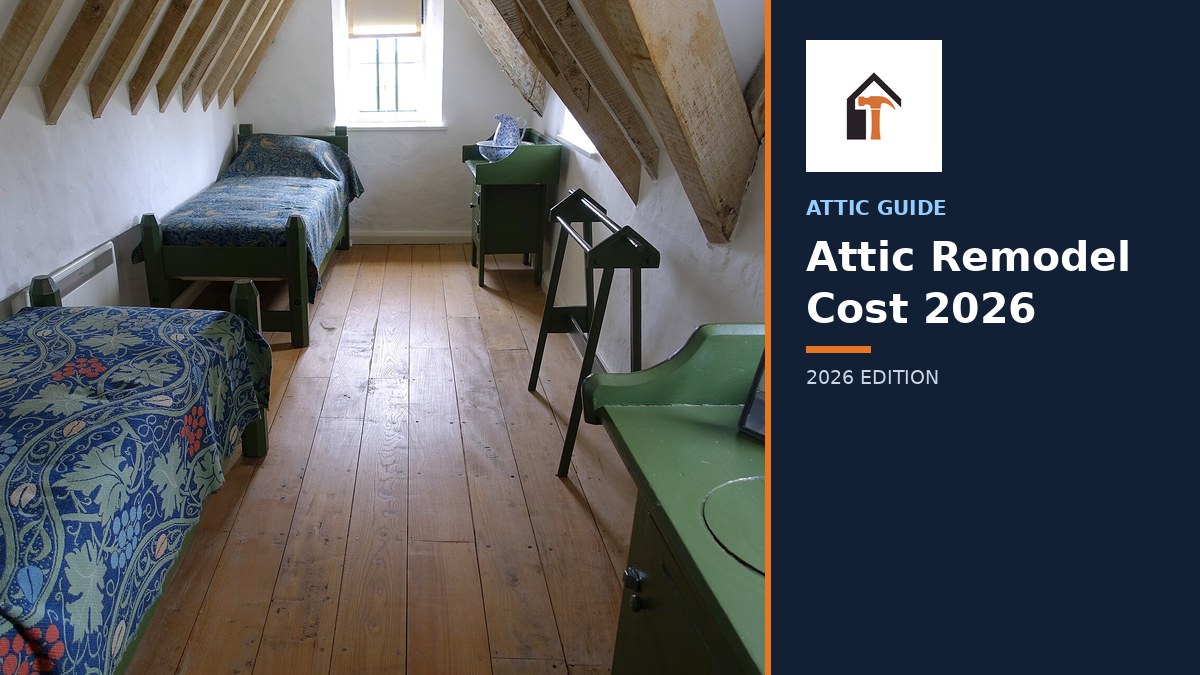
An attic remodel costs $7,500 to $35,000 in 2026 for a basic conversion, with a national average around $20,000 according to industry data. A full bedroom-with-bathroom conversion can run $40,000 to $100,000. Insulation-only upgrades are far cheaper at $1,000 to $3,500 for most attics. Expect to pay $30 to $60 per square foot for a finished attic, depending on your attic size, structural needs, and finish level.
Cost Breakdown
Here is what each part of an attic remodel typically costs in 2026, based on published contractor data.
Insulation: $1,000 to $3,500
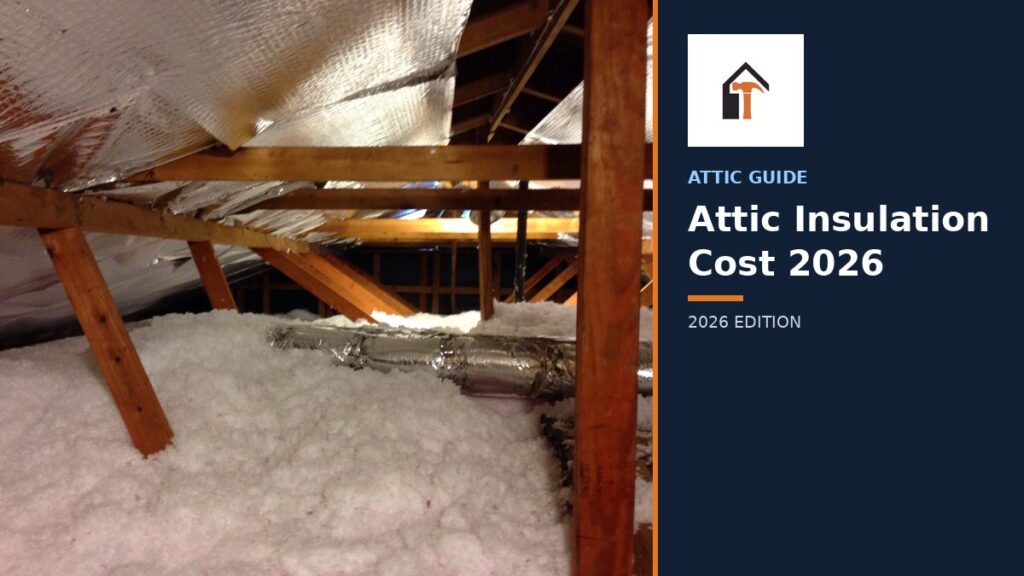
Insulation is required whether you finish the attic or not. Blown-in fiberglass or cellulose costs $1 to $3 per square foot installed, while spray foam runs $4 to $7 per square foot. A typical 1,000 sq ft attic costs $1,000 to $3,000 to insulate with standard materials. For a finished attic, insulating the roof deck (not just the floor) with spray foam or rigid foam creates a conditioned envelope, which is the modern best practice for conversions.
Flooring: $1,500 to $5,000
Most attics need floor reinforcement before finishing, since ceiling joists are not built for living loads. Subfloor reinforcement plus flooring runs $1,529 to $4,852 per industry estimates. Engineered hardwood or luxury vinyl plank are the most practical attic choices. Carpet is cheaper but hides future moisture problems.
Drywall: $1,000 to $2,600
Hanging and finishing drywall on attic walls and ceilings costs $1.50 to $3.00 per square foot, or roughly $1,000 to $2,600 for a typical attic project. Sloped ceilings take longer to mud and finish than flat walls, which is why attic drywall prices skew higher than normal rooms.
Electrical: $1,000 to $3,000
New circuits, outlets, lighting, and smoke detectors require a licensed electrician. Budget $1,000 to $3,000 depending on how much wiring needs to run from the panel and whether the panel has spare capacity. If your panel needs upgrading to serve the new space, add $1,500 to $3,000 more.
HVAC: $2,000 to $8,000
Extending ductwork to an attic costs $10 to $25 per linear foot, but attics are notoriously hard to heat and cool. Many contractors recommend a dedicated ductless mini-split for the attic instead, at $2,000 to $5,000 installed. This gives the new room its own temperature control without overloading your main system.
Stairs: $1,500 to $4,000
If your attic only has a pull-down hatch, code-compliant stairs are required for a finished space. A basic straight staircase installed by a carpenter runs $1,500 to $4,000. Spiral stairs save space but cost more and feel steep for daily use.
Windows and Egress: $500 to $9,500
Skylights cost $500 to $1,500 each installed. A full egress window meeting bedroom code requirements can cost $700 to $9,500 depending on whether the roof or gable wall needs structural modification. This is often the surprise line item in attic conversions.
Permits: $200 to $1,000
Building, electrical, and mechanical permits typically total $200 to $1,000 depending on your city. Skip the permits and you risk stop-work orders, insurance denials, and appraisal problems when you sell.
Cost by Attic Size
Square footage drives the budget more than any other factor. Here is a realistic planning table for a finished attic, assuming standard finishes:
| Attic Size | Basic Finish | Mid-Range Finish | With Bathroom |
|---|---|---|---|
| 300 sq ft (small bedroom) | $7,500 – $12,000 | $12,000 – $20,000 | $25,000 – $45,000 |
| 500 sq ft (large bedroom) | $12,000 – $20,000 | $20,000 – $32,000 | $35,000 – $60,000 |
| 800 sq ft (bedroom + sitting area) | $18,000 – $30,000 | $30,000 – $48,000 | $50,000 – $90,000 |
| 1,000 sq ft (full apartment feel) | $22,000 – $35,000 | $35,000 – $60,000 | $60,000 – $100,000+ |
These assume per-square-foot finishing costs of $30 to $60, consistent with published 2026 data. Bathrooms roughly double the cost because plumbing, fixtures, waterproofing, and tile add so many trade hours. For insulation-only upgrades, the math is simpler: multiply your attic square footage by $1 to $3 for blown-in insulation or $4 to $7 for spray foam.
Insulation Options Compared
Choosing insulation matters more in an attic than anywhere else in the house, because the attic sees the hottest summer temperatures and the coldest winter drafts. Here is how the common options compare:
| Insulation Type | Installed Cost per Sq Ft | R-Value per Inch | Best For |
|---|---|---|---|
| Blown-in fiberglass | $1.00 – $2.50 | R-2.5 | Budget-friendly top-ups over existing insulation |
| Blown-in cellulose | $1.50 – $3.00 | R-3.5 | Eco-friendly option with good gap filling |
| Fiberglass batts | $2.00 – $4.00 | R-3.0 | Clean, accessible attics with regular joist spacing |
| Open-cell spray foam | $3.00 – $5.00 | R-3.7 | Air sealing plus insulation in one step |
| Closed-cell spray foam | $5.00 – $7.00 | R-6.5 | Maximum R-value, moisture barrier, roof-deck conversions |
For a finished attic conversion, spray foam on the roof deck is the professional standard because it air-seals and insulates the roof structure itself, keeping ductwork and the new room inside the conditioned envelope. For insulation-only projects, blown-in cellulose over a properly air-sealed attic floor gives the best value per dollar. Energy Star recommends R-38 to R-60 for most US climate zones, which typically means 12 to 20 inches of blown-in material.
Conversion vs Insulation-Only
These are two completely different projects. An insulation-only upgrade means air sealing plus blowing insulation to the recommended depth. It costs $1,000 to $3,500 for most attics, takes one day, and cuts heating and cooling bills immediately. It adds zero living space but pays for itself in energy savings.
A full conversion turns the attic into finished living space: floors, walls, electrical, HVAC, stairs, and often windows and a bathroom. This costs $7,500 to $35,000 for a simple finish and $40,000 to $100,000 with a bathroom. It adds real square footage and resale value. The National Association of Realtors reports an attic bedroom conversion with a small bath has a national median cost of $65,000 and retains about 61 percent of its value at resale.
The honest rule: insulate if your goal is comfort and energy bills. Convert if your goal is space. Do not do a half-finished conversion to save money, because an unpermitted finished attic can actually hurt your resale.
Code Requirements
Attic conversions must meet the same building codes as any other living space. The big four rules, drawn from the International Residential Code used across most US states:
Ceiling Height
Habitable rooms need a minimum ceiling height of 7 feet over at least 50 percent of the required floor area. Areas with ceilings below 5 feet do not count as habitable space at all. If your attic ridge is under 7 feet 6 inches, a legal conversion is probably not possible without raising the roof.
Egress
Any attic bedroom needs an emergency escape opening: a window with at least 5.7 square feet of clear opening, a minimum of 20 inches wide and 24 inches high, with the sill no more than 44 inches above the floor. This is the rule that drives many attic projects over budget, because cutting an egress opening into a roof or gable wall is structural work.
Structural Capacity
Attic floors must support living-space loads, typically 30 pounds per square foot of live load in most jurisdictions. Standard 2×6 ceiling joists on 16-inch centers often do not qualify and need sistering or engineered reinforcement. Get a structural evaluation before you commit to a conversion.
Smoke and CO Alarms
Finished attics used as bedrooms require interconnected smoke alarms in the room, in the hallway serving it, and on every level of the home, plus carbon monoxide alarms near fuel-burning appliances. Budget $150 to $300 for code-compliant alarms if your home is older.
Project Timeline
Knowing how long an attic project takes helps you plan around your household. An insulation-only upgrade takes one to two days: half a day for air sealing and baffles, then a few hours to blow insulation to depth. A basic attic finish (flooring, drywall, electrical, paint, no bathroom) takes a contractor crew 3 to 6 weeks, with most of the time spent on framing, drywall finishing, and waiting on inspections. A full bedroom-and-bath conversion takes 2 to 4 months, because plumbing rough-in, tile work, and multiple inspection cycles stretch the schedule. Permit approval alone can add 2 to 6 weeks before work starts in busy jurisdictions, so apply for permits before you order materials or schedule trades.
DIY vs Pro
Insulation-only: This is one of the best DIY projects in home renovation. Renting a blower from a home improvement store is often free with a material purchase, and blowing cellulose or fiberglass takes a weekend. DIY cost runs $400 to $1,200 versus $1,000 to $3,500 for professional installation. Air sealing the attic floor with caulk and foam is also very DIY-friendly.
Conversion: Most of a conversion needs a pro. Structural reinforcement, electrical, HVAC, egress windows, and stairs all require licensed trades and permits. A skilled DIYer can realistically handle insulation, drywall hanging, painting, and flooring, saving 30 to 50 percent on labor. But acting as your own general contractor on a conversion is a major undertaking that can stretch a 4-week project into 4 months.
The honest math: DIY makes sense for insulation-only upgrades and cosmetic finish work. Hire pros for anything structural, electrical, or permit-triggering. For a full conversion, get at least three bids and check that each contractor is licensed, insured, and experienced with attic conversions specifically.
Ways to Save
- Keep it simple. A guest room or office conversion without a bathroom saves $10,000 to $25,000 in plumbing costs.
- Use a mini-split. A ductless mini-split for $2,000 to $5,000 is usually cheaper and more effective than extending ductwork through a hot attic.
- Do the insulation yourself. Blown-in insulation is the easiest high-value DIY in this project.
- Reuse what you can. Existing stairs, if code-compliant, and an adequate electrical panel save thousands.
- Get three quotes. Attic conversion quotes vary wildly because every attic is different. Three bids protect you from the outlier.
FAQ
How much does it cost to finish an attic in 2026?
Between $7,500 and $35,000 for a basic conversion, with a national average near $20,000. Simple insulation upgrades cost $1,000 to $3,500, while a bedroom with a bathroom runs $40,000 to $100,000.
Is an attic conversion worth the money?
Usually yes if you need space. The National Association of Realtors reports about 61 percent cost recovery at resale for an attic bedroom with a bath, and it is typically cheaper than building an addition. Insulation-only upgrades pay back through energy savings instead.
Can any attic be converted to living space?
No. You need at least 7 feet of ceiling height over half the floor area, adequate structural floor capacity, and a way to add code-compliant stairs and an egress window. Many low-pitch attics fail the height test and cannot be legally converted.
Do I need a permit to finish my attic?
Yes. Attic conversions trigger building, electrical, and often mechanical permits in virtually every US jurisdiction. Unpermitted conversions can void insurance coverage and cause problems at appraisal or sale. Permit costs run $200 to $1,000.
How long does an attic remodel take?
An insulation-only upgrade takes one to two days. A basic attic finish takes 3 to 6 weeks with a contractor. A full bedroom-and-bath conversion takes 2 to 4 months, mostly because of framing, plumbing, and inspections.
How We Estimated These Costs
Cost ranges in this guide come from published 2026 data: SoFi’s attic remodel analysis (average finish $7,500 to $35,000; national average near $20,000), Thumbtack’s 2026 attic remodeling cost data (national average range $4,224 to $23,012), and the National Association of Realtors Remodeling Impact Report (attic bedroom with bath median $65,000, 61 percent value retention). Insulation pricing reflects HomeAdvisor 2026 installed-cost data ($1 to $3 per square foot for blown-in and batt materials, $4 to $7 for spray foam), and material pricing is consistent with Home Depot retail listings. Energy-efficiency guidance follows Energy Star recommendations for attic R-values by climate zone. All figures are planning ranges, not contractor quotes. Labor rates vary by region, so always get three local estimates before budgeting.
Related guide: Applying the same thinking below grade? Our basement finishing cost guide covers what a full basement conversion runs in 2026.