By Renovation Guide HQ
Quick Answer
A new bathroom mirror costs $25 to $800 depending on type, size, and features. A basic frameless mirror for a single vanity runs $25 to $90, a framed mirror $40 to $250, an arched mirror $60 to $300, a medicine cabinet $80 to $400, and a backlit LED mirror $100 to $800. Professional hanging costs $50 to $150 on top, per Angi and Home Depot handiwork pricing. Most homeowners spend $120 to $450 total for a quality mirror, professionally installed, in 2026.
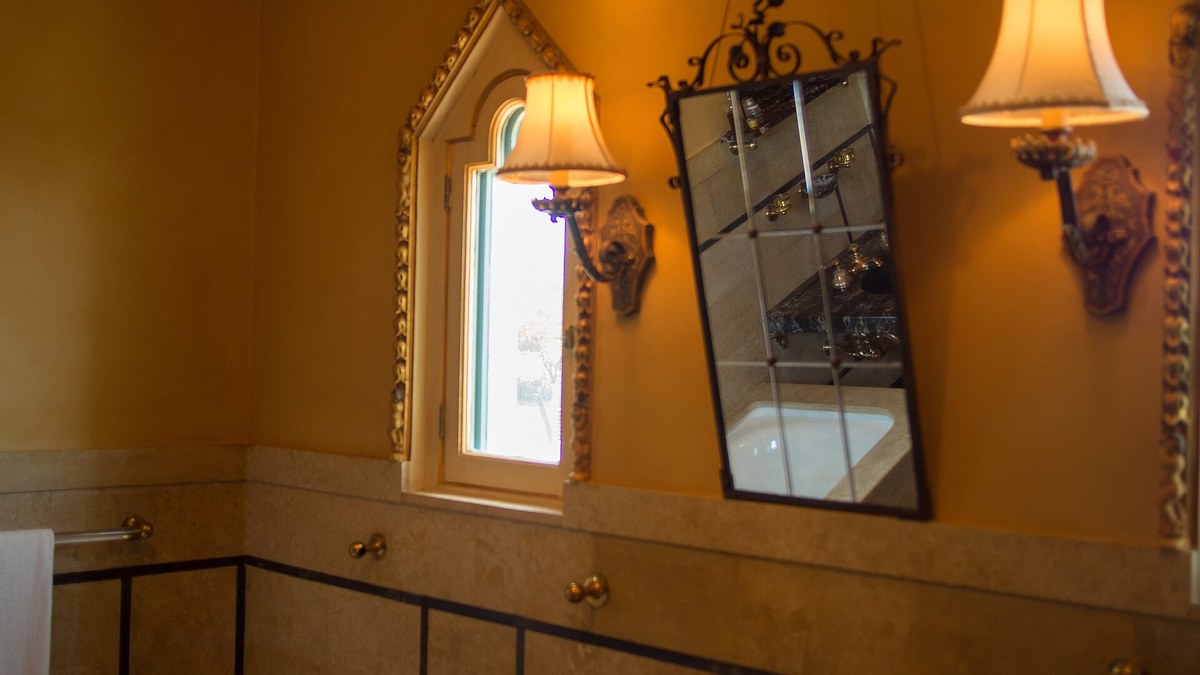
The right mirror does three jobs at once: it bounces light so the bathroom feels bigger, it gives you a clear view for grooming, and it sets the style tone of the whole room. Designers consistently rank the mirror as one of the highest-impact, lowest-cost upgrades in any bathroom.
Bathroom Mirror Type Comparison Table
| Mirror Type | Mirror Cost | Install Cost | Total Range | Best For |
|---|---|---|---|---|
| Frameless plate glass | $25 – $90 | $50 – $100 | $75 – $190 | Clean, modern, budget-friendly looks |
| Framed mirror | $40 – $250 | $50 – $120 | $90 – $370 | Adding warmth, color, and texture |
| Arched mirror | $60 – $300 | $50 – $120 | $110 – $420 | Softening sharp lines, 2026 trend look |
| Medicine cabinet | $80 – $400 | $75 – $200 | $155 – $600 | Hidden storage in small bathrooms |
| Backlit / LED mirror | $100 – $800 | $100 – $250* | $200 – $1,050 | Task lighting, anti-fog, luxury feel |
| Round mirror | $35 – $200 | $50 – $100 | $85 – $300 | Pedestal sinks, powder rooms |
| Custom cut mirror | $10 – $20 per sq ft | $75 – $200 | $150 – $600 | Wall-to-wall or oversized coverage |
* Hardwired backlit models need an electrician; plug-in models hang like any framed mirror.
Cost by Mirror Type (Mirror + Installation)
Prices below reflect 2026 US national average retail pricing from big-box stores and online retailers, plus pro installation rates reported by Angi. All figures are in US dollars.
1. Frameless Plate Glass Mirrors: $75 to $190 installed
Frameless mirrors are the workhorse of the bathroom world: a polished plate-glass sheet with beveled edges that disappears into the room, bouncing light around and making small bathrooms feel larger. A standard 24 x 36 inch frameless mirror costs $25 to $60 at Home Depot or Lowe’s; larger panels run $60 to $90, or roughly $10 per square foot custom-cut. A handyman hangs one in under an hour for $50 to $100. Best for modern, minimalist, and rental-friendly bathrooms.
2. Framed Mirrors: $90 to $370 installed
Framed mirrors are where style enters the picture. A slim black metal frame reads modern farmhouse, reclaimed wood reads rustic warmth, brushed brass reads classic luxury. Prices track frame material and size: a 24 x 32 inch black-metal framed mirror starts around $40 to $70; solid-wood or brass frames in the 30 x 36 range run $90 to $180; designer or oversized pieces reach $200 to $250. Hanging costs $50 to $120, and most are light enough for easy DIY. Best when the mirror should carry design weight, especially matched to vanity hardware and faucet finishes.
3. Arched Mirrors: $110 to $420 installed
Arched mirrors are the defining bathroom trend of 2026. The gentle curve softens the hard rectangles of vanity and tile and draws the eye upward. A 20 x 30 inch arched mirror with a thin brass or black frame costs $60 to $120; mid-range 24 x 36 models run $120 to $220; large statement arches reach $250 to $300. Installation is $50 to $120. Note: arches rise higher than flat-top mirrors of the same stated height, so confirm your wall has room. Best for modern bathrooms that need softness and for resale staging.
4. Medicine Cabinets: $155 to $600 installed
A medicine cabinet is two upgrades in one: a mirror plus hidden storage for items that clutter a vanity top. Basic surface-mount single-door cabinets run $80 to $150; mid-range double-door beveled models cost $150 to $250; premium recessed or lighted cabinets with anti-fog glass and in-cabinet outlets run $220 to $400, reaching $800 at the luxury end. Installation is $75 to $200: surface-mount is straightforward, but recessed models need cutting between studs. Best for small bathrooms and drawerless vanities.
5. Backlit / LED Mirrors: $200 to $1,050 installed
Backlit LED mirrors are the fastest-growing category in 2026. Built-in LEDs cast a soft halo from behind the edges or shine through a frosted face strip, giving even, shadow-free light with no harsh chin shadows. Entry-level touch-dimmer models cost $100 to $200; mid-range with adjustable color temperature and anti-fog run $200 to $400; large architectural models reach $500 to $800. Installation runs $100 to $250: plug-in models hang like any framed mirror ($50 to $120), but hardwired models need an electrician, adding $100 to $200. Best for primary baths and spa-style remodels; the anti-fog feature alone is worth the premium.
6. Round Mirrors: $85 to $300 installed
Round mirrors bring instant design lift for little money: the circle breaks up all the rectangles in powder rooms and above pedestal sinks, and pairs work well over double vanities. A 24-inch round mirror with a thin metal frame costs $35 to $80; 30 to 36 inch models run $80 to $150; oversized 40-inch-plus rounds reach $150 to $200. Installation is $50 to $100. Center the mirror 57 to 60 inches from the floor, with 4 to 6 inches between the faucet top and the mirror’s bottom edge.
7. Custom Cut Mirrors: $150 to $600 installed
Custom mirrors are cut to your exact wall size by a glass shop: the answer for wall-to-wall coverage above a double vanity or a full mirrored wall. Glass costs roughly $10 to $20 per square foot, plus $75 to $200 for pro installation, since large pieces are heavy and unforgiving. A wall-to-wall mirror over a 60-inch double vanity (about 20 square feet) runs $200 to $400 for the glass and $100 to $200 to install, making the bathroom feel enormous. The trade-off is cleaning, since fingerprints and water spots show on large glass.
Size Guide: Matching Mirror Width to Your Vanity
Follow these three rules and you will get sizing right every time.
Rule 1: Keep the mirror 2 to 4 inches narrower than the vanity on each side
A 36-inch vanity pairs with a 28 to 32 inch wide mirror; a 48-inch vanity with 40 to 44 inches; a 60-inch double vanity with either one 52 to 56 inch mirror or two 24 to 28 inch mirrors centered over each sink. The margin of wall on each side frames the mirror and keeps the composition balanced.
Rule 2: Center the mirror at eye level, 57 to 60 inches from the floor
Leave 4 to 6 inches between the faucet top and the mirror’s bottom edge so splashes do not constantly spot the glass. In households with big height differences, choose a taller mirror (36 inches or more) so everyone gets a full-face view.
Rule 3: Give double vanities double mirrors (usually)
Two identical mirrors, each centered over a sink, look more intentional than one long mirror and give each user their own zone. The exception is a wall-to-wall custom mirror, which trades individual grooming zones for maximum light and spaciousness.
Common standard mirror sizes
| Vanity Width | Mirror Width | Mirror Height | Typical Shape |
|---|---|---|---|
| 24 in (powder room) | 20 – 22 in | 30 – 36 in | Round or rectangular |
| 30 in | 24 – 28 in | 32 – 36 in | Rectangular or arched |
| 36 in (most common) | 28 – 32 in | 36 – 40 in | Any style |
| 48 in | 40 – 44 in | 36 – 42 in | Rectangular or oval |
| 60 in (double) | 2 x 24 – 28 in, or 1 x 52 – 56 in | 36 – 42 in | Pair or wall-to-wall |
| 72 in (double) | 2 x 28 – 32 in, or 1 x 64 – 68 in | 36 – 44 in | Pair or wall-to-wall |
Shape and Style Trends for 2026
Arches everywhere
The arch is the defining mirror shape of 2026, in brass, matte black, and unlacquered bronze. The curve breaks up rectangular tile and square vanities and photographs well for resale listings. If you buy one trend mirror this year, make it an arch.
Backlit halo lighting goes mainstream
LED halo mirrors have fallen into the $150 to $300 range, moving from luxury installs into mid-range remodels. The soft ring of light flatters faces and removes the need for bulky light bars; arched LED mirrors combine both trends in one piece.
Mixed metals, larger scales
The matchy-matchy era is over: brushed brass frames pair with matte black faucets, as long as each finish repeats at least twice in the room. Mirrors are also getting bigger, with taller panels running from backsplash to near ceiling, bouncing more light and making rooms feel larger. Freeform blob and capsule shapes add a sculptural option for powder rooms.
Warm minimalism
Thin-profile wood frames in white oak and walnut are replacing stark black metal in cozy modern bathrooms, keeping a contemporary line while adding the warmth all-white bathrooms often lack.
DIY vs Pro: Hanging and Electrical
Most mirror installs are a straightforward DIY job. Hanging a framed, round, or arched mirror takes a level, a drill, wall anchors, and 30 to 60 minutes: find studs or use rated anchors, mark holes at the right height, drill, set anchors, hang. Two people make it safer for anything over 30 inches wide.
Large frameless panels and custom glass are worth hiring out at $50 to $100, and recessed medicine cabinets ($75 to $200) lean pro too, since cutting between studs goes wrong fast if you hit a vent or wire.
Backlit LED mirrors split in two. Plug-in models hang like any framed mirror and are fine for DIY. Hardwired models that tie into a wall switch are an electrician’s job ($100 to $200 extra): bathroom circuits need GFCI protection and damp-location wiring rules. Safety note: always use rated anchors on drywall (a 36 x 42 inch mirror can weigh 25 to 40 pounds) and turn off the circuit at the breaker before touching bathroom wiring.
Frequently Asked Questions
How much does it cost to install a bathroom mirror?
Professional installation costs $50 to $150 for a standard framed, round, or arched mirror, per Angi and Home Depot handiwork pricing. Large panels and recessed cabinets run $75 to $200, and hardwired LED mirrors add $100 to $200 for the electrician. Most projects land between $120 and $450 total in 2026.
What size mirror should I get for my vanity?
Keep the mirror 2 to 4 inches narrower than the vanity on each side: 28 to 32 inches wide for a 36-inch vanity, or two 24 to 28 inch mirrors for a 60-inch double vanity. Center the mirror 57 to 60 inches from the floor, with 4 to 6 inches between the faucet top and the mirror’s bottom edge.
Are backlit LED mirrors worth it?
For most primary bathrooms, yes. They deliver shadow-free task lighting wall sconces struggle to match, and anti-fog keeps the glass clear after showers. Quality models now run $100 to $400, and plug-in versions avoid electrician costs entirely.
Should the mirror match the faucet finish?
Matching looks clean, but 2026 trends favor intentional mixing: a brass frame with matte black faucets works as long as each finish appears at least twice in the room. Avoid a third or fourth finish, which is where mixes start to look accidental.
Can I hang a bathroom mirror myself?
Yes for framed, round, and arched mirrors up to about 36 inches wide with a level, drill, and rated anchors. Hire a pro for large frameless panels, custom glass, recessed cabinets, and hardwired LED mirrors. At $50 to $150, pro installation is cheap insurance against a shattered mirror.
How We Estimated These Costs
Cost ranges in this guide are planning estimates based on 2026 US national averages from three sources: retail pricing at Home Depot and Lowe’s, professional installation rates reported by Angi (typical pro installs $50 to $150; bathroom mirror replacements $80 to $200), and Home Depot handiwork pricing for mirror hanging ($50 to $100). LED and medicine cabinet ranges additionally reflect major online retailer listings for 2026.
Actual prices vary by region, size, frame material, and whether electrical work is required. Get two or three local quotes for any job involving wiring or recessed cabinets, and treat all figures as budgeting ranges rather than fixed quotes.
Planning a bigger refresh? Read our guides on bathroom remodel cost, small bathroom ideas, and bathroom vanity cost next.