Kitchen Backsplash Ideas 2026: 12 Stunning Designs from Budget to Luxury
By Renovation Guide HQ — October 2026
Quick Answer
The trending kitchen backsplash styles for 2026 are full-height slab countersplashes, handmade-look zellige in warm tones, and quiet, low-contrast tile that lets cabinetry shine. A standard 30-square-foot backsplash costs $500–$1,700 installed for most tile options (about $10–$50 per square foot), with slab quartz running $80–$150+ per square foot. Budget-friendly classic subway tile starts around $7 per square foot installed, while authentic Moroccan zellige lands at $20–$60 per square foot.
1. Classic White Subway Tile — The Timeless Budget Hero
What it looks like: Rows of glossy 3×6-inch white ceramic rectangles laid in a running-bond (brick) pattern, with slim grout lines that catch the light. Under warm under-cabinet lighting, the beveled edges of a classic subway tile create a soft, dimensional shimmer. Paired with warm white cabinets and a butcher-block counter, it reads clean and calm. Paired with dark green shaker cabinets and brass pulls, the same tile suddenly looks rich and collected.
Cost: $7–$20 per square foot installed. For a 30 sq ft kitchen, expect $210–$600 — the cheapest “forever” option.
Best for: Resale-safe kitchens, first renovations, anyone who wants a decision they’ll never regret. Use tonal grout (warm white with white tile) — high-contrast white/black grout is declining in 2026 because it reads harsh and grid-like.
2. Handmade Zellige — Warm White
What it looks like: Authentic Moroccan zellige is hand-cut glazed terracotta, and you can see the human hand in every tile: slightly uneven edges, tiny glaze pits, and color that shifts from milky white to pale honey as light moves across the wall. Under pendant lighting, the surface looks alive — shimmering and dimensional in a way machine-made tile can’t replicate. It’s the antidote to sterile kitchens.
Cost: $20–$60 per square foot installed. A 30 sq ft wall runs $600–$1,800. Authentic zellige is porous and needs sealing.
Best for: Artisanal, character-rich kitchens; warm-wood cabinets; anyone chasing the “European farmhouse” look. If the budget balks, a zellige-look ceramic (idea #3) gets you 80% there.
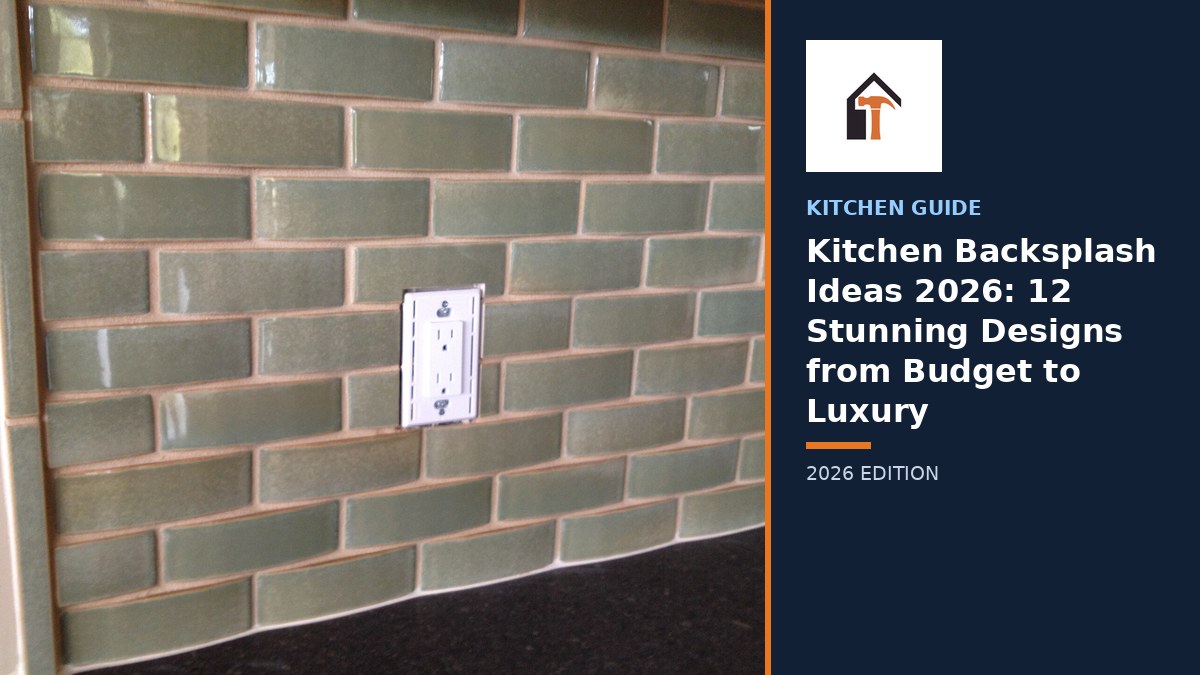
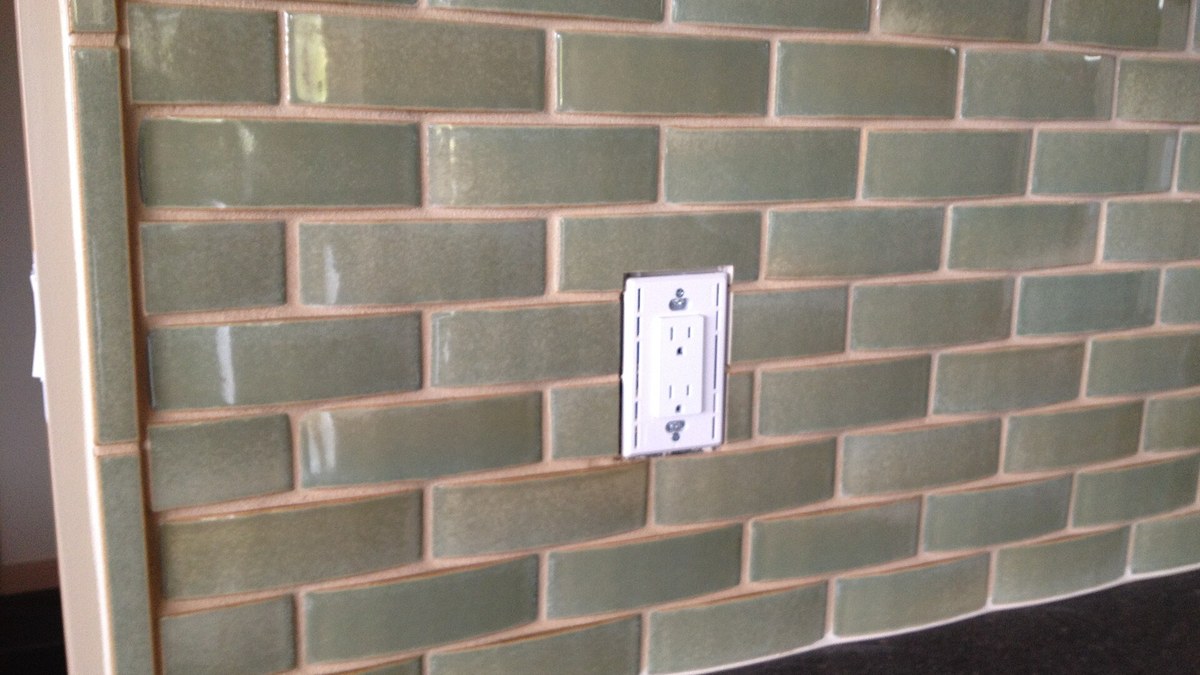
3. Sage Green Zellige-Look Tile — The 2026 Color Move
What it looks like: A soft sage or aloe green with handmade-style glaze variation, in a 2.5×8-inch or 4×4-inch format. Green reads as neutral in a kitchen — it pulls the garden indoors and flatters both white and warm-wood cabinetry. Installed in a running bond or stacked vertically, the color deepens near the range hood and glows near the window. It’s colorful without being loud, which is exactly the 2026 mood: color-forward but calm.
Cost: $10–$25 per square foot installed ($300–$750 for 30 sq ft). Zellige-look porcelain tile runs about $6–$10 per square foot for material at Home Depot.
Best for: Design-forward kitchens on a mid-range budget; pairing with white oak or warm white cabinets.
4. Full-Slab Countersplash — The 2026 Statement
What it looks like: Your countertop material — quartz, quartzite, or marble — continues straight up the wall to the upper cabinets with no grout lines at all. A heavily veined calacatta-style quartz slab behind the range becomes the room’s artwork: dramatic charcoal veining sweeping across a luminous white field. It’s seamless, grout-free, and effortless to wipe down. The fastest-rising backsplash trend of 2026.
Cost: $80–$150+ per square foot installed for quartz; marble slab can reach $130+. A 30 sq ft wall: $2,400–$4,500+. Budget trick: run slab only behind the range and use simple tile on the side walls.
Best for: Contemporary luxury kitchens; homeowners who hate scrubbing grout; high-end remodels where the wall is the centerpiece.
5. Carrara Marble Herringbone — Classic Luxury
What it looks like: Soft white Carrara marble cut into small rectangles, woven into a herringbone zigzag. The pattern’s chevrons add motion and tailored energy, while the marble’s feathery gray veining keeps it timeless. With honed (matte) finish, it reads old-money elegant; polished, it’s more formal. The zigzag catches light differently from every angle — a backsplash you notice without it shouting.
Cost: $25–$60 per square foot installed ($750–$1,800 for 30 sq ft). Marble tile material runs $5–$25 per sq ft, and herringbone labor adds 15–25% over straight-set. Marble needs sealing and can etch from acids.
Best for: Timeless-luxury kitchens; transitional homes; feature walls behind the range.
6. Matte Black Subway — Moody and Modern
What it looks like: Flat, light-absorbing black rectangles in a classic brick pattern — all the familiarity of subway tile with none of the sweetness. Against white uppers and warm wood lowers, a matte black backsplash grounds the room like a well-cut blazer. In an all-white kitchen, it adds the contrast architects call “visual weight” without pattern clutter. Keep grout tonal (charcoal on black) for a seamless monolith effect.
Cost: $8–$22 per square foot installed ($240–$660 for 30 sq ft).
Best for: Modern and industrial kitchens; making white cabinets pop; hiding everyday cooking splatter better than any light tile.
7. Vertical Stacked Subway — The Modern Twist
What it looks like: Take the same 3×6 subway tile and stand it upright in straight vertical columns instead of horizontal rows. The vertical lines draw the eye up, making low ceilings feel taller and narrow galley kitchens feel less cramped. In a handmade-look glaze — warm white, seafoam, or dusty blue — the columns ripple with light like fabric. It’s a small change in layout with an outsized effect on style.
Cost: $10–$25 per square foot installed ($300–$750 for 30 sq ft). Slightly more labor than running bond because alignment must be perfect.
Best for: Low-ceiling kitchens; modern farmhouse and Japandi styles; anyone who wants subway tile that doesn’t look like everyone else’s.
8. Sea-Glass Mosaic Accent
What it looks like: Small glass mosaics in watery aqua, seafoam, and pale turquoise — like frosted sea glass caught mid-shimmer. Glass bounces light around the room, so it’s a gift to dark or north-facing kitchens. Used full-wall it can feel busy (busy mosaics are fading in 2026), but as a framed accent behind the range or a short feature run, it’s luminous and joyful.
Cost: $18–$55 per square foot installed ($540–$1,650 for 30 sq ft). Glass is brittle to cut and needs a special blade, which pushes labor up.
Best for: Light-starved kitchens; coastal and beach-cottage styles; a short accent run rather than the full wall.
9. Fluted 3D Textured Tile — Sculptural Statement
What it looks like: Tiles with carved flutes, ribs, or wave relief that turn the backsplash into sculpture. Under directional lighting — pendants or under-cabinet LEDs — the ridges cast soft shadows that change through the day. A fluted tile in warm white reads like linen; in deep green, like lacquered bamboo. It’s the maximal texture with minimal color.
Cost: $20–$50 per square foot installed ($600–$1,500 for 30 sq ft).
Best for: Statement walls behind the range; minimalist kitchens that need one textural moment; modern organic design.
10. Terrazzo Tile — Speckled Personality
What it looks like: A confetti of marble and stone chips suspended in a warm cement or porcelain base — speckles of cream, rust, charcoal, and sage scattered like a painter’s palette. Large-format terrazzo tiles have fewer grout lines and a calmer read; small terrazzo-look porcelain keeps the price friendly. It’s playful but grounded, and the multicolor speckle hides splatters beautifully.
Cost: $15–$45 per square foot installed ($450–$1,350 for 30 sq ft).
Best for: Eclectic and mid-century kitchens; hiding everyday mess; adding pattern without a busy print.
11. Brushed Stainless Steel — Industrial Edge
What it looks like: A sheet of brushed stainless running full-height — cool, reflective, unapologetically industrial. It mirrors the room back at you, doubling perceived space, and wipes clean in seconds. Behind a professional-style range, it completes the chef’s-kitchen fantasy. Keep it brushed (not mirror) to soften fingerprints, and pair with warm wood to keep it from feeling like a commercial kitchen.
Cost: $20–$85 per square foot installed ($600–$2,550 for 30 sq ft).
Best for: Industrial and modern kitchens; serious home cooks; behind-the-range applications where grease cleanup matters most.
12. Peel-and-Stick Refresh — The $200 Weekend Fix
What it looks like: Vinyl tiles that look surprisingly convincing — faux subway, faux marble, faux tin — pressed onto a clean wall with no thinset, no grout, no mess. From three feet away, a good peel-and-stick subway backsplash fools most guests. It’s not a forever material (keep it away from the range’s direct heat), but for renters, staging a home for sale, or buying time before a full remodel, it’s unbeatable.
Cost: $4–$8 per square foot ($120–$240 for 30 sq ft), DIY. Installation is a Saturday afternoon with a utility knife and a level.
Best for: Renters; home staging; budget refreshes; testing a bold look before committing to real tile.
Backsplash Material Comparison
| Material | Installed Cost (per sq ft) | Maintenance | Best For |
|---|---|---|---|
| Ceramic subway tile | $7–$20 | Moderate (grout) | Timeless, budget, resale-safe |
| Porcelain (incl. zellige-look) | $10–$25 | Low, no sealing | Hard-working family kitchens |
| Authentic zellige (handmade) | $20–$60 | Higher (porous, seal) | Warm, artisanal character |
| Marble / natural stone | $20–$60 | Higher (seal, etches) | Timeless luxury feature walls |
| Glass mosaic | $18–$55 | Low material, grout-heavy | Dark kitchens, accent runs |
| Slab / countersplash | $80–$150+ | Very low, no grout | Luxury, easy-clean kitchens |
| Stainless steel | $20–$85 | Low (wipe down) | Industrial, behind the range |
| Peel-and-stick | $4–$8 | Low, not heat-safe | Renters, quick refresh |
Ranges are 2026 US installed estimates synthesized from Angi, HomeGuide, and Home Depot pricing. Slab work varies widely with cutouts and edge detail.
DIY Installation Tips
- Measure twice, buy 10–15% extra. A standard backsplash is 18 inches tall between counter and cabinets, but full-height-to-ceiling runs are trending. Calculate square footage, then add waste for cuts — 15% for simple layouts, 20%+ for herringbone or diagonal.
- Prep the wall properly. Remove outlet covers, degrease with TSP or a degreaser, and patch any holes. Tile bonds to clean, flat drywall or cement board — never over wallpaper or peeling paint.
- Start level, not at the counter. Counters aren’t always level. Find the lowest point, snap a level ledger line, and start your first full row there; cut tiles meet the counter where the gap hides best.
- Rent the right saw. A wet tile saw ($50–$75/day rental) makes clean cuts on ceramic and porcelain. Glass and stone need a diamond blade rated for the material — or consider hiring out just the cutting.
- Grout the next day, seal the week after. Let thinset cure 24 hours before grouting. Use sanded grout for joints over 1/8 inch, unsanded for tighter joints. Seal natural stone before grouting and again after.
- Know when to hire. Herringbone, full-height walls, slab, and anything involving electrical outlet moves are pro territory. Backsplash labor runs $5–$20 per square foot — for a 30 sq ft wall, a pro adds roughly $150–$600, often worth it for complex patterns.
FAQ
How much does a kitchen backsplash cost in 2026?
Most installed tile backsplashes cost $10–$50 per square foot, with a typical 30 sq ft kitchen landing around $500–$1,700. Angi reports an average near $1,000 for a 35 sq ft job. Slab backsplashes are a separate category at $80–$150+ per square foot installed.
What is the most popular backsplash for 2026?
Full-height slab countersplashes and handmade-look zellige in warm tones are the defining trends of 2026. Warm, low-contrast walls age best — classic subway with tonal grout, warm-neutral porcelain, or a restrained slab will look current far longer than any bold pattern.
What backsplash is out of style in 2026?
The 4-inch strip backsplash is out — full-height coverage has replaced it. Also fading: busy glass-and-stone mosaics (too much grout), high-contrast white-tile/black-grout, stark cool grays, and penny tile, which now reads as a bathroom detail.
Can I install a backsplash myself?
Yes — straight-set ceramic or porcelain subway tile is one of the most DIY-friendly tile projects. Budget a weekend, rent a wet saw, and buy 15% extra tile. Hire a pro for herringbone, natural stone, glass mosaics, or full-height slab.
Should the backsplash be lighter or darker than the countertop?
Neither rule is absolute, but contrast usually wins: a light backsplash brightens a dark countertop, and a darker backsplash grounds a light one. The 2026 preference is low-contrast harmony — pick a backsplash that echoes a tone already in the countertop rather than fighting it.
How We Estimated These Costs
Cost ranges in this guide are 2026 US planning estimates synthesized from HomeGuide’s backsplash cost data, Angi’s 2026 installation figures (average ~$1,000 for a 35 sq ft job), and current material pricing at Home Depot. Labor typically accounts for 50–70% of a backsplash project because of the precise cutting around outlets and cabinets, and complex patterns (herringbone, diagonal) add 15–25% to labor. Regional rates vary — metro markets generally run above national averages. Treat these figures as planning ranges, not quotes: get two to three itemized estimates from local tile installers before budgeting.