Transparency: Renovation Guide HQ carries no affiliate links. Every cost figure below is either linked to its published source or clearly labeled as a planning estimate. Countertop pricing varies by region, slab grade, and fabricator — get itemized local quotes before committing. If you need contractor quotes, contact us and we will point you in the right direction.
By Renovation Guide HQ · Updated October 8, 2026
Quick Answer: Quartz vs. Granite Countertops
Quartz costs $50–$200 per sq ft installed; granite costs $40–$175 per sq ft installed — the ranges overlap heavily, so price alone rarely decides it, per HomeGuide and SlabWise’s 2026 comparison. Maintenance winner: quartz — it is non-porous and never needs sealing. Heat winner: granite — it tolerates temperatures up to about 1,200°F, while quartz resins can scorch around 300–400°F. Durability: a near-tie — both score 6–7 on the Mohs hardness scale and last 25–50+ years with proper care. Choose quartz if you want zero-maintenance consistency; choose granite if you cook hot, want a one-of-a-kind slab, or need an outdoor-rated surface.
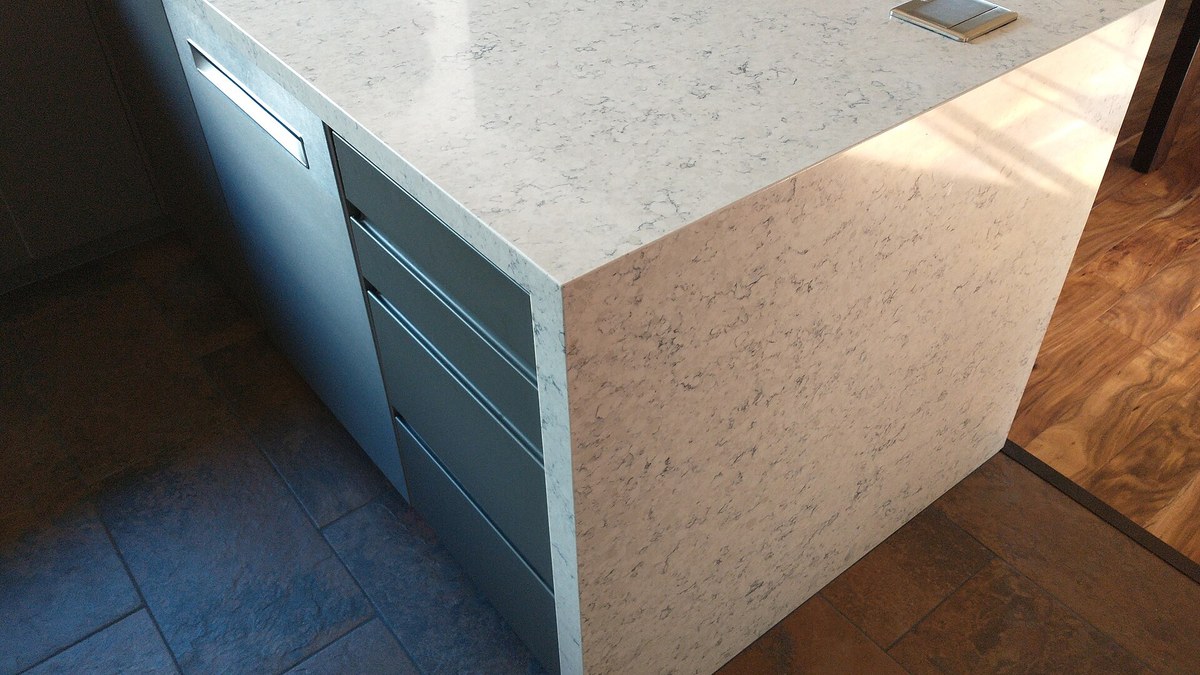
Quartz and granite together cover more than 75% of US kitchen countertop installations, per 2026 market data. They are the two materials every homeowner compares — and the two that get confused most often, because one is a natural stone and the other only looks like one. Quartz is an engineered stone: roughly 90–95% ground quartz crystal mixed with polymer resins and pigments, then compressed under heat and pressure. Granite is 100% natural stone: slabs cut directly from quarried bedrock. That single difference — manufactured vs. mined — explains nearly every performance gap below. This guide compares them head-to-head on cost, durability, maintenance, and resale, with 2026 figures you can take to a fabricator.
Quartz vs. Granite: Side-by-Side Comparison
| Factor | Quartz | Granite |
|---|---|---|
| What it is | Engineered stone: 90–95% crushed quartz + polymer resin | 100% natural stone, cut from quarried slabs |
| Installed cost per sq ft | $50–$200 | $40–$175 |
| 30 sq ft kitchen total | $1,500–$8,000 | $1,200–$6,000 |
| Durability / hardness | Mohs 7; very scratch-resistant; rarely cracks | Mohs 6–7; excellent scratch resistance; natural fissures can crack |
| Heat resistance | Moderate — resin scorches around 300–400°F; always use trivets | Excellent — up to ~1,200°F; hot pans generally safe |
| Stain resistance | Excellent — non-porous, resists wine, oil, coffee | Good when sealed; porous stone absorbs spills if unsealed |
| Sealing | Never — no sealing, ever | Yes — every 1–3 years |
| Daily maintenance | Soap, water, microfiber | Soap and water + specialty cleaner; polish to retain shine |
| Appearance | Consistent color and pattern; repeatable across slabs | Unique per slab; natural variation and movement |
| Outdoor / UV use | No — resin fades and yellows in sunlight | Yes — weather- and UV-resistant |
| Lifespan | 25–50+ years | 25–50+ years |
| Resale value | Strong; slight 2026 buyer-preference edge | Strong; prestige factor in traditional/luxury markets |
Sources: SlabWise 2026, HomeGuide, The Spruce, Lowe’s.
What Quartz and Granite Cost in 2026
Both materials span a wide range, and the national bands overlap so much that the slab you pick matters more than the material category. Here is where the money goes:
| Cost factor | Quartz | Granite | Source |
|---|---|---|---|
| Material only (per sq ft) | $15–$50 | $12–$20 | MSI; StoneDepotUS |
| Entry-level installed (per sq ft) | $50–$70 | $40–$70 | edstoneinc; Boston 2026 pricing |
| Mid-range installed (per sq ft) | $70–$140 | $70–$120 | Langs Kitchens; edstoneinc |
| Premium/exotic installed (per sq ft) | $140–$200 | $150–$200+ | Boston 2026 pricing |
| Typical 30 sq ft kitchen (total) | $1,500–$8,000 | $1,200–$6,000 | HomeGuide |
Three things move you within those bands. First, the slab tier: value-line quartz and common granite colors (Santa Cecilia, New Venetian Gold) sit at the bottom; designer quartz collections (Cambria, Caesarstone) and exotic, bookmatched granite sit at the top. Second, fabrication details: edge profiling runs $10–$30 per linear foot, and each sink cutout adds $100–$300, per professional cost data. Waterfall islands, extra seams, and long overhangs that need reinforcement push both materials up. Third, what is NOT in the quote: Boston-area 2026 pricing notes that old-countertop removal is typically excluded — ask whether tear-out, disposal, and haul-away are in your number, per fabricator pricing.
One cost that surprises people: material is only 40–60% of the installed price, per AskDoss’s 2026 cost comparison — the rest is templating, CNC cutting, edge polishing, and setting a slab that can weigh close to 100 pounds for a 36-inch section. Compare installed quotes, not slab prices.
Quartz Pros and Cons
Pros:
- Zero sealing, ever. The resin-bound surface is non-porous, so there is no annual sealing appointment and no sealing product to buy.
- Superior stain resistance. Wine, oil, coffee, tomato sauce — the resins make quartz considerably more stain-resistant than sealed granite, per The Spruce.
- Consistent patterns. What you pick in the showroom is what arrives — pattern repeat is predictable across slabs, which matters for large kitchens and islands.
- More hygienic surface. Lower porosity means less susceptibility to harboring bacteria than granite, per The Spruce.
- Rarely cracks. The uniform manufactured composition means quartz rarely cracks from inherent flaws, unlike natural stone’s fissures.
- Lower lifetime maintenance cost. No sealer, no annual re-seal labor, and standard soap-and-water cleaning.
Cons:
- Heat is its weakness. Resin scorches around 300–400°F — a hot pan can leave a dull scorch mark that polishing cannot fully fix. Trivets are mandatory, per Lowe’s.
- No outdoor use. UV exposure fades and yellows the resin binders over time — quartz is not rated for outdoor kitchens, per SlabWise.
- Damaged areas are hard to restore. If the surface is scorched or deeply scratched, surface polishing may not restore the factory finish — the area may need replacement.
- Can look “engineered.” Patterns repeat, and the surface has a different depth than natural stone. Premium quartz fools most visitors, but the look is controlled rather than organic.
Granite Pros and Cons
Pros:
- Best-in-class heat resistance. Up to about 1,200°F — a hot pan straight from the burner will not scorch it in most cases, per SlabWise.
- One-of-a-kind slabs. No two slabs are identical — natural veining and mineral movement give each kitchen a distinctive look engineered materials cannot fully replicate.
- Excellent scratch resistance. At Mohs 6–7, granite resists knife work and daily abrasion as well as anything in a kitchen.
- Outdoor-rated. UV-stable and weather-resistant — the right choice for outdoor kitchens and patio bars.
- Entry-level deals exist. Common-color granite at $40–$70/sq ft installed gives natural stone at near-quartz-entry prices, per comparison pricing.
- Prestige in listings. The word “granite” still moves MLS listings in traditional and luxury neighborhoods, per Charlotte 2026 market reporting.
Cons:
- Sealing is forever. Every 1–3 years for the life of the countertop — a professional seal runs $150–$300 per visit, or 30–45 minutes of DIY time, per Boston 2026 pricing.
- Stains if neglected. Wine, oil, and coffee soak into unsealed stone. Skip the annual sealing and you risk permanent marks.
- Slab lottery. You can fall in love with a sample and get a bold vein across the full slab — inspect YOUR slab before fabrication, not the sample.
- Heavier than quartz. May need solid cabinet support verification.
- Needs specialty cleaners. Standard abrasive cleaners can strip the sealer; granite needs dedicated stone cleaners plus periodic polishing to retain shine, per Lowe’s.
Durability Compared: Heat, Scratches, Stains, and Lifespan
On everyday toughness, this is close to a draw. Both score 6–7 on the Mohs hardness scale — the difference is not meaningful for kitchen use, per hardness analysis. Both resist scratches excellently and both last 25–50+ years with proper care, per SlabWise.
The differences show up at the extremes. Heat: granite wins decisively — it is one of the most heat-resistant countertop materials available, and you can generally set a hot pot directly on it, per The Spruce. Quartz’s resins scorch around 300–400°F; a hot pan near the cooktop can leave a permanent dull mark. Stains: quartz wins decisively — its non-porous surface shrugs off wine, oil, and coffee without any treatment, while granite depends entirely on its seal being current. Cracking: quartz’s uniform composition rarely cracks from inherent flaws; granite’s natural fissures are weak points, though thermal shock from extreme heat-to-cold swings can crack either one. Sunlight: granite is UV-stable; quartz fades and yellows outdoors.
A quick note on a question that comes up every year: radiation. The EPA states it is unlikely that radiation from granite countertops would increase annual radiation doses above normal natural background levels, per The Spruce’s summary of EPA guidance — not a decision factor.
Maintenance Compared: What Each One Demands From You
This is the category with the clearest winner. Quartz: soap, water, microfiber — forever. No sealing, no specialty products, no annual appointment. Granite: soap and water daily, plus specialty stone cleaner, periodic polishing, and resealing every 1–3 years.
How do you know granite needs resealing? The water test: pour a small amount of water on the surface — if it darkens within 5 minutes, the seal is gone and it is time to reseal, per SlabWise. A professional reseal runs $150–$300, or about 30–45 minutes if you do it yourself, per Boston 2026 pricing. Over 25 years, that is 8–25 resealing cycles — a real lifetime cost that closes quartz’s upfront price gap and then some.
Neither material is a DIY install. Even a small 36-inch top weighs close to 100 pounds, and both are difficult to cut and drill with basic shop tools — hire a professional fabricator and installer, per The Spruce.
Which Should You Choose? A Decision Framework
Stop comparing averages and match the material to how you actually live:
- Choose quartz if: you want the lowest-maintenance premium countertop; your kitchen gets heavy daily use with kids, spills, and sauces; you love a specific marble-look pattern and want it repeatable; you never want to think about sealing again. Quartz holds 51% of the 2026 market for a reason, per SlabWise.
- Choose granite if: you cook with serious heat and set hot pans down without thinking; you want a genuinely one-of-a-kind natural slab; you need an outdoor-rated surface; you found a common-color granite deal at $40–$70/sq ft installed and the maintenance does not bother you.
- On a tight budget: entry-level granite often gives more visual variety per dollar at $40–$70/sq ft installed, per comparison pricing — but remember the lifetime sealing cost. Entry quartz at $50–$70 is close in price with zero maintenance forever.
- For resale: both add strong value — roughly 70% cost recoupment nationally, per market reporting. Quartz has a slight 2026 buyer-preference edge for modern listings; granite keeps its prestige in traditional and luxury markets, per SlabWise. Match the material to your home’s style — either one signals quality over laminate.
- For an outdoor kitchen: granite, full stop. Quartz’s resins degrade under UV, per 2026 guidance.
Other Countertop Materials Worth Knowing
Quartz and granite dominate, but four alternatives cover the budget and luxury edges, per AskDoss’s 2026 cost comparison:
| Material | Installed per sq ft | 30 sq ft kitchen | Best for |
|---|---|---|---|
| Quartzite (natural) | $70–$120 | $2,100–$3,600 | Harder than granite, etch-resistant; the rising luxury favorite — needs periodic sealing |
| Marble | $75–$150 | $2,250–$4,500 | Classic luxury look; soft, stains and etches easily — high maintenance |
| Butcher block | $40–$70 | $1,200–$2,100 | Warm prep-zone look; needs regular oiling, vulnerable to water |
| Laminate | $15–$40 | $450–$1,200 | Tight budgets and rentals; today’s styles mimic stone well but durability is fair |
Quartzite deserves a callout: it is a natural stone (not the same as engineered quartz despite the name), harder than granite, and etch-resistant — the homeowner favorite that keeps climbing in 2026, per 2026 pricing. Marble is the romance pick — beautiful, soft, and it etches the moment lemon or wine touches it: “a romance, not a workhorse.”
Comparing countertop quotes? Send us your bids and kitchen size and we’ll help you spot what’s missing from the numbers — contact Renovation Guide HQ.
Quartz vs. Granite FAQ
Is quartz cheaper than granite?
Usually about the same — and sometimes slightly more. Quartz runs $50–$200/sq ft installed and granite $40–$175/sq ft, so the bands overlap heavily, per HomeGuide and SlabWise. Entry-level granite can undercut entry-level quartz, but granite’s lifetime sealing cost (every 1–3 years) narrows or erases the gap over time.
Which is better, quartz or granite?
Neither wins outright. Quartz is better for low maintenance, stain resistance, and consistent patterns; granite is better for heat resistance, natural character, and outdoor use, per 2026 comparison guidance. The best countertop is the one that fits how you actually cook and live — not the most expensive one.
Does quartz need to be sealed?
No — never. Quartz’s resin-bound surface is non-porous, so it needs no sealing at any point in its life, per Lowe’s and The Spruce. Granite, by contrast, needs resealing every 1–3 years to resist stains.
Can you put a hot pan on quartz or granite?
On granite, generally yes — it tolerates temperatures up to about 1,200°F, per SlabWise. On quartz, no — the resins can scorch around 300–400°F, leaving a permanent dull mark. Always use a trivet on quartz, per Lowe’s.
Which adds more resale value, quartz or granite?
Both add strong resale value — roughly 70% cost recoupment nationally, per market reporting. In 2026, quartz has a slight buyer-preference edge for modern listings, while granite keeps its prestige in traditional and luxury markets, per SlabWise. Either is a major upgrade over laminate.
Can quartz countertops go outdoors?
No. The resins in quartz fade, yellow, and can warp under direct UV exposure, per SlabWise and 2026 guidance. For outdoor kitchens, granite is the better choice.
The Bottom Line
For most kitchens in 2026, quartz is the easier choice: $50–$200/sq ft installed, zero sealing, superb stain resistance, and consistent patterns — at the cost of mandatory trivets and no outdoor use. Granite is the cook’s choice and the naturalist’s choice: $40–$175/sq ft installed, best-in-class heat tolerance, one-of-a-kind slabs, and outdoor-rated — at the cost of resealing every 1–3 years and stain risk if you skip it. Price both as installed quotes on your actual square footage, inspect your specific slab before fabrication, and pick the material that matches how you cook. For the full kitchen budget these counters sit inside, see our 2026 kitchen remodel cost guide; for the cabinets they’ll sit on, our cabinet refacing cost guide covers the biggest budget lever after countertops.
How We Estimated These Costs
Cost figures in this guide come from published 2026 sources: HomeGuide’s quartz vs. granite comparison, SlabWise’s 2026 comparison, StoneDepotUS’s 2026 material guide, AskDoss’s 2026 cost comparison, Langs Kitchens’ material cost table, MSI’s 2026 quartz pricing, CountBricks’ professional cost breakdown, edstoneinc’s 2026 Florida installed pricing, and Boston-area 2026 fabricator pricing. Performance comparisons draw on The Spruce, Lowe’s, and mogastone’s 2026 guide; resale data from Fox Granite and Charlotte market reporting. Ranges marked “(planning estimate)” are our synthesis of multiple published ranges, not quotes from any single source. Pricing varies by region, slab grade, and fabricator — get itemized local quotes. Last updated October 2026.