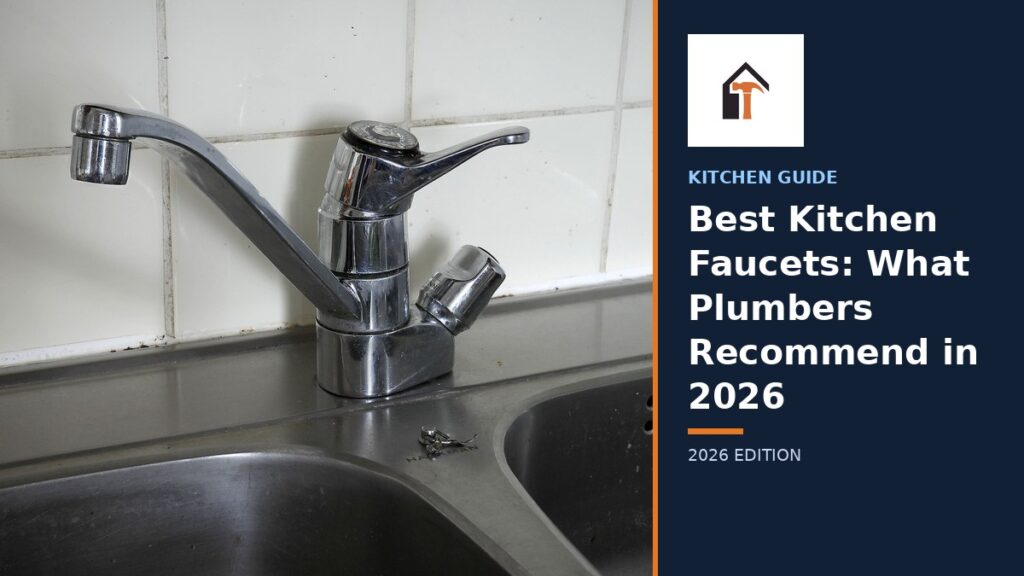
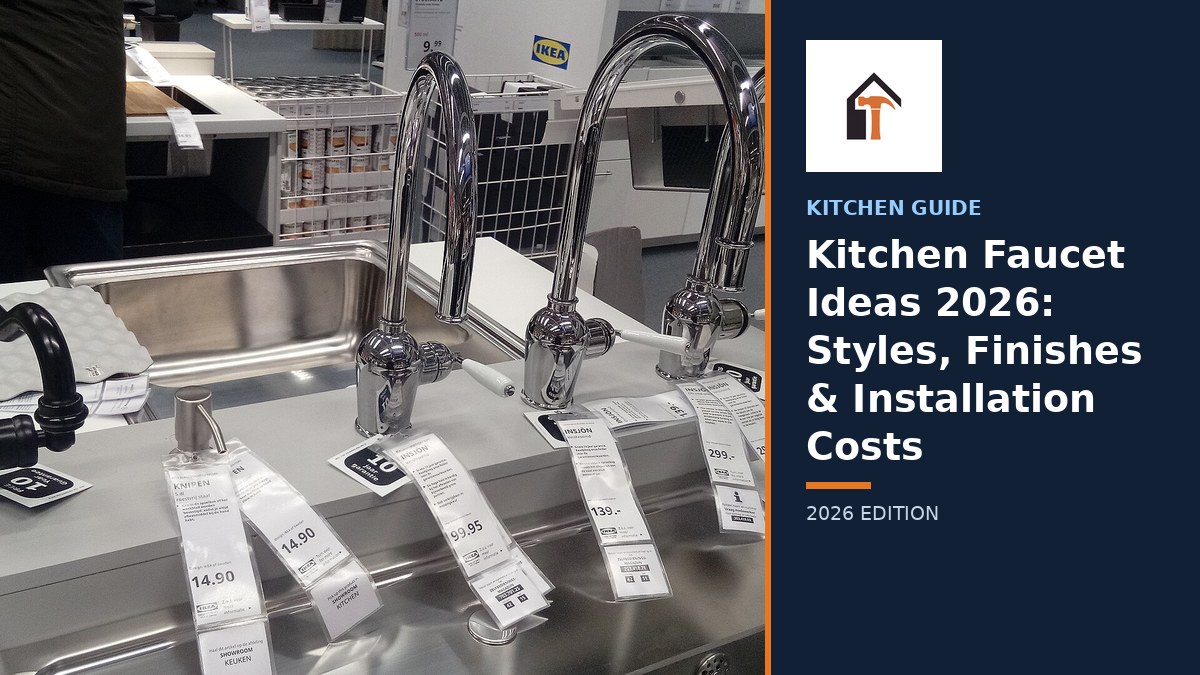
Quick Answer: Kitchen Faucet Styles and Costs in 2026
Most US homeowners spend $150 to $600 on a kitchen faucet in 2026, with premium touchless and designer models reaching $900 or more. Professional installation adds $150 to $350 on top of the fixture price. The pull-down faucet with a gooseneck or spring spout remains the most popular style, while touchless faucets are the fastest-growing category. Pot fillers continue their rise as a luxury add-on near the stove. Your total budget comes down to three things: the faucet type, the finish, and whether you install it yourself or hire a plumber.
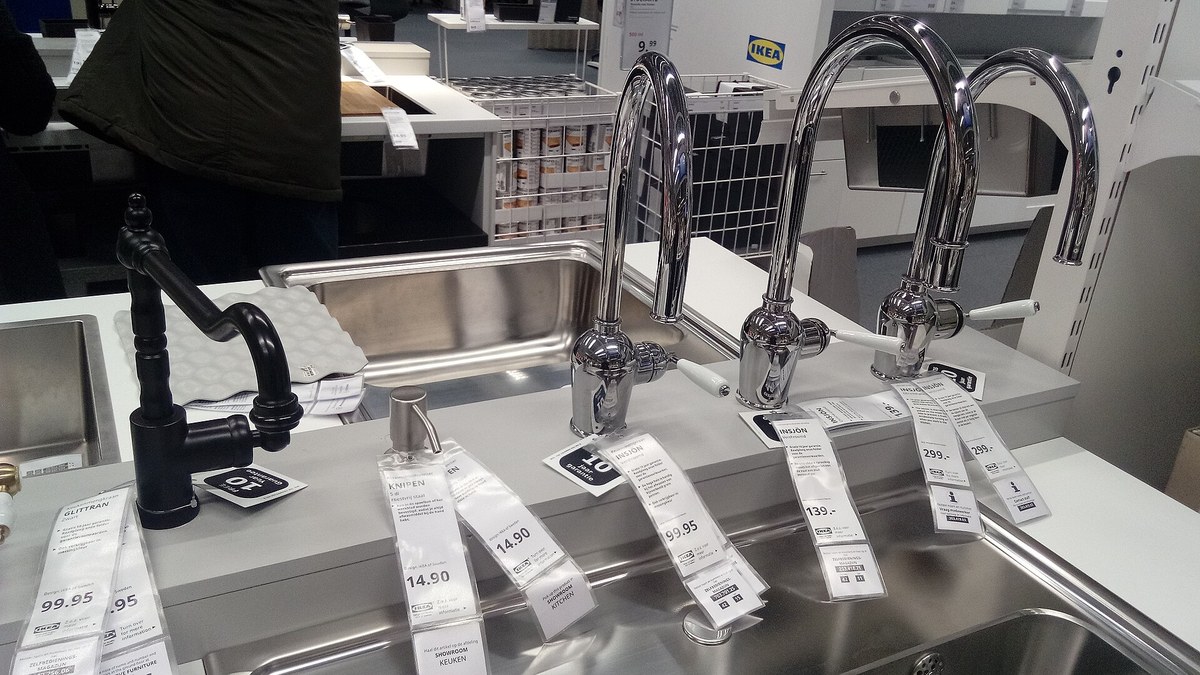
Kitchen Faucet Type Comparison Table (2026)
| Faucet Type | How It Looks and Works | Fixture Price Range | Best For |
|---|---|---|---|
| Pull-Down | Tall gooseneck spout with a spray head that pulls down into the sink; single-handle | $150 to $500 | Most kitchens; deep sinks, tall pots |
| Pull-Out | Shorter spout with a compact head that pulls out toward you; single-handle | $100 to $350 | Shallow sinks, low clearances |
| Single-Handle | One lever controls flow and temperature; one mounting hole | $80 to $300 | Small kitchens, rentals, budgets |
| Bridge | Two handles joined by an exposed horizontal pipe; farmhouse look | $250 to $700 | Farmhouse kitchens, apron sinks |
| Touchless | Motion sensor starts and stops water; battery or plug powered | $250 to $900+ | Busy cooks, families, hygiene focus |
| Pot Filler | Wall-mounted folding arm near the stove; fills pots on the cooktop | $200 to $800 | Serious cooks, second faucet |
Cost by Faucet Type: Fixture Plus Installation
Below are realistic 2026 US price ranges. "Installed" adds a typical plumber fee of $150 to $350 for a straightforward replacement. Costs rise when new holes must be drilled, plumbing lines moved, or a new water line is needed.
Pull-Down: $150 to $500 Fixture, $300 to $850 Installed
The pull-down is the default choice in 2026 kitchens. The tall, curved spout rises 15 to 20 inches above the sink deck, so you can fill a stockpot without tilting it. The spray head docks magnetically and pulls down on a braided hose extending 18 to 24 inches, toggling between a solid stream for filling and a wide spray for rinsing. Budget models start around $150 in chrome with plastic internals. Mid-range faucets at $250 to $350 add spot-resistant finishes, metal spray heads, and stronger magnetic docking. Designer models from Delta, Moen, and Kohler run $400 to $500 with touch activation, voice control compatibility, and solid brass construction. Installed by a plumber, expect $300 to $850 all-in.
Pull-Out: $100 to $350 Fixture, $250 to $700 Installed
The pull-out is the pull-down’s shorter cousin. Its compact spout sits lower and the spray head pulls out toward you horizontally, which suits low cabinet clearances, sinks under windows, and shallow basins. Styling leans modern and minimalist, with clean cylindrical bodies. Entry-level chrome models run $100 to $200, the $200 to $280 tier adds brushed finishes and better cartridges, and premium brands reach $280 to $350 with ceramic disc valves and lifetime finish warranties. With installation, most homeowners pay $250 to $700.
Single-Handle: $80 to $300 Fixture, $230 to $650 Installed
The single-handle faucet is the simplest option: one lever for flow and temperature, needing just one mounting hole. Spout heights range from low-profile models to high-arc versions approaching pull-down territory. At $80 to $150 you get reliable basics in chrome. The $150 to $220 tier adds nicer finishes and smoother cartridges, while $220 to $300 buys spring spouts, magnetic docking, and matching soap dispensers. Installed costs run $230 to $650, and this is the easiest type to install yourself.
Bridge: $250 to $700 Fixture, $400 to $1,050 Installed
Bridge faucets are the statement piece of the farmhouse kitchen. Two separate handles, one for hot and one for cold, connect through an exposed horizontal pipe, giving unmistakable vintage character. Bridge faucets need three holes, and their exposed connections take longer to align and install. Entry-level models start around $250, mid-range solid-brass versions run $350 to $500, and high-end faucets from Rohl, Brizo, or Waterstone reach $600 to $700. With professional installation, budget $400 to $1,050.
Touchless: $250 to $900+ Fixture, $400 to $1,250 Installed
Touchless faucets are the fastest-growing category in 2026. A motion sensor detects your hand and starts the water automatically, then stops it when you move away, which is a genuine help during food prep. Most models include a manual override so the faucet works during power or battery outages, with power from AA batteries lasting one to two years or a plug-in adapter. Entry-level touchless faucets at $250 to $400 offer basic sensing in chrome or stainless. Mid-range models at $400 to $600 add temperature memory and spot-resistant finishes. Premium versions from $600 to $900+ include voice control, app connectivity, and temperature presets in designer finishes. Installation costs more because of the sensor wiring: $400 to $1,250 installed.
Pot Filler: $200 to $800 Fixture, $550 to $1,600 Installed
A pot filler is a cold-water-only faucet mounted on the wall above the stove. Its articulated arm folds flat when not in use and swings out to fill pots on the cooktop, so you never carry a heavy pot of water across the kitchen. The catch is plumbing: it needs a dedicated cold-water line run through the wall, which means opening drywall and patching afterward. In new construction or a full renovation, expect $550 to $900 installed. In an existing finished kitchen, running the new line pushes the total to $1,000 to $1,600. Fixtures run $200 to $400 for basic models and $400 to $800 for mid-range to premium brass versions.
Finish Guide 2026: What Is Trending and What Lasts
The finish is what you see and touch every day, and it strongly affects both price and how your kitchen feels.
Chrome: The Timeless Default
Chrome remains the most popular and most affordable finish. Its mirror shine bounces light around the kitchen, making small spaces feel brighter. Chrome is the easiest finish to match across brands, and replacement parts are cheapest in chrome. It shows water spots and fingerprints more than other finishes, so expect regular wipe-downs. On the plus side, chrome is the hardest-wearing common finish, resisting scratches and tarnish for decades. Other finishes typically add $20 to $100 over the chrome version of the same faucet.
Matte Black: The Modern Statement
Matte black defines the modern 2026 kitchen. Its soft, non-reflective surface looks striking against white quartz counters and light wood cabinets, and it hides water spots better than chrome. Quality matters: cheap black finishes can chip or wear through within a few years, while premium powder-coated or PVD black finishes hold up well. Expect $30 to $80 more than chrome for the same model. In hard-water areas, light mineral deposits can show on the darkest finishes.
Brushed Gold: Warm Luxury
Warm metallics, sold as brushed gold or champagne bronze, are the luxury trend of 2026. Today’s versions are muted and brushed with a soft champagne tone, far from the brassy gold of the 1990s. This is a premium finish at $50 to $120 over chrome. It hides water spots well and shows fingerprints moderately. Use it as an accent: a gold faucet with matching cabinet hardware creates a cohesive high-end look. Stick to one warm metal per kitchen to avoid clashing.
Stainless Steel: The Professional Look
Stainless finishes mimic commercial kitchen equipment and pair naturally with stainless appliances. The brushed texture hides fingerprints and water spots better than polished chrome, making it practical for busy family kitchens. It sits mid-range at $20 to $60 above chrome. Note that "stainless" describes the color: check that the body is solid brass with a stainless PVD finish, not thin plating over plastic.
Oil-Rubbed Bronze: Traditional Warmth
Oil-rubbed bronze has a dark brown-black base with warm copper highlights at the edges. It suits traditional and rustic kitchens, pairing well with wood cabinets and granite counters, and hides water spots and fingerprints exceptionally well. Quality varies: inexpensive versions wear unevenly, while genuine oil-rubbed bronze over solid brass develops an attractive patina. Expect $40 to $100 over chrome. It is less trendy than matte black in 2026 but remains a favorite in traditional homes.
Installation Guide: Holes, Deck Mount vs Wall Mount
How Many Holes Does Your Sink Have?
Most kitchen sinks have one, three, or four pre-drilled holes. Single-handle pull-down and pull-out faucets need one hole. Bridge faucets need three. If your sink has three holes but you want a single-hole faucet, cover the extras with the included escutcheon plate or add accessories like a soap dispenser. If you need holes added, a plumber can drill stainless steel or composite sinks, but drilling stone or quartz requires a diamond bit and a steady hand, typically $75 to $150 per hole by a pro.
Deck Mount vs Wall Mount
Deck-mount faucets attach to the sink deck or countertop behind the sink and are the standard in US kitchens. Wall-mount faucets attach to the wall above the sink, creating a clean minimalist look and freeing counter space. Wall mounts cost more because water lines must be roughed in inside the wall at exactly the right height, usually 8 to 12 inches above the sink rim. In new construction, a wall-mount rough-in adds $200 to $400. Retrofitting one into an existing wall runs $500 to $1,000 with drywall work.
What a Standard Replacement Involves
A like-for-like replacement takes a plumber 45 minutes to 2 hours: shut off the water, disconnect supply lines, remove the old faucet, clean the sink deck, install the new faucet with fresh putty or silicone, reconnect supply lines, and test for leaks. New braided stainless supply lines cost $10 to $20 and are worth installing while the faucet is out. Most plumbers charge a flat $150 to $350, or $75 to $150 per hour with a one-hour minimum.
DIY vs Professional Installation
When DIY Makes Sense
Replacing a deck-mount faucet with the same hole configuration is one of the most approachable plumbing DIYs. If you can close the shut-off valves under the sink, disconnect two supply lines, and loosen a mounting nut, you can do this job. Budget two to three hours for a first attempt and buy a basin wrench ($15 to $25) for reaching the mounting nut behind the sink. DIY saves the full $150 to $350 plumber fee. This is a safe DIY project because the shut-off valves isolate the work: as long as you test carefully before closing the cabinet, the worst case is a small, catchable leak.
When to Hire a Plumber
Hire a pro when the job goes beyond a like-for-like swap: new holes in stone, corroded or missing shut-off valves, deck-to-wall-mount conversions, pot fillers needing new water lines, or moving the sink. Also hire one if your home has galvanized or polybutylene supply pipes, which can crack when disturbed. A licensed plumber carries insurance, warranties the work, and brings everything up to code, which matters for resale. For touchless faucets, a plumber’s experience with sensor wiring and battery placement is worth the fee.
DIY vs Pro Cost Comparison
For a $250 mid-range pull-down, DIY costs about $280 total ($250 faucet plus $30 in supplies). The same job by a plumber costs $400 to $600 ($250 faucet plus $150 to $350 labor). The $120 to $320 difference buys the plumber’s warranty and your afternoon back. For complex jobs like pot fillers or wall mounts, DIY is not recommended for most homeowners.
Frequently Asked Questions
How much does it cost to replace a kitchen faucet in 2026?
A basic replacement costs $230 to $650 all-in: $80 to $300 for the faucet plus $150 to $350 for a plumber. Most homeowners land between $350 and $550 with a mid-range pull-down. Premium touchless models, bridge faucets, or jobs needing new holes or water lines can reach $700 to $1,600.
Are touchless kitchen faucets worth it?
For frequent cooks, yes. The hygiene benefit is real: start the water with a messy hand without touching the handle. Touchless models also save water by stopping flow automatically. Downsides include the premium (typically $150 to $400 more than an equivalent manual faucet), battery changes every one to two years, and occasional sensor misfires.
What is the most durable kitchen faucet finish?
Chrome and PVD stainless finishes are the most durable, resisting scratches and tarnish for decades. Matte black and brushed gold hold up well when applied with quality PVD or powder-coating by reputable brands, but cheap versions can chip. Use mild soap and a soft cloth on any finish, and avoid abrasive cleaners.
Can I install a kitchen faucet myself?
Yes, for a like-for-like deck-mount replacement using the same holes. Most homeowners with basic tools finish in two to three hours. Hire a plumber for new holes in stone, wall-mount conversions, pot fillers needing new water lines, or corroded shut-off valves.
How long do kitchen faucets last?
A quality faucet lasts 15 to 20 years. The cartridge is usually the first part to wear out, typically after 10 to 15 years, and replacements cost $20 to $60. Many major brands offer lifetime warranties with free replacement parts. Budget faucets with plastic internals may last only 5 to 8 years.
How We Estimated These Costs
These ranges reflect 2026 US national averages from published sources. Fixture prices are based on current retail listings at Home Depot, Lowe’s, and manufacturer sites (Delta, Moen, Kohler) across entry, mid-range, and premium tiers. Installation labor is cross-checked against Angi’s published 2026 cost data, which reports typical pro fees of $150 to $350 for standard replacements and higher costs for complex work. All figures are planning estimates, not quotes: actual prices vary by region, brand, and job complexity. Get two or three written estimates from licensed local plumbers for an exact price on your project.