Transparency: Renovation Guide HQ carries no affiliate links. Every cost figure below is either linked to its published source or clearly labeled as a planning estimate. Cabinet pricing varies by region, kitchen size, and material grade — get itemized local quotes before committing. If you need contractor quotes, contact us and we will point you in the right direction.
By Renovation Guide HQ · Updated October 8, 2026
Quick Answer: Refacing vs. Replacing Cabinets
Refacing costs $4,000–$13,000 professionally; full replacement costs $10,000–$40,000+ — so refacing saves roughly 30–50% when your cabinet boxes are solid and the layout stays, per HomeBuddy and 2026 refacing guidance. But there is a catch: when a refacing quote climbs past about $7,000–$8,000, new stock or ready-to-assemble cabinets often cost about the same — so always get both quotes. Replace instead when boxes are water-damaged, sagging, or you want a new layout.
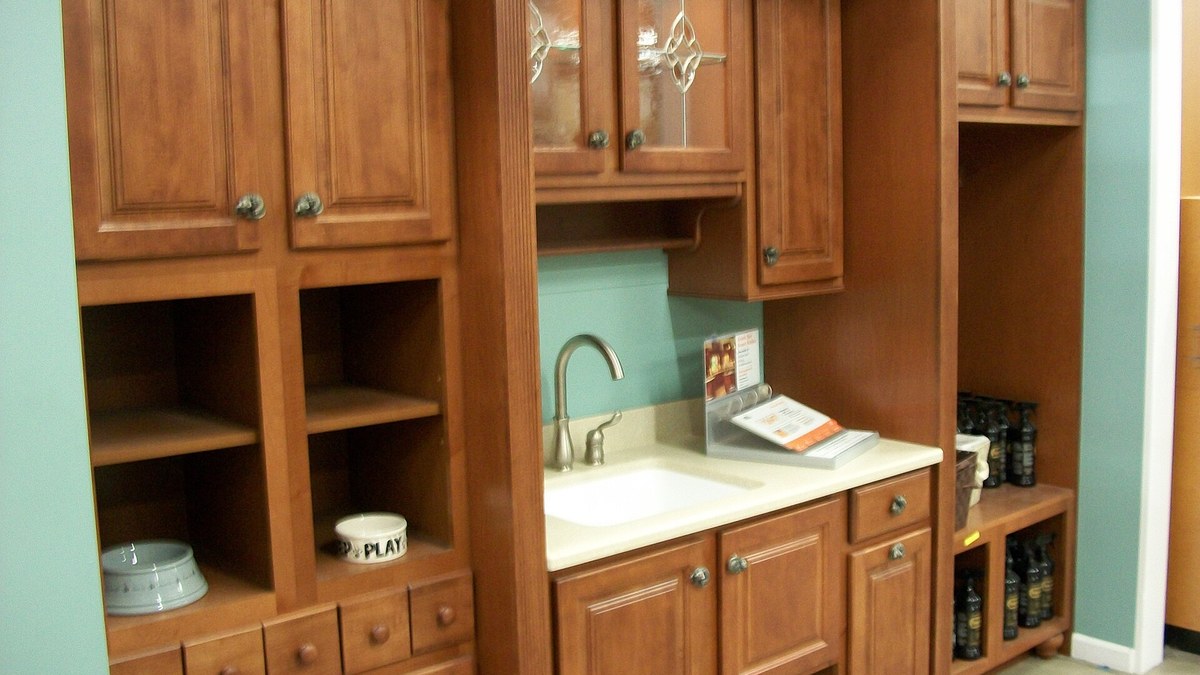
Cabinets are the single biggest line item in a kitchen remodel — 30 to 40 percent of the total budget, per 2026 remodeling cost data. They are also the line item where the most money gets wasted, because homeowners treat “reface” and “replace” as the only two options and never price the third: repainting. This guide compares all three on cost, timeline, and resale, explains exactly what refacing involves, and shows you the price point where refacing stops being the bargain.
Refacing vs. Replacing vs. Repainting: 2026 Cost Comparison
| Option | Typical professional cost | Timeline | Best when |
|---|---|---|---|
| Repainting | $1,200–$5,000 | 2–5 days | Boxes and doors in good shape; you only want a color change |
| Refacing | $4,000–$13,000 | 3–5 days | Boxes solid, layout stays, you want new door styles |
| Replacing (stock/semi-custom) | $10,000–$25,000+ | 1–6 weeks | Boxes damaged, layout changes, or new storage needed |
| Replacing (custom) | $40,000–$70,000+ | 6–10 weeks | Full custom kitchen, luxury finishes, exact dimensions |
Sources: HomeBuddy 2026, HomeGuide, AllBetter, 2026 Bay Area comparison.
Quoted per linear foot — the way most contractors estimate — the bands tell the same story, per HomeBuddy and Highland Cabinetry:
| Per linear foot (installed) | Refacing | Stock replacement | Semi-custom | Custom |
|---|---|---|---|---|
| 2026 range | $150–$400 | $100–$300 | $150–$700 | $500–$1,200+ |
Notice the overlap in the middle columns — that is where the “refacing is always cheaper” rule breaks down, and it is the most important number in this guide. Our cabinet refacing cost guide breaks down refacing costs in full detail.
What Cabinet Refacing Actually Involves
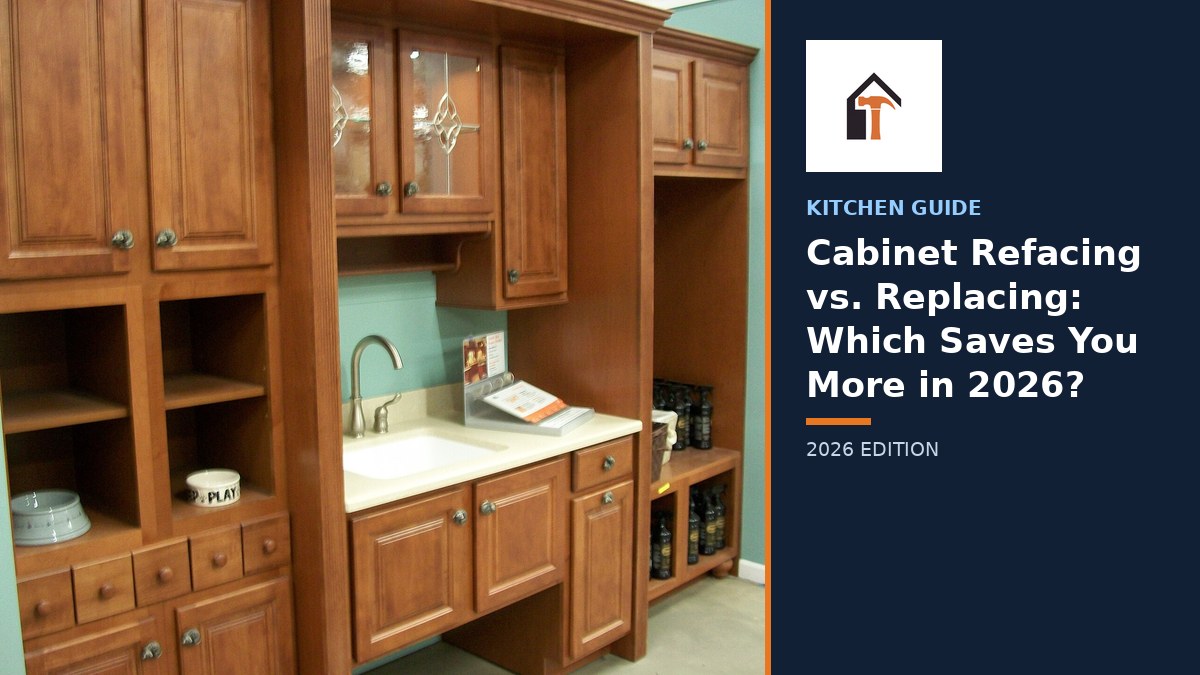
Refacing keeps your existing cabinet boxes — everything mounted to the wall and floor stays — and replaces everything you see and touch. Per HomeGuide, a professional refacing job includes:
- New doors and drawer fronts — this is the visual transformation; you choose the style (Shaker, flat-panel, raised-panel) and finish.
- Veneer or laminate on the boxes — the exposed face frames and end panels get wrapped in matching wood veneer or plastic laminate so old and new look identical.
- New handles and knobs — hardware is the cheapest upgrade per dollar of visual impact.
- New hinges and drawer slides (usually) — soft-close hardware is standard in most 2026 refacing quotes.
The materials matter. Wood veneer ($2–$5 per sq ft) gives a natural grain and can be refinished later, but has only moderate moisture resistance, per 2026 material guidance. Plastic laminate ($1–$3 per sq ft) is tougher, highly moisture-resistant, and cheaper — the smart pick for busy family kitchens — but it can never be refinished. Upgrading from laminate to solid wood doors typically adds 15–25% to the project, per 2026 pricing data.
What refacing does not change: the box interiors, the layout, the storage configuration, or the plumbing. If your boxes are particle board that has swollen from a sink leak, veneer will not save them. And refacing cannot add a pantry, an island, or taller uppers — the footprint is fixed.
What Full Replacement Involves — and Its Hidden Costs
Replacement means tear-out: old boxes come off the wall, and everything starts fresh. That opens possibilities refacing cannot touch — new layout, ceiling-height uppers, pantry pull-outs, island seating, fully custom storage — but it also opens cost lines that never appear on a refacing quote, per 2026 Colorado cost data:
- Demolition and disposal: $100–$300 to pull the old boxes and haul them away.
- Wall repair: $200–$400 — removing cabinets tears drywall with it, every time.
- Permits: $200–$800 if plumbing or electrical moves with the new layout.
- Countertops: the big one. Countertops rarely survive cabinet removal intact. If yours crack or must come off anyway, replacing them is a separate project on top of the cabinet budget — see our quartz vs. granite countertop comparison for what that adds.
- Installation labor: $70–$120 per hour, or $69–$119 per linear foot per Home Depot’s labor benchmark — typically 15–25% of the cabinet budget, around $2,000–$4,500 on an average kitchen.
A replacement quote that looks close to a refacing quote often has not included all of these. Ask point-blank whether the number covers installation, tear-out, wall repair, and countertop handling before comparing anything.
The Crossover Point: When Refacing Stops Being Cheaper
Here is the math most articles skip. Refacing at $150–$400 per linear foot installed overlaps heavily with stock replacement at $100–$300 per linear foot installed, per HomeBuddy and Highland Cabinetry. Worked through for a standard 20-linear-foot kitchen (planning estimate):
- Refacing: 20 lf × $150–$400 = $3,000–$8,000
- New stock cabinets installed: 20 lf × $100–$300 = $2,000–$6,000, plus roughly $2,000–$4,500 install labor if quoted separately
In the mid-range of both bands, you are looking at comparable money — and the new cabinets come with plywood boxes, dovetailed drawers, and soft-close hardware that a refaced kitchen only partially delivers. The rule of thumb (planning estimate): when a professional refacing quote exceeds roughly $7,000–$8,000 on a standard kitchen, get a replacement quote on the same scope before deciding. Refacing wins clearly at the low end ($4,000–$6,000); replacement becomes the better value at the high end. Anyone who tells you one option is always cheaper has not run both numbers on your kitchen.
Reface If… / Replace If…: The Decision Framework
Match the project to the condition of what is already on your walls, per refacing-vs-replacing guidance and 2026 material guidance:
Reface (or repaint) when:
- The boxes are solid — plywood or good-condition hardwood, square and firmly mounted.
- You are happy with the layout — same footprint, same appliance positions.
- The damage is cosmetic — dated doors, worn finish, old hardware.
- You are selling soon — a fresh kitchen photographs well for a fraction of replacement cost.
- Disruption matters — you need the kitchen usable in days, not weeks.
Replace when:
- The boxes are failing — sagging shelves, swollen or crumbling particle board, water damage or mold.
- You want a new layout — island, pantry, moved appliances, ceiling-height uppers.
- You need new storage — pull-outs, deep drawers, and organizers fitted to how you actually cook.
- You are already opening walls or moving plumbing/electrical — the disruption is happening anyway, so new boxes cost little extra in downtime.
- The refacing quote crossed the crossover point above and new stock cabinets price out within a few hundred dollars.
Timeline and Disruption Compared
Time is a real cost, especially in a working kitchen. Per HomeBuddy and 2026 Bay Area comparison data:
| Repainting | Refacing | Stock/semi-custom replacement | Custom replacement | |
|---|---|---|---|---|
| On-site work | 2–5 days | 3–5 days | 1–2 weeks | 4–10 weeks |
| Lead time (ordering) | None | 1–3 weeks | 3–5 weeks | 8–16 weeks |
| Kitchen usable? | Mostly yes | Mostly yes | No — demo to install | No |
| Permits | Almost never | Not typically (cosmetic) | If plumbing/electrical moves | Usually yes |
Lead times are the hidden timeline killer on replacement — custom cabinets can take 8–16 weeks to manufacture before the first box is pulled off your wall. If you need the project done by the holidays, order windows decide the option for you.
ROI and Resale: What Each Option Returns
Kitchen work ranks among the highest-ROI projects in the home, and the cheaper the intervention, the better the percentage return. The 2026 Cost vs. Value Report puts minor kitchen remodels at roughly 113% ROI, while AllBetter’s 2026 data shows minor/cosmetic kitchen work recovering about 85%, mid-range about 75%, and major renovations 55–65%. Cabinet refacing specifically lands around 80% ROI, per 2026 ROI analysis.
The resale logic is straightforward: buyers pay for a kitchen that looks fresh, functions well, and needs nothing — they rarely pay dollar-for-dollar for the boxes behind the doors. A refaced kitchen with new hardware, and ideally new counters and lighting from the money you saved, photographs and shows as well as a mid-range replacement at a fraction of the cost. The exception: if the existing kitchen has a genuinely bad layout or failing boxes, refacing cannot fix what buyers notice most, and the money goes to waste — match the improvement to the kitchen’s real condition.
5 Mistakes Homeowners Make on Cabinet Projects
- Refacing over rotten boxes. New doors on swollen particle board is money thrown away. Open a base cabinet under the sink — if the floor is puffy, the shelves sag, or you smell mildew, price replacement, not refacing.
- Comparing quotes with different scopes. One refacing quote includes hardware, soft-close hinges, and crown molding; another includes none of it. Normalize every quote to the same door count, material, and hardware before comparing numbers.
- Forgetting the countertop question. Refacing usually leaves counters in place; replacement usually does not. If your counters are due anyway, replacement’s “extra” cost shrinks — price the countertop decision into both options.
- Ordering custom cabinets on a deadline. An 8–16 week manufacturing lead time plus a 4–10 week install blows up any holiday or listing deadline. Refacing’s 3–5 day install exists for a reason.
- Skipping the crossover check. Never accept a refacing quote above $7,000–$8,000 without a replacement quote beside it. That one extra bid is the highest-ROI phone call in the whole project (planning estimate).
Comparing cabinet quotes? Send us your bids and kitchen size and we’ll help you spot what’s missing from the numbers — contact Renovation Guide HQ.
Cabinet Refacing vs. Replacing FAQ
Is it cheaper to reface or replace kitchen cabinets?
Usually refacing — it costs $4,000–$13,000 versus $10,000–$25,000+ for replacement, saving roughly 30–50%, per HomeBuddy and 2026 guidance. The exception is the crossover point: when a refacing quote exceeds about $7,000–$8,000, new stock cabinets often cost about the same — always get both quotes.
How long does cabinet refacing last?
The new doors, drawer fronts, and veneer are new materials built to last — durability comes down to the condition of the existing boxes. If the boxes are solid plywood in good shape, a refaced kitchen serves for many years, per refacing guidance. Bay Area 2026 data shows 5–10 year warranties on refacing finish and doors, versus 10–25 years on new semi-custom boxes, per the comparison table.
Can you reface cabinets yourself?
Yes, with peel-and-stick veneer and new doors — DIY materials run $36–$200 per linear foot versus $150–$400 installed, per HomeBuddy. The hard parts are clean edge cuts and surface prep. A simpler DIY route is repainting: $200–$600 in supplies for a small-to-medium kitchen, per KitchenSearch.
Does cabinet refacing add resale value?
Yes — refacing returns roughly 80% of its cost at resale, per 2026 ROI analysis, and minor kitchen remodels overall can exceed 100% ROI, per the 2026 Cost vs. Value Report. Buyers pay for a fresh, functional kitchen — they rarely pay dollar-for-dollar for the boxes behind the doors.
Can refacing change my kitchen layout?
No. Refacing keeps every box exactly where it is — it cannot add a pantry, an island, taller uppers, or move anything, per 2026 comparison data. If the layout is the problem, replacement is the only fix.
Should I replace my countertops when I reface cabinets?
Not necessarily — refacing is designed to leave counters in place, which is part of the savings. But if your counters are worn, price them into both options: a refaced kitchen with new counters often delivers the best dollars-per-visual-impact of any kitchen project. Our quartz vs. granite comparison covers countertop costs.
The Bottom Line
Reface when the boxes are solid and the layout works — at $4,000–$6,000 it is the best value in kitchen renovation. Repaint when only the color is dated — at $1,200–$5,000 it is the cheapest real transformation available. Replace when the boxes are failing or the layout needs to change, and always check the crossover: if a refacing quote tops $7,000–$8,000, price new stock cabinets on the same scope before you sign. Get both quotes, compare them line by line, and pick the option that matches your kitchen’s actual condition — not the one a salesperson prefers. For the full kitchen budget these cabinets sit inside, see our 2026 kitchen remodel cost guide.
How We Estimated These Costs
Cost figures in this guide come from published 2026 sources: HomeBuddy’s 2026 refacing price guide (refacing ranges, per-linear-foot pricing, repair/reface/replace comparison), HomeGuide’s cabinet cost tables (reface/replace/refinish/paint), 2026 Bay Area refacing-vs-replacement comparison (timelines, warranties, permits), 2026 refacing guidance (30–50% savings rule, decision criteria), Highland Cabinetry’s 2026 cost breakdown (stock/semi-custom/custom per-foot pricing), 2026 Colorado restyling data (hidden replacement costs, Home Depot labor benchmark), 2026 refacing material guidance (veneer vs laminate pricing), AllBetter’s 2026 cabinet painting costs, KitchenSearch’s 2026 repaint pricing, and ROI data from the 2026 Cost vs. Value Report, AllBetter’s 2026 kitchen remodel data, and 2026 ROI analysis. Figures marked “(planning estimate)” are our synthesis of multiple published ranges, not quotes from any single source. Pricing varies by region and kitchen size — get itemized local quotes. Last updated October 2026.