Transparency: Renovation Guide HQ carries no affiliate links. Every cost figure below is either linked to its published source or clearly labeled as a planning estimate. These are general US patterns — local labor rates and codes vary, so confirm with your local building department and get itemized local quotes. If you need contractor quotes, contact us and we will point you in the right direction.
By Muhammad Haroon · Updated November 16, 2026
Quick Answer: What Are the Costliest Bathroom Remodel Mistakes?
The mistakes that cost the most are the ones you cannot see. Skipping waterproofing behind tile can turn a $500–$1,500 membrane job into a $5,000–$15,000 tear-out and repair, per AllBetter’s 2026 cost data. Moving plumbing for looks adds $1,500–$5,000 per fixture. Remodels with no contingency fund overrun their estimates by 20–35% — an unexpected $2,420–$4,235 on a $12,100 average remodel, per Renology’s 2026 project analysis. Below: the 10 mistakes worth real money, what each one costs, and how to avoid it.
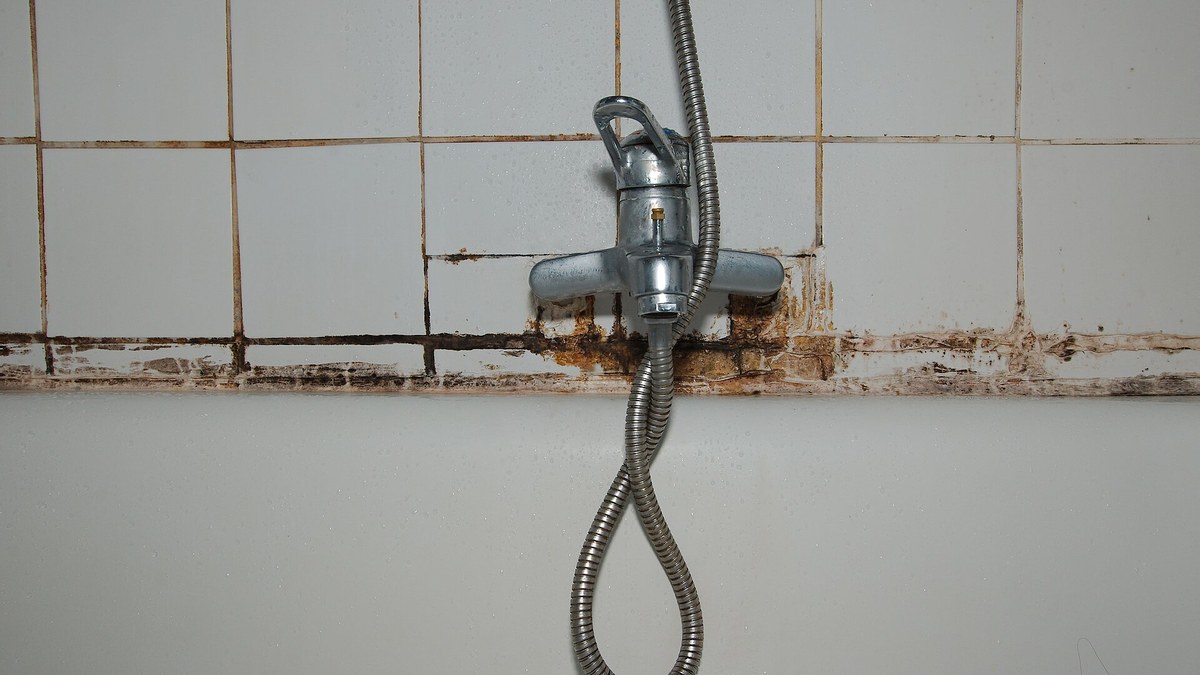
A bathroom remodel is the most mistake-dense project in a house. The room is small, every trade is in it, everything is wet, and most of the expensive work disappears behind tile before you ever see it. The good news: the costly mistakes are the same ones every year, and every one of them is preventable with about twenty minutes of planning.
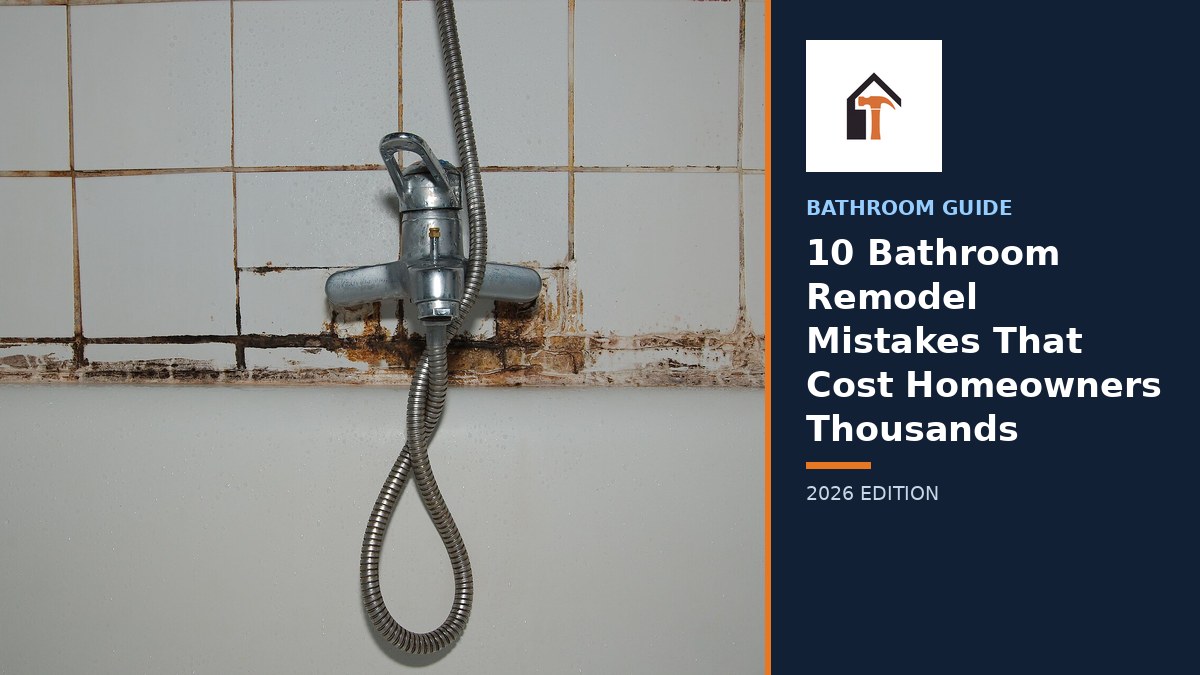
Mistake 1: Skipping or Skimping on Waterproofing
What it costs you: Water behind tile causes mold and rot that costs $5,000–$15,000 to repair, per AllBetter’s 2026 cost data — against $500–$1,500 to install a proper waterproofing membrane the first time. A failed shower pan alone runs $530–$2,700+ to replace, averaging about $1,600 with labor, per Modernize’s 2026 shower repair costs; if the leak ran long enough to rot the subfloor, repairs climb to $1,500–$5,000, per shower pan installers.
How to avoid it: Get the waterproofing method in writing before demo — named system, not a promise. a contractor quote should specify the waterproofing method (Schluter, Wedi, RedGard, or similar) the way it specifies the tile. If a contractor talks about tile but never mentions waterproofing, walk away — that is flagged as the most common cause of bathroom renovation failures and the most expensive to fix. For tile shower systems and membrane options, our bathroom tile installation guide covers what a proper wet-area assembly looks like.
Mistake 2: Moving Plumbing Just for Looks
What it costs you: Relocating a toilet, shower, or sink to a different wall adds $1,500–$5,000 per fixture — opening walls or floors, rerouting drain and supply lines, and meeting code, per AllBetter’s 2026 cost data. Keeping every fixture where it is saves $2,000–$5,000 on the same project. Even a short move is expensive: a toilet shifted 1–3 feet runs $500–$1,500, and a 4–10 foot move runs $1,500–$3,000, per AskDoss’s 2026 plumbing pricing. On a concrete slab, cutting and patching concrete adds another $500–$2,000.
How to avoid it: Only move plumbing when the current layout genuinely does not work — a door that cannot open, a toilet with no clearance, a shower nobody can use. General Contractor Los Angeles’s 2026 LA cost guidance puts it bluntly: changing the plumbing layout just for aesthetics rarely justifies the cost. Move fixtures on paper, price the move separately in the quote, and decide whether the new position is worth several thousand dollars — before the plumber starts. On a tight budget, work with the existing layout and spend on visible surfaces. Our small bathroom cost guide shows what you can achieve without touching the rough-in.
Mistake 3: Undersizing the Exhaust Fan — or Venting It Wrong
What it costs you: A bathroom without adequate exhaust develops mold, peels paint, and degrades finishes no matter how premium the materials are, per our exhaust fan installation guide. Surface mold remediation runs $500–$1,000, per Angi’s 2026 data — but let mold get behind fixtures, tile, or cabinetry and you are into demolition territory, where the bill reaches $8,000, per LendEDU’s 2026 remediation cost analysis. The average mold remediation project costs $2,369 nationally, per Angi’s mold remediation cost data (updated October 29, 2026). A fan vented into the attic instead of outdoors is one of the most common defects inspectors find, and it fails final inspection on sight.
How to avoid it: Size the fan to the room — roughly 1 cfm per square foot of bathroom, with a 50 cfm minimum for intermittent fans — and verify the duct terminates through the roof or an exterior wall, never into the attic or crawl space. Budget the mechanical permit (typically $60–$150) rather than treating the fan as an afterthought. Our exhaust fan installation guide covers sizing, placement, and duct runs in detail.
Mistake 4: Starting With No Contingency Fund
What it costs you: Unplanned projects — especially older homes — commonly overrun their initial estimates by 20–35% — on a $12,100 average remodel, that is an unexpected $2,420–$4,235, per Renology’s 2026 project analysis, using the $12,100 average from our bathroom remodel cost guide. The overrun rarely comes from one big surprise. It comes from rotted subfloor discovered at demo, outdated wiring that must be brought to code, and material prices that moved since the quote — the exact costs a contingency absorbs.
How to avoid it: Add 15–20% on top of the contractor’s number and treat that as spent money in your head (planning estimate). Our bathroom remodel cost guide is explicit: hidden problems behind bathroom walls are common, and material prices fluctuate.
General Contractor Los Angeles’s 2026 LA guidance adds the older-home warning: a homeowner who budgets for a clean cosmetic update and then discovers rotted subfloor or outdated wiring at demo ends up paying more in change orders than a realistic contingency would have cost upfront. If your home is pre-1980, budget the high end of that range. Our 2026 bathroom remodel cost guide breaks down where the money goes so you can set a realistic number. Run your own numbers with our Renovation cost estimator.Mistake 5: Hiring the Cheapest Bid Without Checking What’s Included
What it costs you: Cheap quotes often leave out permits, waterproofing, or mold prevention — and you pay for all of it later, usually as change orders. Our contractor hiring guide lists a bid dramatically lower than everyone else’s as a red flag and explains that change orders are where budgets die. The lowest bid sometimes means thinner materials or a shorter warranty, per General Contractor Los Angeles’s 2026 contractor guidance. A bid that is thousands lower usually hides change orders — the “surprise” charges that appear mid-project once you are committed.
How to avoid it: Get three written, itemized quotes on the same written scope, and compare line by line: labor, materials, disposal, permits, allowances, timeline, payment schedule, warranty. A proper quote names the waterproofing method, the tile brand and quantity, and the fixture models — not just “tile” and “toilet,” per
Mistake 6: Skipping Permits to Save a Few Hundred Dollars
What it costs you: It is not unusual for jurisdictions to charge double the permit fee when unpermitted work is discovered, and some add 25–100% administrative penalties with fines up to $50,000 in extreme cases. Beyond fines: stop-work orders, forced removal of finished work, denied insurance claims on unpermitted electrical or plumbing, and buyers who walk away — or demand a discount — when the inspector finds no permit on record.
How to avoid it: Permit anything that touches plumbing, electrical, ventilation, or structure; cosmetic work usually does not need one. Simple trade permits can be same-day; budget $150–$1,000 for a typical full-remodel permit package (planning estimate). Never let a contractor talk you out of permitting — “we don’t need a permit for that” is a top red flag. Our contractor hiring guide lists the red flags that should send you walking. Our bathroom permit guide covers exactly what needs a permit, what it costs by city, and the inspection sequence.
Mistake 7: Choosing Trendy Finishes That Tank Resale
What it costs you: Ultra-bold tile patterns, high-maintenance natural stone, and oversized soaking tubs are among the lowest-ROI choices for resale — buyers read them as future renovation projects, not upgrades. Design choices that feel “safe” consistently outperform statement designs in resale value. There is also the neighborhood ceiling: a $60,000 bathroom in a neighborhood of our $250,000 homes will not return its cost, per bathroom flooring ideas.
How to avoid it: Spend the statement money on things buyers keep — walk-in showers with large-format porcelain, frameless glass, double-sink vanities, updated lighting — and keep tile classic: subway tile, marble-look porcelain, neutral palettes. Those hold their appeal and their resale value far longer than this year’s geometric pattern, per our bathroom flooring ideas guide. Match the renovation’s quality to what the local market supports; mid-range bathroom remodels returned roughly 80% of their cost at resale in 2026 — Zonda’s 2025 Cost vs. Value report puts the midrange remodel at $26,138 cost and $20,915 resale value, an 80.0% return; see our bathroom remodel cost guide. If you love a bold look, put it in paint or accessories you can change for $200 — not in $3,000 of tile.
Mistake 8: Planning Lighting and Electrical After the Drywall Is Up
What it costs you: Deciding where you want lights after the drywall is up limits your options and increases cost, per our bathroom lighting ideas guide. Adding a circuit, moving a switch, or upgrading to code-compliant GFCI protection once walls are closed means opening finished walls — turning a few hundred dollars of rough-in electrical into a four-figure patch-and-repaint job (planning estimate). This Old House’s Bathroom Remodel Cost (2026) guide, updated July 2, 2026, puts bathroom electrical at $456 per project when planned during rough-in — the cheap phase.
How to avoid it: Plan every light, outlet, switch, and heated-floor circuit during framing — before insulation and drywall. Mark the exact mirror-light height, the shower light position, and the outlet locations on the studs with the electrician on site. Verify GFCI protection on all bathroom outlets (code requires it) and confirm the exhaust fan has its own circuit or a code-compliant shared one. Walk the framed bathroom at night with a flashlight if you have to — shadows you see now are free to fix and expensive to fix later. Our remodel steps guide shows where electrical sits in the project sequence.
Mistake 9: Tile Math Errors — Under-Ordering, Bad Layout, Wrong Grout
What it costs you: Running short on tile mid-project means reordering — and tiles are produced in batches, so the new box can be a visibly different shade from the old one, cheapening an otherwise beautiful finish. Tile and grout repairs run $200–$600 for a small area, per Modernize’s 2026 costs; retiling a larger shower or repairing damaged substrate reaches $1,000–$3,000+. A layout started without centering leaves sliver cuts at the focal wall — the first thing every visitor’s eye finds.
How to avoid it: Order 10% extra tile for standard layouts and 15% for herringbone or diagonal patterns — the universal rule from tile manufacturers and installers, per Ideal Home’s tile expert guidance. Keep the spares after the job; matching a discontinued line years later is nearly impossible. See our bathroom flooring ideas for tile types and costs. Dry-lay the pattern before the installer starts — colors shift dramatically under bathroom lighting compared to the showroom, per our bathroom lighting ideas guide. Use the right grout for the location (sanded for wide joints, unsanded for narrow), and use silicone caulk — not grout — at every change of plane: tub-to-tile, wall corners, and floor-to-wall joints. Grout cracks where surfaces flex; caulk flexes with them.
Mistake 10: Ignoring Aging-in-Place (and Storage) While the Walls Are Open
What it costs you: Adding grab bars after the tile is up costs $150–$500 per bar installed — but about $800 if the wall must be opened to add the wood blocking the bar needs to hold a falling adult, per FreeQuotes’ 2026 modification cost data. A curbless shower retrofit later runs $8,000–$18,000, per DearFathers’ 2026 aging-in-place guidance. A bathroom with no storage is a daily annoyance you will pay to fix with a second mini-project.
How to avoid it: While the walls are open, add solid wood blocking at grab-bar height in the shower and beside the toilet — it costs almost nothing now and is the difference between a safe bar and a dangerous one later. Consider a curbless or low-threshold shower entry, slip-resistant flooring, a comfort-height toilet, and a handheld shower on a slide bar — none of these change how the bathroom looks. Plan storage into the design, not after it: a recessed shower niche, a vanity with drawers instead of doors, and a linen cabinet if the layout allows. The four decisions that matter most — blocking, curbless entry, grippy floor, wider door — are cheap or free during the remodel and expensive or impossible afterward. Our tub-to-shower conversion guide covers curbless conversions and their costs. If you are deciding between a shower and a tub, see our walk-in shower vs bathtub guide.
The Costliest Mistakes at a Glance
| Mistake | Do it right (upfront) | Fix it later |
|---|---|---|
| Waterproofing skipped | $500–$1,500 membrane | $5,000–$15,000 tear-out + repair |
| Moving plumbing for looks | $0 — keep the layout | $1,500–$5,000 per fixture moved |
| Undersized/misvented fan | Right-sized fan + outdoor duct | $500–$1,000 surface mold; up to $8,000 behind fixtures |
| No contingency fund | 15–20% set aside (planning estimate) | 20–35% overruns: $2,420–$4,235 unexpected on a $12,100 average remodel |
| Cheapest bid, unchecked | 3 itemized quotes compared | Change orders + rework (planning estimate) |
| Permits skipped | $150–$1,000 permit package (planning estimate) | Double fees, fines, forced redo |
| Trendy finishes | Classic tile + neutral palette | Resale discount; re-tile $1,000–$3,000+ |
| Late lighting decisions | About $456 electrical (This Old House, July 2026) | Opening finished walls (planning estimate) |
| Tile under-ordered | 10–15% extra ordered | $200–$600 small repair; mismatched batches |
| No aging-in-place prep | Blocking ~$0 while open | $800 per bar; $8,000–$18,000 curbless retrofit |
Sources: AllBetter, Modernize, Angi, LendEDU, Renology, AskDoss, FreeQuotes Contractors, Ideal Home, DearFathers, This Old House, General Contractor Los Angeles, Action Shower Pan.
Planning a remodel and want a second opinion on the plan? Send us your scope and we’ll flag the expensive mistakes before you commit — contact Renovation Guide HQ.
Bathroom Remodel Mistakes FAQ
What is the most expensive bathroom remodel mistake?
Skipping waterproofing behind tile. A proper membrane costs $500–$1,500 during the remodel; water damage behind tile costs $5,000–$15,000 to tear out and repair, per AllBetter’s 2026 cost data. It is also the failure you discover last — usually 12 to 36 months after the tile goes up (planning estimate) — when the repair means demolishing the finished shower.
How much extra should I budget for unexpected bathroom remodel costs?
Add a 15–20% contingency on top of the contractor’s number (planning estimate). Unplanned projects — especially older homes — commonly overrun their initial estimates by 20–35% — an unexpected $2,420–$4,235 on a $12,100 average remodel — driven by hidden water damage, outdated wiring, and material price changes, per Renology’s 2026 project analysis. Older homes should budget the high end.
Is it worth moving plumbing in a bathroom remodel?
Only when the layout genuinely does not work. Moving a fixture to a different wall adds $1,500–$5,000 per fixture — opening walls or floors, rerouting drains and supply lines, and meeting code — while keeping the layout saves $2,000–$5,000, per AllBetter’s 2026 cost data. Move it on paper, price it separately, and decide if the new position is worth several thousand dollars before work starts.
What happens if my bathroom exhaust fan is too small?
Chronic moisture: mold, peeling paint, and degraded finishes. Surface mold remediation costs $500–$1,000, but mold behind fixtures or tile pushes the bill to $8,000 with demolition, per LendEDU’s 2026 cost analysis. Size the fan to the room — about 1 cfm per square foot, 50 cfm minimum — and duct it outdoors, never into the attic. See our exhaust fan guide for sizing and placement.
How much extra tile should I order for a bathroom?
Order 10% extra for standard layouts and 15% for herringbone or diagonal patterns, per Ideal Home’s tile expert guidance. Tiles are made in batches that vary in shade, so a reorder mid-project can arrive visibly mismatched. Keep the spares after the job for future repairs.
What should I add to my bathroom now for aging in place later?
Four things while the walls are open: solid wood blocking at grab-bar height in the shower and beside the toilet, a curbless or low-threshold shower entry, slip-resistant flooring, and a wider door if the wall allows — plus a comfort-height toilet and a handheld shower on a slide bar. None change how the bathroom looks; all are expensive or impossible to add later, per DearFathers’ 2026 aging-in-place guidance.
The Bottom Line
The ten mistakes above share one root cause: deciding late. Waterproofing, plumbing layout, ventilation, contingency, contractor vetting, permits, finish choices, lighting, tile quantities, and aging-in-place prep are all decisions that are cheap on paper and expensive in drywall. Make them during planning — with three itemized quotes, a named waterproofing system, 10–15% extra tile, and a 15–20% contingency — and the most dangerous part of your bathroom remodel is already handled. For the full cost picture, see our 2026 bathroom remodel cost guide; for the project sequence these decisions sit inside, our remodel steps guide; and for the permit rules behind mistake 6, our bathroom permit guide.
How We Estimated These Costs
Mistake costs in this guide come from published 2026 sources: AllBetter’s 2026 bathroom cost data (plumbing moves, waterproofing repair ranges), Modernize’s 2026 shower repair costs (pan and tile repair), Angi’s 2026 mold remediation data and LendEDU’s 2026 analysis (remediation by location), Renology’s 2026 project analysis (overrun rates), AskDoss 2026 plumbing pricing (fixture-move distances), our exhaust fan installation guide (ventilation), our bathroom flooring ideas (trends, tile ordering), and our bathroom lighting ideas (lighting), our contractor hiring guide (quote standards, red flags), Ideal Home tile experts (ordering rules), FreeQuotes’ 2026 aging-in-place cost data and DearFathers’ 2026 aging-in-place guidance, and This Old House’s Bathroom Remodel Cost (2026) guide (updated July 2, 2026). Figures marked “(planning estimate)” are our synthesis of multiple published ranges, not quotes from any single source. Local rates vary; get itemized local quotes. Last updated October 2026.
About the Author
Muhammad Haroon is the Founder & Editor of Renovation Guide HQ, where he covers home renovation costs, materials, and resale value. Learn more about how we research our costs on the About page.