Transparency: Renovation Guide HQ carries no affiliate links. Every cost figure below is either linked to its published source or clearly labeled as a planning estimate. Backsplash pricing varies by region, material grade, and installer — get itemized local quotes before committing. If you need contractor quotes, contact us and we will point you in the right direction.
By Renovation Guide HQ · Updated October 8, 2026
Quick Answer: What Does a Kitchen Backsplash Cost?
A kitchen backsplash costs $10–$50 per square foot installed, or $500–$1,700 on average, including materials and labor, per HomeGuide. A standard 30 sq ft backsplash runs roughly $480–$1,500, per Angi’s 2026 data. Ceramic and porcelain sit at the budget end; glass, marble, and metal at the premium end. Most pro installations take 1–2 days.
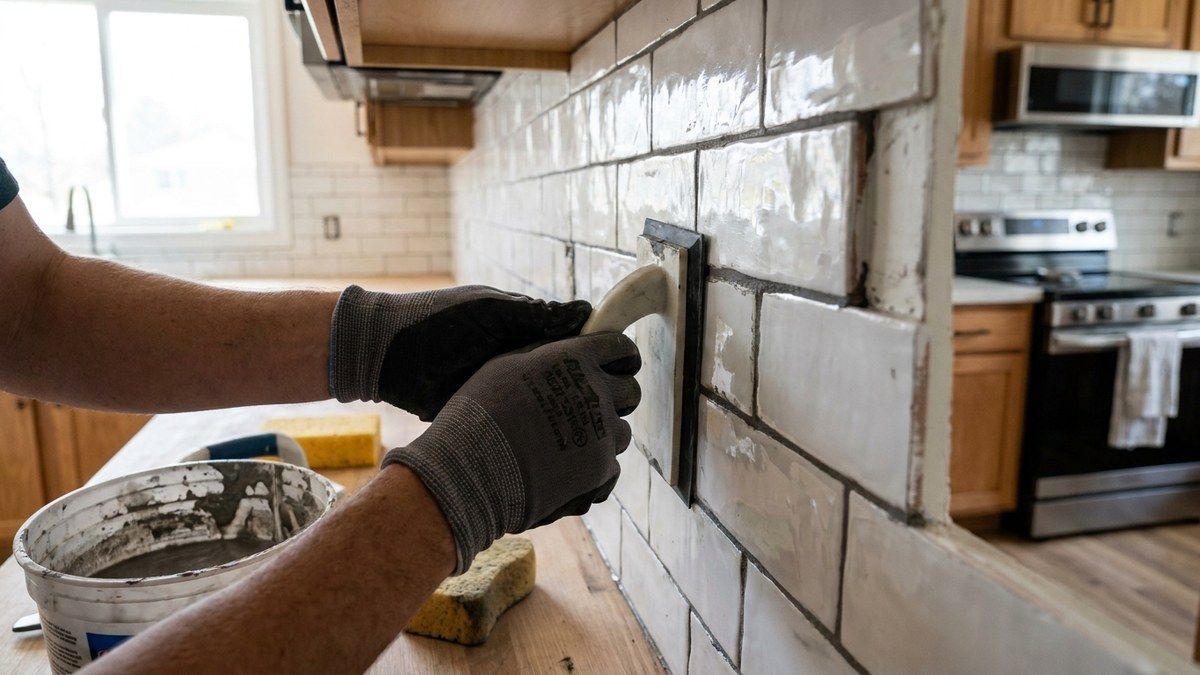
The backsplash is the smallest surface in the kitchen and the one with the biggest visual payoff per dollar. It protects the wall behind the range and sink from grease, steam, and splatter — and it is the first thing the eye lands on in a finished kitchen. Because the area is small (about 25–35 sq ft in most kitchens), upgrading the material costs a few hundred dollars, not a few thousand.
Backsplash Material Costs Compared (2026)
Material choice drives the budget more than anything else. Installed figures below include materials and labor, per HomeGuide, with material-only ranges from Thumbtack:
| Material | Installed per sq ft | Material only per sq ft | 30 sq ft project total |
|---|---|---|---|
| Ceramic tile | $6–$28 | $2–$8 | $180–$840 |
| Porcelain tile | $7–$30 | $3–$10 | $210–$900 |
| Subway tile (ceramic/porcelain) | $7–$35 | $2–$10 | $210–$1,050 |
| Glass tile | $10–$45 | $3–$15 | $300–$1,350 |
| Natural stone (granite, slate) | $8–$35 | $5–$15 | $240–$1,050 |
| Marble tile | $10–$45 | $5–$15 | $300–$1,350 |
| Travertine | $8–$29 | $5–$12 | $240–$870 |
| Metal / stainless steel | $20–$85 | $15–$25 | $600–$2,550 |
| Thin-brick veneer | $8–$18 | $4–$10 | $240–$540 |
| Peel-and-stick tile (DIY) | $4–$30 | $4–$30 | $120–$900 |
Nationally, most projects land between $593 and $1,786 total, per Thumbtack, with a typical 25 sq ft kitchen running $425–$900 all-in, per Angi 2026 data.
Ceramic Tile: The Budget Workhorse
Ceramic is the default backsplash material for a reason: it is cheap, easy to clean, moisture-resistant, and available in nearly every color and shape, per Thumbtack. Material runs just $2–$8 per sq ft, making it the lowest-cost real-tile option.
Pros: lowest price, glazed surface wipes clean, huge design variety, easy to cut and install (DIY-friendly). Cons: simpler designs than premium materials; chips more easily than porcelain. Glossy glazed ceramics are among the easiest backsplashes to wipe down, per designer guidance.
Best for: budget projects, rentals, and busy family kitchens where easy cleaning matters most.
Porcelain Tile: Tougher Than Ceramic
Porcelain looks like ceramic but is denser, harder, and less porous — with better resistance to chipping, staining, and moisture, per 2026 design guidance. For a backsplash meant to last decades, porcelain offers the best physical longevity of the budget-friendly options.
Pros: harder and more stain-resistant than ceramic; still affordable at $3–$10 per sq ft material; works in every pattern. Cons: slightly more limited color range; harder to cut (a wet saw is non-negotiable). Large-format porcelain (12×24 inches or larger) creates a contemporary look with fewer grout lines — in neutral matte finishes it stays timeless, per the same guidance.
Best for: homeowners who want ceramic’s price with better durability.
Subway Tile: Still #1 in America
Subway tile remains the most popular backsplash choice in American kitchens, per Express Kitchens. The classic 3×6 white ceramic is a safe bet — but 2026’s versions have moved on: beveled subway that catches the light, handmade-look tile in off-white or warm cream, and colored subway in sage green, dusty blue, or matte black.
Pros: timeless, versatile, works with nearly any cabinet and countertop combination; affordable at $7–$35 per sq ft installed, per HomeGuide. Cons: it is the common choice — stand out with color, finish, grout color, or layout (vertical stacking makes a room look taller and more modern, per 2026 trend reporting).
The 2026 power combination: white subway tile with dark gray grout — it reads clean, hides grease, and cuts cleaning time versus white grout, which shows residue within weeks in an active kitchen, per 2026 installation data.
Glass Tile: Light, Color, and a Premium Price
Glass tile reflects light, resists stains, and makes a kitchen look brighter and larger — which is why it suits small or dark kitchens, per material guidance. Material runs $7–$30 per sq ft with labor at $8–$20 (the tile is fragile), for a total installed cost of $12–$40 per sq ft, averaging $22, per 2026 glass tile pricing. A 30 sq ft backsplash: $360 at the low end, $660 at the average, $1,200 at the high end.
Pros: luminous, stain-resistant, easy to clean; classic colors in simple subway or square shapes have looked current for 50+ years, per timeless-design guidance. Cons: more damage-prone than ceramic; shows fingerprints; metallic or iridescent finishes date fast. One planning trap: grout color shows through translucent tile and changes how the color looks — decide grout before buying tile, per installation guidance.
Budget move: use glass as an accent band and fill the field with ceramic — you get the luminosity at a fraction of the cost, per the same pricing guide.
Natural Stone: Marble, Granite, Travertine, Slate
Stone brings one-of-a-kind veining and a luxury feel that manufactured tile cannot fully replicate — but it demands more care. Installed costs run $8–$45 per sq ft depending on the stone, per HomeGuide. Marble sits at the top ($10–$45 installed); travertine and slate lower ($7–$29).
Pros: unique natural character; timeless appeal; pairs beautifully with stone countertops. Cons: porous stone absorbs grease — travertine and unsealed stone are the hardest backsplashes to keep clean in cooking zones, per designer guidance. Stone must be sealed and resealed periodically, or stains become permanent. Highly figured stones with dramatic veining can also feel trend-specific over time, per timeless-design guidance.
Best for: statement kitchens where the backsplash is the focal point — and owners willing to seal and maintain it.
Metal, Brick, and Budget Alternatives
Stainless steel / metal tile ($20–$85 installed, per HomeGuide): nearly indestructible and stain-resistant, but expensive and can clash with other kitchen metals, per Thumbtack.
Thin-brick veneer ($8–$18 installed): rustic, industrial, farmhouse character — one of the 2026 trend styles, per Express Kitchens.
Peel-and-stick tile ($4–$30 per sq ft, DIY): the renter-friendly option — no mortar, no grout, no tools, per Thumbtack. The catch: it can damage drywall on removal and does not survive heavy heat or steam like real tile. Beadboard ($5–$9 installed) is the cheapest real-material option, but the grooves are hard to clean behind a range, per Thumbtack.
What Installation Actually Costs
Labor is the second half of the bill: $5–$20 per sq ft, depending on material, pattern complexity, and surface prep, per HomeGuide. What moves you up or down that band:
- Pattern complexity: diagonal, herringbone, and mosaic layouts add 15–25% to labor versus a straight grid, per Angi 2026 data.
- Material difficulty: glass mosaics and natural stone need slower, more careful setting (glass labor runs $8–$20 per sq ft, per glass pricing data).
- Outlets and obstacles: backsplashes cost more per sq ft than floor tile precisely because of precision cutting around cabinets, outlets, and appliances, per Angi’s cost analysis.
Regional variation (planning estimate): labor lands at the top of the $5–$20 band in high-cost metros (NYC, San Francisco, Boston, Los Angeles) and toward the bottom in the South and Midwest. On a typical 30 sq ft project, that is roughly $900–$1,500 pro-installed in expensive markets versus $500–$900 in lower-cost ones for mid-range materials.
DIY vs. Hiring a Pro
A backsplash is one of the most DIY-friendly tile projects: small area, no waterproofing membrane, and mistakes are cheap to fix.
| DIY | Pro | |
|---|---|---|
| Skill level (1–5) | 2–3 for ceramic/porcelain subway | N/A |
| Tools needed | Notched trowel, spacers, grout float, sponge, level, tile cutter or wet saw, buckets, safety gear — roughly $80–$150 if bought new (planning estimate) | Included |
| Time | One weekend: day 1 set tile, day 2 grout (after 24-hr cure), day 3 seal | 1–2 days on site |
| Savings | The full labor band: $5–$20 per sq ft, or $150–$600 on 30 sq ft (planning estimate) | — |
DIY it when: the tile is ceramic or porcelain, the layout is a straight grid or running bond, and the wall is flat and clean. A 30 sq ft ceramic backsplash is the classic first tile project.
Hire a pro when: the material is glass mosaic (fragile, shows every lippage error), natural stone, the pattern is herringbone or waterjet mosaic, or the wall needs real repair. Also hire out if outlets need moving — tile adds wall thickness, and receptacles must sit flush using box extenders, per installation guidance; anything involving the electrical box itself belongs to an electrician.
How to Install a Tile Backsplash: Step by Step
- Prep the wall (1–2 hours). Remove the old backsplash and repair the drywall. Clean off all grease — grease inhibits adhesion, per installation guidance. Turn off power to nearby outlets and remove cover plates. Protect countertops with drop cloths.
- Plan the layout (30–60 minutes). Mark a level horizontal guideline. Dry-fit tiles to check spacing and plan cuts around outlets and edges. For subway tile, start the first row centered on the focal point (behind the sink faucet), per DIY subway tips. Order 10% extra tile for cuts and breakage (planning estimate).
- Mix and apply adhesive (ongoing). Mix thinset in small batches — it dries out while you place tiles and cut around outlets, per the same guidance. Spread with a notched trowel held at 45°, working in 2×3 ft sections.
- Set the tile (2–4 hours for 30 sq ft). Press each tile firmly with a slight twist; insert spacers; check level frequently. In tight spots under cabinets, butter the back of the tile instead of troweling the wall.
- Cut around outlets and edges (1–2 hours). Score-and-snap for straight ceramic cuts; a wet saw for porcelain, stone, and intricate shapes. A basic wet saw runs about $80–$90 at a hardware store (planning estimate) and pays for itself on one project.
- Let it cure (24–48 hours). Do not grout early — follow the mortar manufacturer’s drying time.
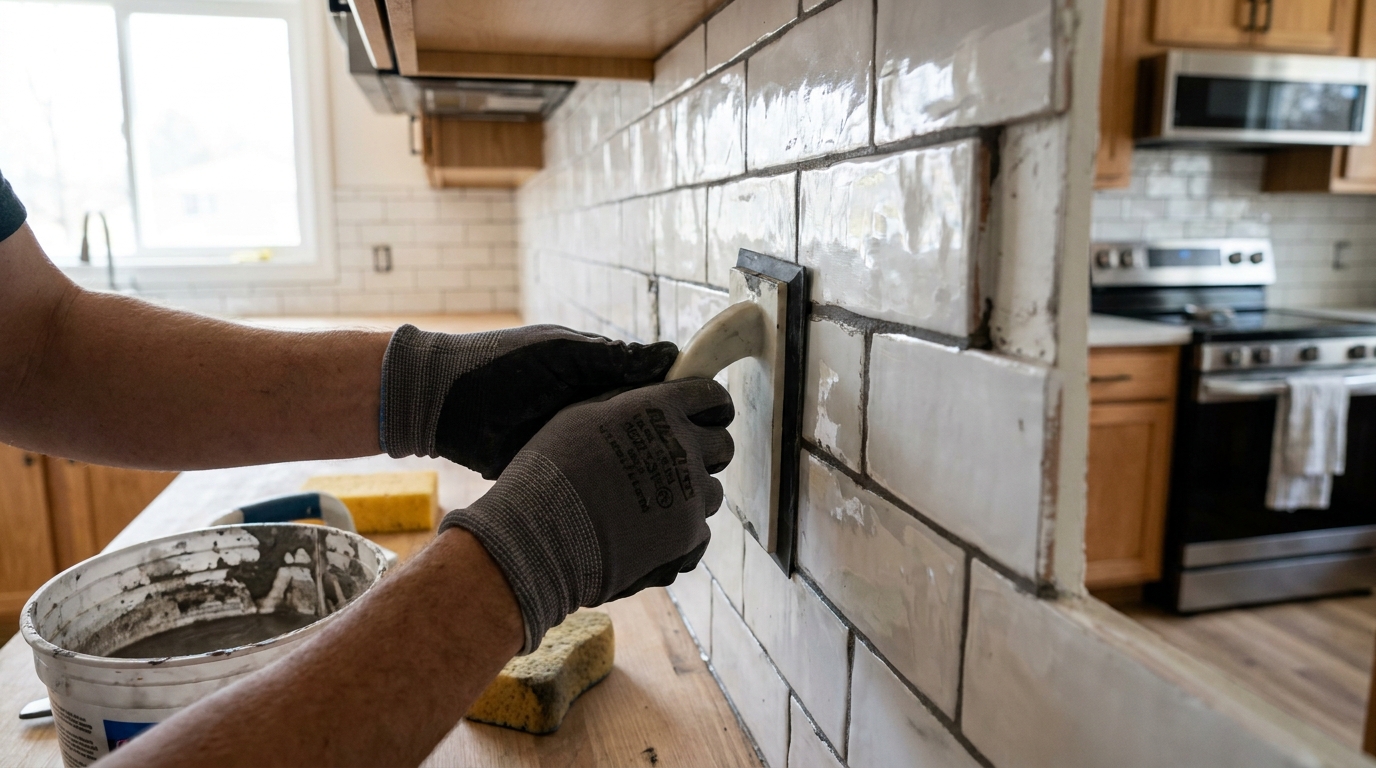
- Grout (1–2 hours). Sanded grout for joints ⅛” or wider, unsanded for narrower joints, per installation guidance. Spread diagonally with a grout float, wait ~10 minutes, then wipe with a damp sponge — rinsing frequently. Do not grout the joint where tile meets countertop — that flexes and needs caulk, per the same guide.
- Clean haze and seal (30–60 minutes + 24-hr wait). Wipe grout haze within 24 hours with a microfiber cloth — it gets much harder to remove later, per grout guidance. After the grout cures (24+ hours), apply grout sealer to cement-based grout. Never use vinegar on sealed grout — the acid damages the sealer, per installation guidance.
- Caulk the transitions. Fill the countertop-to-tile gap and any wall corners with color-matched caulk or silicone — these are movement joints, not grout joints.
Layout Patterns That Change the Look
The same tile reads completely differently depending on the pattern:
- Running bond (classic subway): offset by half a tile — timeless and fastest to install.
- Stacked (straight grid): tiles aligned in columns — modern and minimal; shows every crooked line, so the wall must be flat.
- Herringbone: 45° zigzag — elevated and architectural; adds 15–25% labor, per Angi data.
- Vertical stack: subway tiles set upright — makes ceilings feel taller, per 2026 trends.
- Large-format slab: quartz or marble panels with almost no grout lines — dramatic and nearly maintenance-free; needs pro templating and setting.
- Zellige / handmade-look: uneven, artisanal clay tile — warm and textured; one of 2026’s defining trends.
Choosing Grout: Type and Color
Type by joint width: sanded grout for joints ⅛” or wider; unsanded for narrower joints — and unsanded for glass or polished stone, which sand can scratch, per tiling guidance and backsplash grout guidance. Epoxy grout costs more upfront but is extremely stain-resistant and needs no sealing — the “set and forget” option, per grout type guidance.
Color: matching grout looks seamless; contrasting grout makes the pattern pop. In an active kitchen, mid-gray or charcoal beats white — white grout shows grease within weeks, while mid-gray preserves a graphic look with far less cleaning, per 2026 installation data. Seal cement-based grout after it cures — non-negotiable for stain resistance, per grout guidance.
2026 Backsplash Trends Worth Knowing
- Zellige and handmade-look tile: the artisan wave — warm, imperfect, textured. Ceramic/porcelain remains the most popular backsplash category overall at 70% of respondents in recent market reporting, per 2026 trend data.
- Colored subway: sage green, dusty blue, matte black — the shape stays classic while color does the work, per Express Kitchens.
- Terracotta and earthy clay: warm, bohemian, lived-in — pairs with wood cabinets and unlacquered brass.
- The long-game rule: 2026’s trend reporting keeps coming back to one idea — durable materials and timeless aesthetics over short-lived fads, per trend analysis.
7 Mistakes That Ruin a Backsplash
- Skipping surface prep. Grease on the wall kills adhesion. Clean and degrease before the first trowel stroke.
- No layout plan. Starting in a corner without dry-fitting leaves sliver cuts at the focal point. Plan from the center of the visual anchor.
- Grouting too soon. Mortar needs 24–48 hours. Grouting over uncured thinset traps moisture and weakens the bond.
- Grouting the countertop joint. The tile-to-counter gap flexes with the house — grout cracks there. Caulk it.
- Skipping the sealer. Cement grout and natural stone without sealer absorb grease permanently. Seal after curing; never use vinegar on sealed grout.
- Wrong grout for the tile. Sanded grout scratches glass and polished stone; unsanded grout cracks in wide joints. Match grout to joint width and tile type.
- Forgetting the outlets. Tile adds wall thickness — receptacles need box extenders to sit flush, or the cover plates float. Plan before you tile, not after.
Planning a backsplash? Tell us your kitchen size and material shortlist and we’ll help you sanity-check the budget before you buy tile — contact Renovation Guide HQ.
Kitchen Backsplash FAQ
How much does it cost to install a kitchen backsplash?
$10–$50 per square foot installed, or $500–$1,700 on average, per HomeGuide. A typical 25–30 sq ft kitchen runs $425–$1,500 by material, per Angi’s 2026 data. Ceramic is cheapest; glass, marble, and metal cost the most.
What is the cheapest backsplash material?
Ceramic tile at $2–$8 per sq ft for material ($6–$28 installed), per Thumbtack and HomeGuide. Beadboard ($5–$9 installed) is cheaper but hard to clean behind a range; peel-and-stick ($4–$30) is the cheapest DIY route but can damage drywall on removal.
Can I install a backsplash myself?
Yes — one of the most DIY-friendly tile projects. A ceramic or porcelain subway backsplash is a skill-level 2–3 weekend job: set tile day one, grout day two after the 24-hour cure, seal day three. Hire a pro for glass mosaics, natural stone, herringbone patterns, or walls needing real repair.
What grout should I use for a kitchen backsplash?
Sanded grout for joints ⅛” or wider, unsanded for narrower joints — and unsanded for glass or polished stone, which sand can scratch, per tiling guidance and backsplash grout guidance. Epoxy grout costs more but needs no sealing and resists stains far better than cement grout, per grout guidance. In active kitchens, choose mid-gray over white — it hides grease.
Do I need to seal a backsplash?
Seal cement-based grout and natural stone after installation — otherwise grease soaks in permanently, per grout guidance. Glazed ceramic, porcelain, glass, and epoxy grout need no sealing. Never clean sealed grout with vinegar.
What backsplash goes with busy granite countertops?
A simple, solid-colored tile — let the countertop be the star. If your counters are veined or highly patterned, choose a quiet backsplash in a pulled color from the stone; if the kitchen is neutral overall, the backsplash is the right place for bold color or pattern, per design guidance. Our countertop comparison covers stone costs.
The Bottom Line
For most kitchens, porcelain or ceramic subway tile is the smart money: $7–$35 per sq ft installed, easy to clean, timeless, and DIY-friendly. Spend the savings on what actually shows — a great grout color, a thoughtful layout, and sealed grout lines. Choose glass for luminosity ($12–$40 per sq ft installed), natural stone only if you will seal and maintain it, and peel-and-stick only for rentals. Whatever you pick: plan the layout from the focal point, caulk — don’t grout — the countertop joint, and seal cement grout. For the full kitchen budget, see our 2026 kitchen remodel cost guide; for the cabinets below it, our cabinet refacing guide; and for small-kitchen strategy, our galley kitchen layout guide.
How We Estimated These Costs
Cost figures in this guide come from published 2026 sources: HomeGuide’s 2026 backsplash cost guide (installed per-sq-ft table by material, labor band $5–$20/sq ft), Thumbtack’s 2026 cost data (national $593–$1,786 range, material-only costs), Angi 2026 data via TileHub ($480–$1,500 average, 15–25% pattern labor premium), 2026 glass tile pricing (material $7–$30, installed $12–$40 avg $22), and 2026 patterned-tile installation data. Material guidance draws on tile material guidance, designer cleanability guidance, and timeless-design guidance; trends from Express Kitchens and 2026 market analysis. Installation steps follow professional installation guidance and DIY subway tile guidance; grout rules from tiling guidance and grout type guidance. Figures marked “(planning estimate)” are our synthesis of multiple published ranges, not quotes from any single source. Last updated October 2026.